![Gossip Lanka News [English]](https://blogger.googleusercontent.com/img/a/AVvXsEhYm2aFFq-bIW1nWX-RrqnPFoIsVos6_VCVz8BpLt0QJi55GNXHXC2fugeRvL0qUStEuCfs7Sfu6ZiSlhrkldxfGuE_wzy5gitY6rMZ2KSi8VBbGvkgXLks37RwZV-4-HKbWiNLRxB8C_r1e4z3mpxFTMPDJPEADoG8E-bZteWFipeD5KNGbjvCfqEfKw=s300 "Gossip Lanka News [English]")
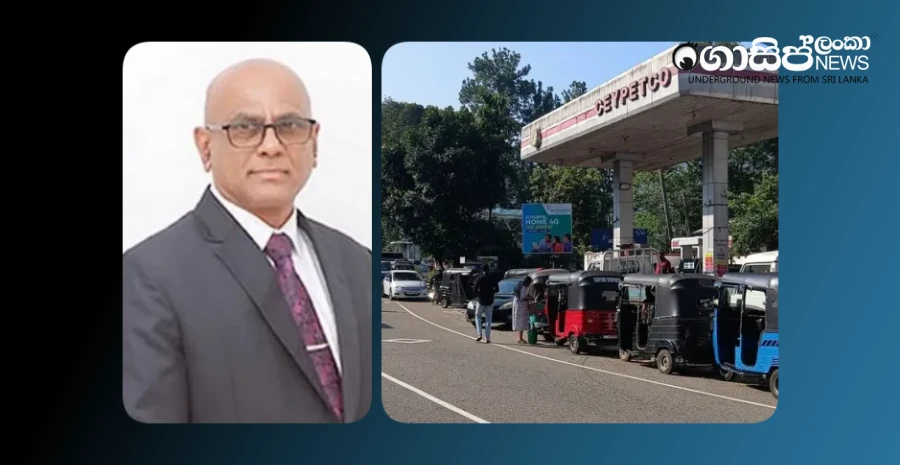
Chairman of the Ceylon Petroleum Corporation, Mr. D.J. Rajakaruna, emphasizes that there is no risk of any fuel crisis in Sri Lanka amidst the prevailing war situation in the Middle East region.
He clarified these points as a tendency for people in some areas to gather in large numbers at fuel stations due to undue fear, stemming from the crisis situation currently centered around Iran.The chairman points out that consumers should not panic unnecessarily as the country already has sufficient fuel reserves for more than a month. It has been confirmed that, based on current and incoming stocks, the country has enough petrol for the next 37 days and sufficient auto diesel for 35 days. Furthermore, there is the capability to supply aviation fuel without any shortage for the next 47 days, and he further revealed that even if no ships arrive in the country in the future, the current stocks can maintain a continuous supply.
A major reason why the closure of the Strait of Hormuz or the Middle East crisis does not directly impact Sri Lanka's fuel supply is that the majority of refined petrol and diesel required by Sri Lanka are not imported from that region. Considering transportation costs and distance, in recent times, most of the fuel imported into the country comes from India, Singapore, Malaysia, and South Korea. The Ceylon Petroleum Corporation states that even if there is some impact on crude oil supply, the necessary reserves to face such a situation have already been secured for a month.
A special meeting, chaired by the President, is scheduled to be held in the future to discuss the next steps to be taken regarding this global situation. As the world has been prepared for such a situation in advance, alternative supply routes have already been confirmed, and authorities urge the public not to create undue fear of a fuel shortage by queuing up, but to carry on with their daily activities as usual.