![Gossip Lanka News [English]](https://blogger.googleusercontent.com/img/a/AVvXsEhYm2aFFq-bIW1nWX-RrqnPFoIsVos6_VCVz8BpLt0QJi55GNXHXC2fugeRvL0qUStEuCfs7Sfu6ZiSlhrkldxfGuE_wzy5gitY6rMZ2KSi8VBbGvkgXLks37RwZV-4-HKbWiNLRxB8C_r1e4z3mpxFTMPDJPEADoG8E-bZteWFipeD5KNGbjvCfqEfKw=s300 "Gossip Lanka News [English]")
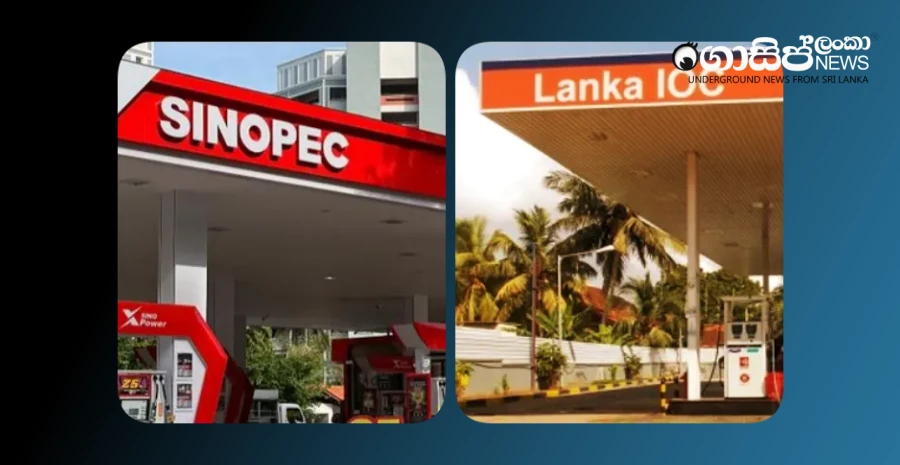
Sinopec company has taken steps to revise its fuel prices effective from midnight today (22). According to this revision, which surpasses the prices of the Ceylon Petroleum Corporation, the price of a liter of Octane 95 petrol has been increased by Rs. 122, with its new price being Rs. 487.
Furthermore, the price of a liter of Super Diesel has been increased by Rs. 219, raising its new price to Rs. 573. However, the company has decided to maintain the prices of Octane 92 petrol and Auto Diesel unchanged at Rs. 398 and Rs. 382 respectively, matching the prices of the Petroleum Corporation. Sources indicate that a similar decision is expected to be issued by LIOC today. Although Ceypetco announced an increase in fuel prices last night, LIOC postponed mentioning any price changes for Octane 95 and Super Diesel. Accordingly, an official announcement is expected today. The relevant companies have stated that the special reason for this decision is the price of crude oil at the time of unloading from the vessel. They have also informed that as private companies, they are not willing to carry out this task at a loss.Attention is currently focused on whether private fuel companies have the legal ability to sell fuel at higher prices as they wish.
Considering the relevant legal background, the last extraordinary gazette notification issued, bearing number 2479/27, is currently in effect. That gazette notification clearly states that the relevant fuel price revision is made according to the powers vested in the Minister of Energy by Section 66 of the Ceylon Petroleum Corporation Act. It announces revised new prices for five main types of fuel, which are specified as fixed prices, not as maximum or minimum values. Furthermore, it is not mentioned anywhere in the gazette that the specified prices are limited to any specific institution or geographical area.
According to Section 66(1) of the Ceylon Petroleum Corporation Act, the Minister of Energy, with the concurrence of the Minister of Finance, has the power to issue relevant orders by prescribing a maximum price, a minimum price, or a fixed price for fuel. According to subsections 66(2) of that Act, there are provisions to make such a price determination applicable only to the Petroleum Corporation. Otherwise, the Minister is also legally empowered to impose it in a way that affects all parties in the market, or applicable only to a specific geographical area and time period.