![Gossip Lanka News [English]](https://blogger.googleusercontent.com/img/a/AVvXsEhYm2aFFq-bIW1nWX-RrqnPFoIsVos6_VCVz8BpLt0QJi55GNXHXC2fugeRvL0qUStEuCfs7Sfu6ZiSlhrkldxfGuE_wzy5gitY6rMZ2KSi8VBbGvkgXLks37RwZV-4-HKbWiNLRxB8C_r1e4z3mpxFTMPDJPEADoG8E-bZteWFipeD5KNGbjvCfqEfKw=s300 "Gossip Lanka News [English]")
Within the last nine months, the United States and Iran came very close twice to reaching an agreement regarding the Iranian nuclear program. However, a few hours after a very important round of talks on February 28, those peace efforts were thwarted by an illegal military attack launched jointly by Israel and America.
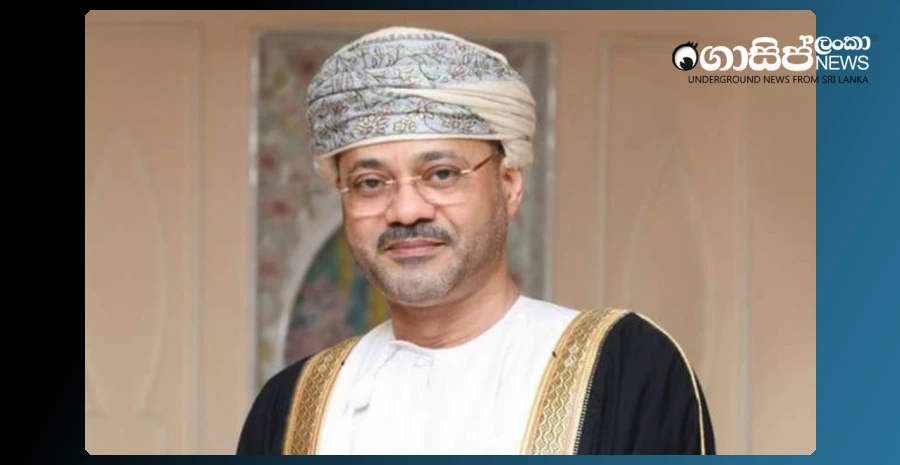
Oman's Foreign Minister, Sayyid Badr bin Hamad Al Busaidi, in a letter to 'The Economist' magazine, points out that while this situation is astonishing, it is by no means surprising.In the face of this war, launched with the aim of completely destroying the Islamic Republic, the Iranian leadership had no other logical option but to retaliate against American targets in neighboring countries. Although it is a regrettable and unacceptable situation, it appears to have been an an inevitable outcome. The most severe impact of these Iranian counterattacks is currently being strongly felt in the southern countries of the Gulf region. Arab nations, which for a long time heavily relied on American security cooperation, now feel that this very cooperation has become a serious threat to their current security and future prosperity.
The Gulf region's economic model, built through global sports, tourism, aviation, and technology sectors, is severely jeopardized by this situation. Furthermore, their plans to become a global hub for data centers will also need to be reconsidered. The global impact of this crisis is already evident through rising energy prices due to disruptions to maritime traffic through the Strait of Hormuz and the risk of a severe economic recession. If the parties who created this war did not anticipate this beforehand, the Foreign Minister believes it is their most serious miscalculation.
However, the biggest mistake made by the American administration is allowing itself to be drawn into this war, which is not theirs at all. There is no clear scenario in this conflict where both Israel and America can achieve what they want. While America's objective may be limited to rhetorical statements about regime change in Iran, Israel clearly aims to overthrow the Islamic Republic. It appears they have no concern about who will take control of the country afterward.
Israel had convinced America that Iran had been severely weakened by American-Israeli bombings targeting Iranian nuclear facilities, sanctions, and internal conflicts in June. Accordingly, they expected Iran to surrender unconditionally after the initial attack and the assassination of its supreme leader. However, it has now become clear that Israel will have to embark on a prolonged military operation, involving American ground troops, to achieve its objectives. This will open another new front in the series of 'forever wars' that President Donald Trump previously pledged to end, and this is not the expectation of the American government or its people.
How to extricate the superpower from this unnecessary entanglement is the main problem facing America's allies. For this, they first have the responsibility to state the truth. It must be pointed out that no party benefits from this war, and the national interest of both America and Iran is to cease hostilities as soon as possible. Although it is a difficult truth to point out that America has lost control over its foreign policy, it must be stated.
Thereafter, the United States leadership must identify its true national interests and act accordingly. Prominent among these interests are definitively ending nuclear proliferation in the region, maintaining a secure energy supply network, and expanding new investment opportunities based on the region's growing economic value. All these objectives can be achieved most successfully only if Iran cooperates peacefully with its neighbors. This can also be recognized as a common goal for the entire Gulf region.
It may be difficult for America to re-engage in bilateral talks that were missed twice due to the temptations of war. Similarly, it is also difficult for the Iranian leadership to re-enter dialogue with an administration that suddenly shifted from the negotiating table to bombings and assassinations. However, no matter how difficult it is for both sides, the only path to escaping war lies in restarting these negotiations.
Some incentive is essential to give both sides the courage needed to return to negotiations. This incentive can be created by linking bilateral talks aimed at resolving the core American-Iranian issue with a broader regional process concerning nuclear energy transparency and energy transition in the region. Secure innovation and development efforts in regional countries moving towards a post-carbon era depend on a fundamental agreement regarding the role of nuclear technology.
It needs to be examined whether this will be a sufficiently large incentive for the main parties to endure the difficulties of dialogue. Oman and the neighboring countries of the Gulf Cooperation Council can present this proposal. Through initial discussions, steps can be taken to build trust over time, and a common understanding can be reached regarding the role of nuclear energy in the energy transition. While determining the final destination of such a process amidst a war is difficult, a regional agreement on nuclear transparency against the backdrop of a regional non-aggression pact can be expected through it.