![Gossip Lanka News [English]](https://blogger.googleusercontent.com/img/a/AVvXsEhYm2aFFq-bIW1nWX-RrqnPFoIsVos6_VCVz8BpLt0QJi55GNXHXC2fugeRvL0qUStEuCfs7Sfu6ZiSlhrkldxfGuE_wzy5gitY6rMZ2KSi8VBbGvkgXLks37RwZV-4-HKbWiNLRxB8C_r1e4z3mpxFTMPDJPEADoG8E-bZteWFipeD5KNGbjvCfqEfKw=s300 "Gossip Lanka News [English]")
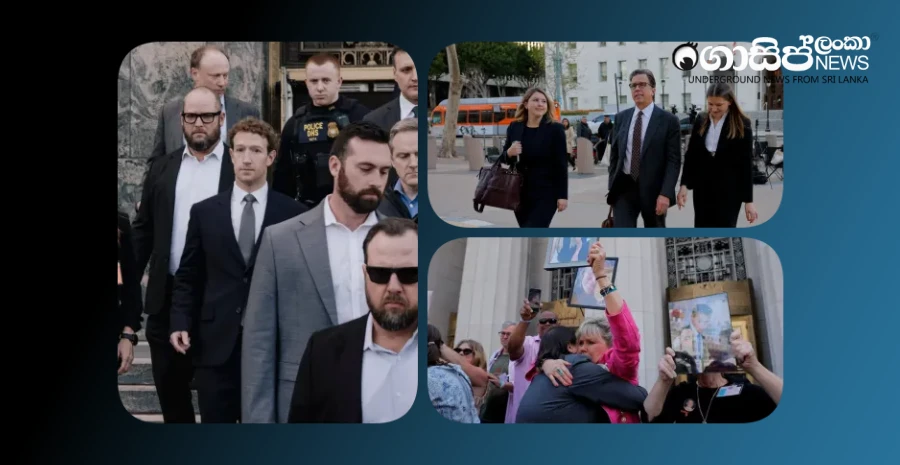
A Los Angeles jury has delivered a historic verdict, ordering Meta (Meta) and YouTube (YouTube) to pay US$6 million in compensation to a young woman who sued them over the damage caused to her mental health due to social media addiction during her childhood. The jury concluded that Meta, which owns Facebook, Instagram, and WhatsApp, and Google, which owns YouTube, deliberately created addictive platforms and caused severe damage to the mental health of this young woman named Kaley, who is 20 years old.
The jury, determining that these companies acted maliciously, oppressively, and fraudulently, ordered that she be paid $3 million in compensatory damages and another $3 million in punitive damages, with Meta responsible for 70% of the liability and Google for the remaining 30%.Kaley's lawyers demonstrated in court that these companies built their platforms as 'addiction machines' with the aim of retaining young users for long periods, and features like Instagram's infinite scroll were designed specifically for this purpose. Kaley testified that she started using YouTube at age 6 and Instagram at age 9, and faced no age-related restrictions. She even stopped contact with family members due to spending all her time on social media, and began suffering from conditions like anxiety and depression from the age of 10. Furthermore, having tried to change her external appearance using Instagram filters since childhood, she is now also suffering from 'body dysmorphia,' a condition where she is excessively concerned about her body's appearance.
Meta and Google have separately stated that they disagree with this verdict and will file appeals against it. Meta expressed confidence in its safety records, stating that adolescent mental health is very complex and cannot be attributed to a single application, while Google pointed out that YouTube is a responsibly built video-watching platform, not a social media network. Meta CEO Mark Zuckerberg, who testified during the trial, stated that his company follows a policy preventing children under 13 from accessing the platforms, but internal documents confirmed that the company was aware of younger children using it. Furthermore, Instagram head Adam Mosseri refused to acknowledge that Kaley's reported 16 hours of Instagram use per day constituted an addiction, calling it merely 'problematic' behavior for a teenager.
Snap and TikTok, originally named as defendants in this case, had reached a confidential settlement with Kaley before the trial. Upon the announcement of this victory, other parents and supporters outside the courthouse expressed great joy, and it is expected to set a massive precedent for hundreds of similar cases being heard in American courts. This Los Angeles verdict was announced just one day after a New Mexico jury ruled against Meta for failing to protect children from sexual predators and inappropriate content. Against the backdrop of countries like Australia and the United Kingdom also taking steps to limit or ban social media use for children under 16, Forrester Research Director Mike Proulx points out that the conflict between the public and social media companies has reached its peak. Meanwhile, another similar lawsuit against social media companies, including Meta, is scheduled to be heard in a California federal court this coming June.