![Gossip Lanka News [English]](https://blogger.googleusercontent.com/img/a/AVvXsEhYm2aFFq-bIW1nWX-RrqnPFoIsVos6_VCVz8BpLt0QJi55GNXHXC2fugeRvL0qUStEuCfs7Sfu6ZiSlhrkldxfGuE_wzy5gitY6rMZ2KSi8VBbGvkgXLks37RwZV-4-HKbWiNLRxB8C_r1e4z3mpxFTMPDJPEADoG8E-bZteWFipeD5KNGbjvCfqEfKw=s300 "Gossip Lanka News [English]")
This strange broadcast begins with a mysterious voice speaking in Persian, heard over the radio waves. He says "Tavajjoh!" (Attention!) three times, and then "Six.
four. zero. nine. three. nine." as a continuous series of numbers. A few hours after the attack on Iran by the United States and Israel on February 28th, these mysterious shortwave radio broadcasts have been regularly emanating from a transmitter located somewhere in Western Europe.This provides excellent evidence that secret intelligence operations within Iran have taken on a new dimension. According to former US intelligence officials, these broadcasts are very likely an emergency measure used by Washington to maintain communication with its spies inside Iran. John Sipher, former CIA chief in Moscow, states that using such alternative communication channels is crucial in a wartime situation and serves as an excellent fallback strategy for individuals whose contacts cannot be abandoned under any circumstances.
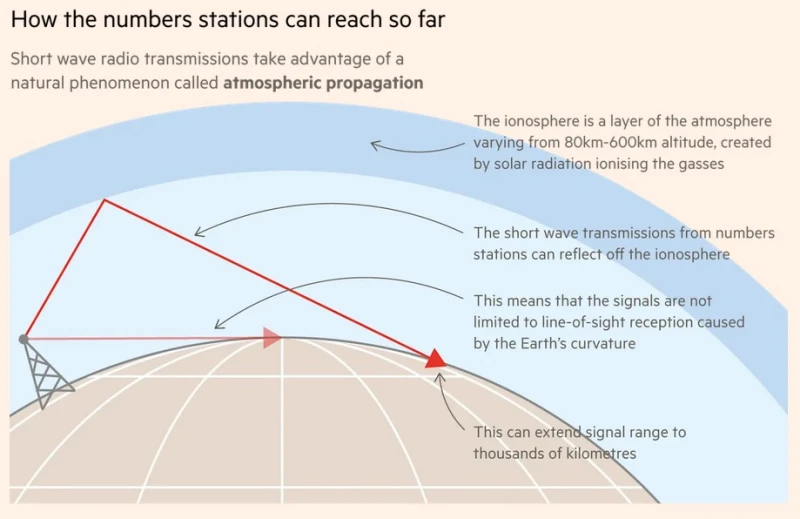
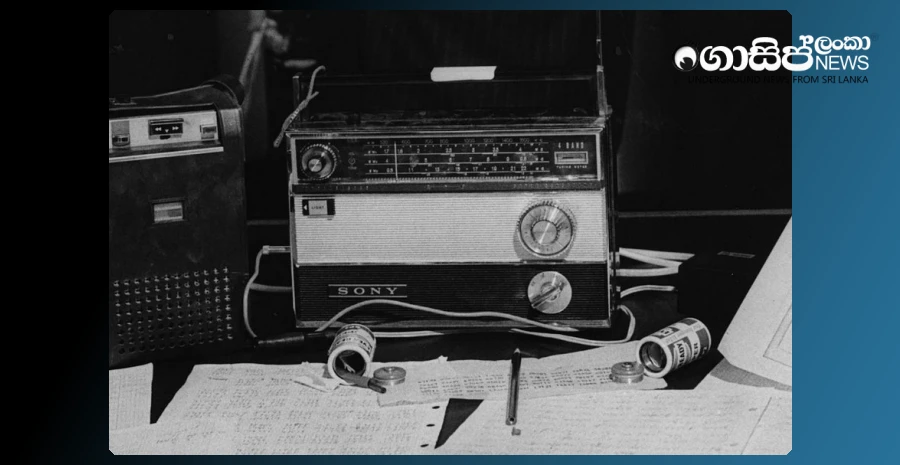
Experts say that within days of the broadcast beginning, Iran issued electronic signals to jam it. However, the mysterious voice quickly switched to a new frequency and resumed reading its numbers. This station, named "V32" by shortwave observers, is considered a "number station" used by intelligence services to send coded instructions to their agents. Here, agents decode messages received through numbers using radio receivers and notebooks. This has also been identified as the first number station broadcasting in Persian in the last twenty-five years. Previously, a similar short broadcast occurred during the US invasion of Afghanistan in 2001, and its number patterns suggested it might have been operated by Russia.
This Persian broadcast, which began last month, now operates twice a day, at 5:30 AM and 9:30 PM Iranian time, with each broadcast lasting approximately one and a half hours. The unique aspect is that anyone with a shortwave radio can listen to it, and it's impossible to determine who is listening. Therefore, unless an agent is caught decoding a message or a mistake is made by the transmitters, counter-intelligence agencies can do nothing but jam these frequencies. Chris Simmons, a former US intelligence officer involved in tracking agents instructed by Cuba, states that its launch on the very day the war began is no coincidence. He further mentioned that it is essential to provide agents operating at risk to their lives with very simple, concealable, and easily explainable equipment.
It is noteworthy that this station began operating as the Iranian government severely restricted internet connections with the outside world during times of crisis. John Sipher, who also served as an instructor in secret CIA training programs, points out that this allows them to connect with their sources even if phone and internet services are disconnected. According to Chris Simmons, even one successful agent receiving instructions through such a system can have a significant impact. This remains a secure alternative for agents over many years, even when using new communication methods is dangerous. Since carrying a radio receiver does not arouse suspicion, they can easily hide among enemies. Former officials say these messages might instruct agents to activate, leave the country, or go to meeting points. It is believed that this is limited to the most crucial intelligence personnel.
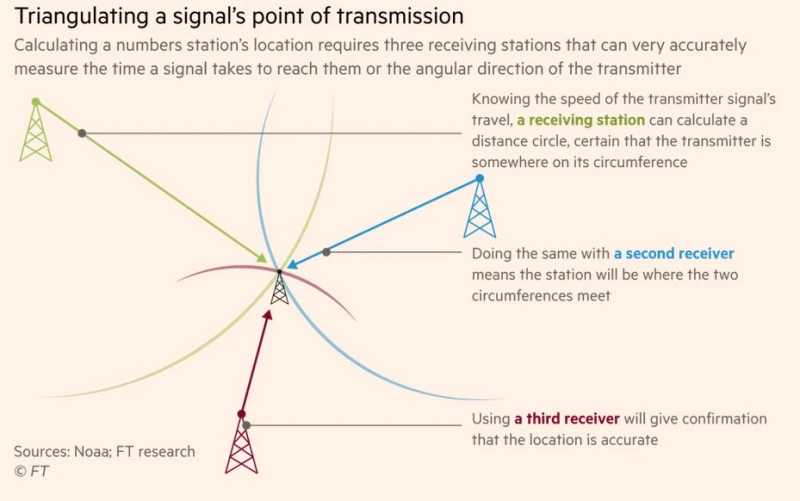
The shortwave monitoring group named Priyom has roughly confirmed that this V32 broadcast originates from Western Europe by calculating the time taken for signals to travel. Although such number stations have decreased since the end of the Cold War, countries like Poland, Russia, Taiwan, and North Korea still use them. Compared to stations like V13, which broadcasts from Taiwan and ends with a flute melody greeting listeners, V32 has no attractive features. Since the absence of a US embassy has made maintaining an intelligence network within Iran a severe challenge for the CIA, such fail-safe communication mechanisms are extremely important to them.
Robert Gourley, former CIA chief in Lima and Rome, sees this from another angle. He speculates that militant Iranian dissidents might be using this network with the approval of Western intelligence agencies. Alternatively, it could be a psychological operation conducted by Washington or Tel Aviv to instill fear and suspicion within Iranian counter-intelligence that high-level spies are present in Tehran. He also points out that Iran will likely attempt to decode these number patterns. Meanwhile, those interested in this broadcast are trying to determine whether it is being read live or is a recording, and they have even heard sounds of a microphone being moved and sounds similar to error messages from the Windows 10 operating system. According to Tony Ingesson, a counter-intelligence expert at Lund University, this is an excellent example of how successfully old communication technologies operate both in the past and in the present. (Based on an FT news report)