![Gossip Lanka News [English]](https://blogger.googleusercontent.com/img/a/AVvXsEhYm2aFFq-bIW1nWX-RrqnPFoIsVos6_VCVz8BpLt0QJi55GNXHXC2fugeRvL0qUStEuCfs7Sfu6ZiSlhrkldxfGuE_wzy5gitY6rMZ2KSi8VBbGvkgXLks37RwZV-4-HKbWiNLRxB8C_r1e4z3mpxFTMPDJPEADoG8E-bZteWFipeD5KNGbjvCfqEfKw=s300 "Gossip Lanka News [English]")
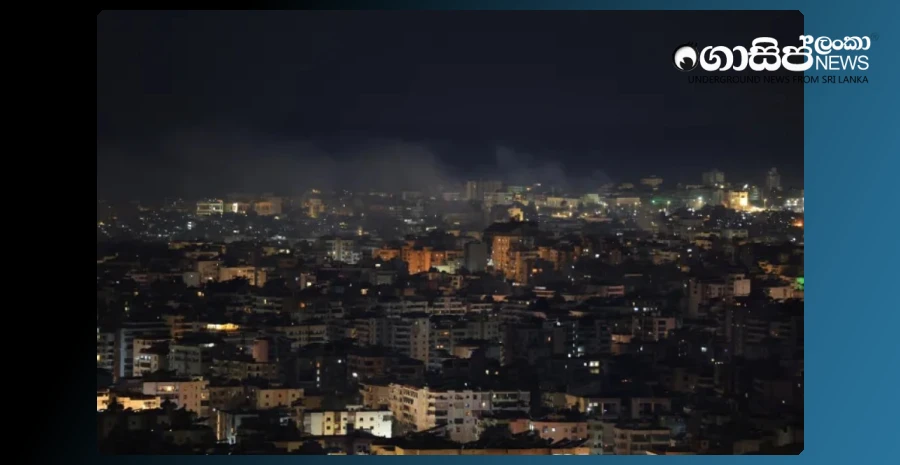
Amidst severe Israeli attacks on several areas, including Beirut, the capital of Lebanon, Lebanese Prime Minister Nawaf Salam today convened an emergency cabinet meeting at the Presidential Palace. The main purpose of this meeting, called at 8:00 AM local time, was to discuss the escalating conflict situation since the previous night and the government's next steps to respond to it.
The Prime Minister strongly condemned the rocket attack from southern Lebanon towards northern Israel as an "irresponsible and suspicious act" that endangers Lebanon's security and stability.Hezbollah has claimed responsibility for these rocket and drone attacks, stating that they targeted a missile defense center near the city of Haifa in northern Israel. The organization further announced that these attacks were launched in response to the recent American-Israeli attack that killed Iranian Supreme Leader Ayatollah Ali Khamenei and several senior officials, and with the aim of protecting Lebanon and its people. However, the Lebanese Prime Minister emphasized that the country would not be allowed to be plunged into a new crisis and that steps would be taken to bring those responsible to justice.
In immediate response to the Hezbollah attack, the Israeli military launched a series of intense airstrikes on southern areas of Beirut and the eastern Beqaa Valley in Lebanon. According to the Lebanese National News Agency (NNA), these Israeli attacks have so far killed 31 people and wounded 149 others. Additionally, the Israeli military has warned residents of approximately 53 villages in southern Lebanon and the Beqaa Valley to evacuate their homes and move at least one kilometer away, causing hundreds of thousands of people to suffer severe distress and flee to safe locations during the Ramadan fasting period.
This conflict situation has raised a serious risk of escalating into a broader regional war involving the United States, Israel, Iran, and their allies. Lebanese President Joseph Aoun condemned the Israeli attacks while also warning against Lebanon being used as a stage for a regional war. Although a ceasefire between Hezbollah and Israel was established in November 2024, Lebanese authorities had previously complained to the United Nations that Israel was continuously violating that agreement.