![Gossip Lanka News [English]](https://blogger.googleusercontent.com/img/a/AVvXsEhYm2aFFq-bIW1nWX-RrqnPFoIsVos6_VCVz8BpLt0QJi55GNXHXC2fugeRvL0qUStEuCfs7Sfu6ZiSlhrkldxfGuE_wzy5gitY6rMZ2KSi8VBbGvkgXLks37RwZV-4-HKbWiNLRxB8C_r1e4z3mpxFTMPDJPEADoG8E-bZteWFipeD5KNGbjvCfqEfKw=s300 "Gossip Lanka News [English]")
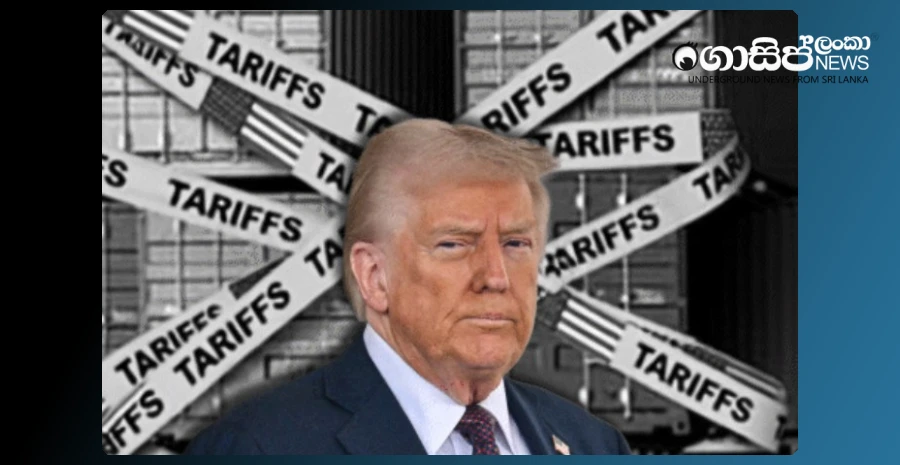
The US government has decided to suspend the emergency tariffs imposed by American President Donald Trump starting today. Concurrently, President Trump warned countries withdrawing from tariff agreements that if they attempt to 'play' with America through trade agreements, they will face severe consequences, including the imposition of higher tariffs.
This decision comes after the US Supreme Court ruled these emergency tariffs illegal three days ago. Accordingly, the US Customs and Border Protection (CBP) announced that the tariffs imposed under the 1977 International Emergency Economic Powers Act (IEEPA) would be suspended from 12:01 AM on Tuesday (10:30 AM local time), and importers have been instructed to remove all related codes from their merchandise systems.Economists at the Penn Wharton Budget Model indicate that this Supreme Court ruling could force the US government to refund over $175 billion (approximately 15.75 billion Sri Lankan Rupees) in revenue. According to Reuters, while the US has collected over $500 million (approximately 45 billion Sri Lankan Rupees) daily through tariffs imposed under IEEPA, companies now have the possibility of requesting refunds. However, with a 15% tariff set to take effect for all countries, including India, starting Tuesday, Trump stated via his Truth Social media platform that 'many countries have harmed America in trade for years.'
Currently, some countries are protesting this 15% tariff. Countries like Britain, Australia, and New Zealand have agreed to trade deals with Trump involving a 10% basic American tariff, and therefore, they have refused to pay the new 15% tariff. The Trump administration has not yet provided any clarification on this matter.
Commenting on the court's decision to revoke the tariffs, President Trump stated that this ruling inadvertently granted him more power than before. He declared that he has no respect for this decision and will henceforth write 'supreme court' in lowercase English letters, calling it a foolish and internationally divisive ruling. Nevertheless, he emphasized that his power to impose tariffs under other laws has been further affirmed, and he can take strong measures against countries using methods like licenses. He also stated that all other tariffs have been approved by the court.
This measure takes effect three days after the Supreme Court ruling, and authorities have not yet clarified why tariffs were collected during those three days or whether the collected funds will be refunded. CBP has stated that it will provide notifications to the business community through official messages in the future. However, this order only affects tariffs imposed under the IEEPA law.
Through Section 232 of the 1962 US trade law, the President is empowered to impose tariffs if the import of goods from a certain country poses a threat to national security, and Trump imposed tariffs on steel and aluminum during his first term under this national security clause. Similarly, Section 301 of the 1974 Act allows for action against countries engaging in intellectual property theft or unfair trade practices, which includes most of the tariffs imposed against China. The court ruling has had no impact on these Sections 232 and 301.
Immediately after the Supreme Court's 6-3 majority decision on February 20 confirmed that President Trump had exceeded his powers under the IEEPA law, he announced a new global tariff. Initially declared as 10%, it was suddenly raised to 15%, surprising even officials. This new tariff is imposed under Section 122 of the 1974 Trade Act, which allows a government to impose tariffs up to 15%, but requires Congressional approval if it is to be in effect for more than 150 days. Section 122 empowers the President to temporarily impose tariffs without a lengthy investigation process when the US faces an emergency trade deficit or economic crisis.
According to NBC News, imposing a uniform 15% global tariff on all trade partner countries means that the tax rates in countries currently subject to higher tariffs will automatically decrease. Exemptions have been granted for products such as beef, tomatoes, oranges, minerals, pharmaceuticals, certain electronic devices, and passenger vehicles. The Trump administration states that this new tariff replaces the old system and continues the effort to generate more revenue.
In 1971, President Richard Nixon imposed a 10% global tariff due to a severe imbalance in trade and the balance of payments, and pressure on the dollar. This Trade Act was introduced in 1974 with the aim of granting the President legal powers to deal with such emergency economic situations. However, according to a New York Times report, Section 122 has never been used before, so it is still unclear how a court would interpret it if challenged in the future.