![Gossip Lanka News [English]](https://blogger.googleusercontent.com/img/a/AVvXsEhYm2aFFq-bIW1nWX-RrqnPFoIsVos6_VCVz8BpLt0QJi55GNXHXC2fugeRvL0qUStEuCfs7Sfu6ZiSlhrkldxfGuE_wzy5gitY6rMZ2KSi8VBbGvkgXLks37RwZV-4-HKbWiNLRxB8C_r1e4z3mpxFTMPDJPEADoG8E-bZteWFipeD5KNGbjvCfqEfKw=s300 "Gossip Lanka News [English]")
Previously, there was no idea whether there were alternatives to passing the G.C.E. Advanced Level examination in Sri Lanka to enter a state university in Sri Lanka. However, it is reported that a special court ruling has provided alternatives, allowing entry into local medical colleges through an Advanced Level examination from a foreign country.
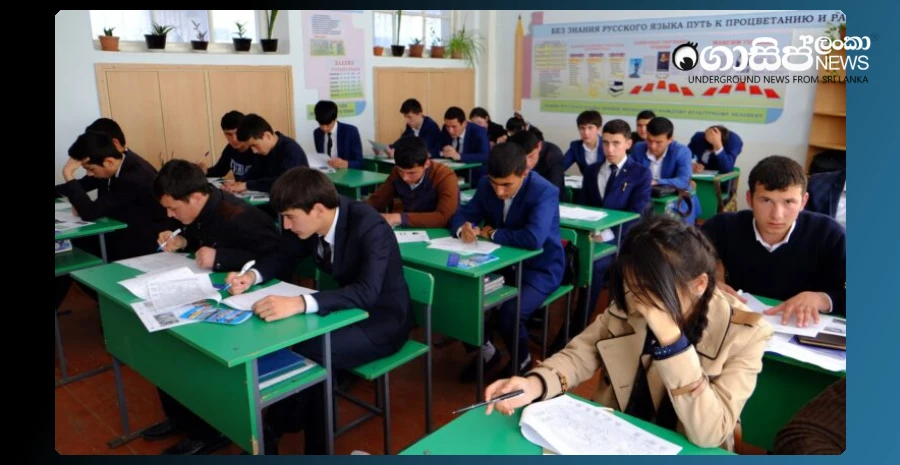
The Supreme Court has ruled that the fundamental human rights of a student who had qualified for admission to a local medical faculty by passing an examination equivalent to the Advanced Level examination held in Russia were violated by the rejection of his application. Accordingly, the Supreme Court issued orders to the University Grants Commission to immediately admit the aggrieved student to a medical faculty of a state university in Sri Lanka.The court announced this decision after hearing a fundamental rights petition filed by a student named Isula Damsith Jayaratne, a resident of Boralla. The petitioner student had passed the G.C.E. Ordinary Level examination from Royal College, Colombo, and later moved to Russia because his father, a Group Captain in the Sri Lanka Air Force, received an appointment as a Defense Advisor at the Sri Lankan Embassy in Russia. In Russia, he enrolled in a school where Indian, Pakistani, and Bangladeshi students studied, and there he sat for and passed the Senior School Certificate examination. It was confirmed before the court that this is recognized as an equivalent qualification to the G.C.E. Advanced Level examination in Sri Lanka. However, it is not clear how this student's Z-score was calculated.
After the foreign examination, he submitted an application through the Ministry of Foreign Affairs for admission to a government medical faculty in the country. However, the Ministry rejected his application, stating that he did not meet the relevant criteria. The student pointed out in his petition that this rejection violated his fundamental human rights, including the right to equal treatment before the law, as enshrined in the Constitution.
This petition was heard before a three-member Supreme Court bench comprising Justices Janak de Silva, Arjuna Obeyesekere, and Dr. Sobitha Rajakaruna. The decision was announced by Justice Arjuna Obeyesekere with the concurrence of Justices Janak de Silva and Dr. Sobitha Rajakaruna. During the hearing of this petition, Attorney Hafeel Fariz represented the petitioner, and Deputy Solicitor General Ganga Wakishtha Arachchi appeared for the Attorney General. The ruling further stated that the student had met the qualifications for medical faculty admission and that the Ministry of Foreign Affairs had no authority to intervene in this process.