![Gossip Lanka News [English]](https://blogger.googleusercontent.com/img/a/AVvXsEhYm2aFFq-bIW1nWX-RrqnPFoIsVos6_VCVz8BpLt0QJi55GNXHXC2fugeRvL0qUStEuCfs7Sfu6ZiSlhrkldxfGuE_wzy5gitY6rMZ2KSi8VBbGvkgXLks37RwZV-4-HKbWiNLRxB8C_r1e4z3mpxFTMPDJPEADoG8E-bZteWFipeD5KNGbjvCfqEfKw=s300 "Gossip Lanka News [English]")
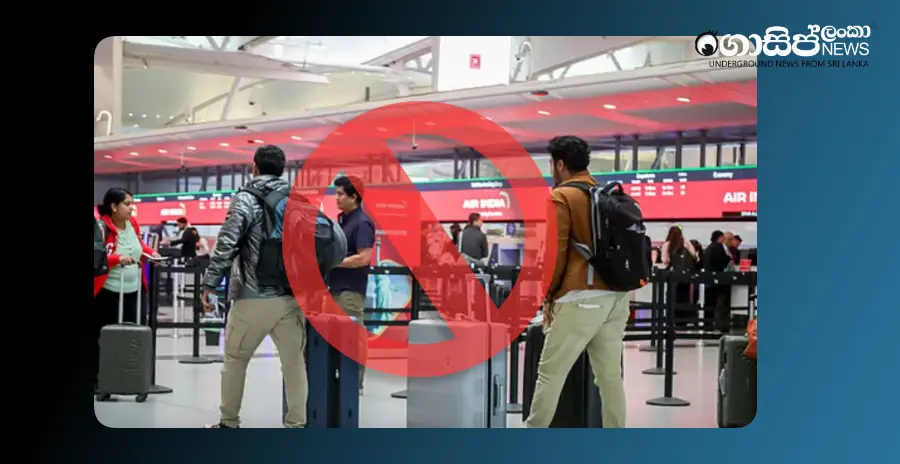
The White House announced that US President Donald Trump has taken steps to add 7 more countries to the list of nations banned from entering the United States, effective January 1, 2026. The President has implemented these expansions with the aim of ensuring national security and public safety, taking into account serious deficiencies in the person screening, investigation, and information exchange processes in the respective countries.
Under the new order, Burkina Faso, Mali, Niger, South Sudan, and Syria have been newly added to this full sanctions list, while Laos and Sierra Leone, which were previously subject to partial restrictions, have now been placed under a full travel ban. Additionally, this new order blocks individuals arriving in the US using documents issued by the Palestinian Authority.
In addition to this full ban, partial entry restrictions and visa limitations have been imposed on 15 other countries, but the White House has not yet publicly released that list, according to Reuters. However, restrictions previously imposed on residents of 12 high-risk countries identified under Proclamation 10949 – Afghanistan, Burma, Chad, the Republic of Congo, Equatorial Guinea, Eritrea, Haiti, Iran, Libya, Somalia, Sudan, and Yemen – will remain unchanged.
Although Trump had previously pledged to support Syria's stabilization after discussions with its new President, Ahmed al-Shara, last November, the President has hardened his stance following a recent alleged ISIS attack in Syria that killed two American soldiers and a civilian interpreter. The White House cited a high visa overstay rate, the weakness of the central government, and inadequate security measures in passport issuance systems as the main reasons for including Syria on this banned list.
However, this order will not impede legal permanent residents, individuals currently holding visas, specific visa categories such as diplomats and athletes, or individuals arriving for US national interests. The US Supreme Court has previously affirmed the legality of similar travel restrictions imposed during a previous administration, ruling that preventing individuals who cannot be properly vetted and who may pose a threat to national security from entering the country falls within the President's powers.
Tags:
Trending