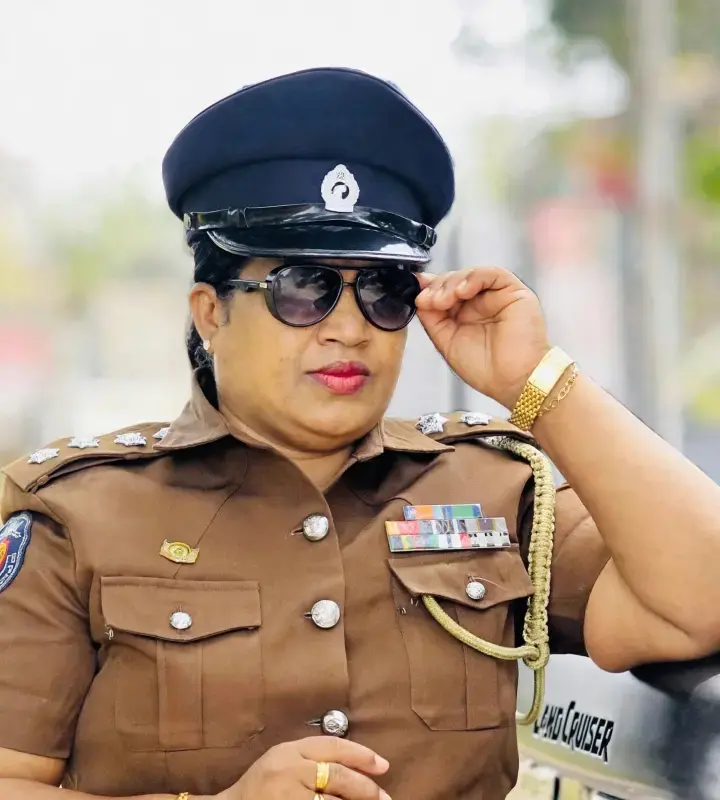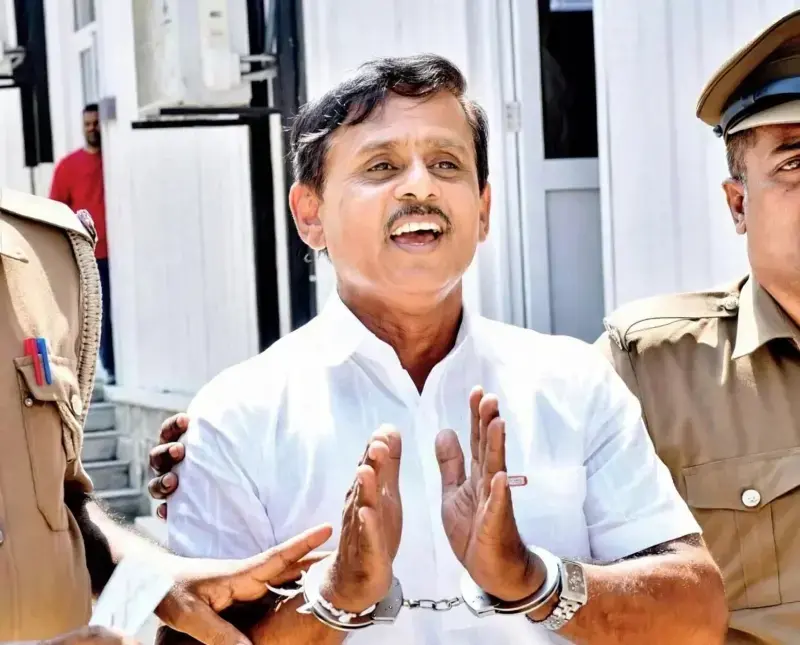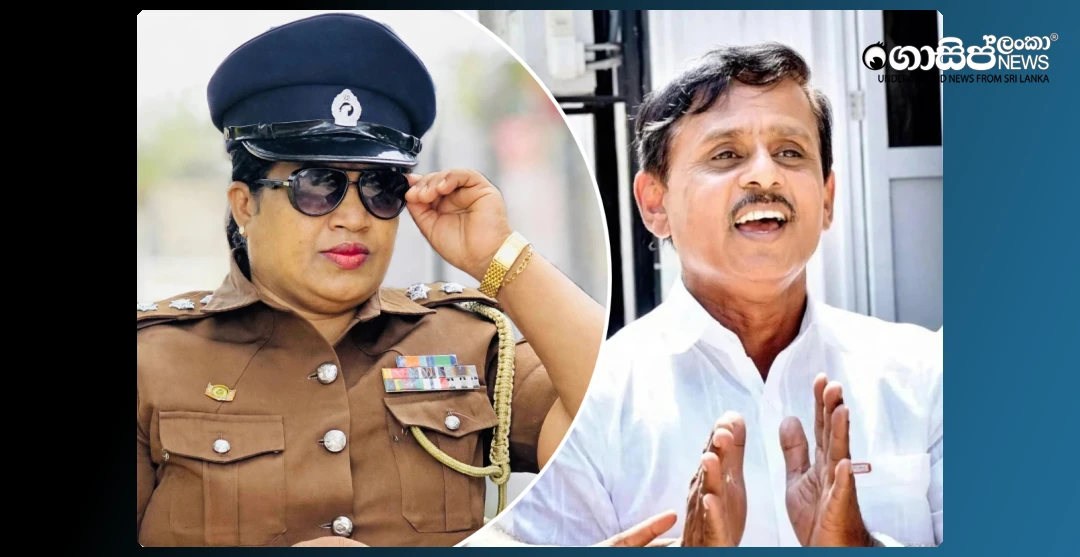
With the recent arrest of Chief Police Inspector Varuni Bogahawatta, there has been renewed public discussion about her past official conduct. However, this note is not about her arrest on financial charges, but about a very important fundamental rights judgment delivered against her by the Supreme Court a few years ago.
It dates back to the investigation period of the accusation of child abuse against 'Saruwa Sunil', the former chairman of the Akuressa Pradeshiya Sabha.Saruwa Sunil was arrested in July 2012 for sexually abusing a 14-year-old minor girl. On January 17, 2020, Colombo High Court Judge Aditya Patabendige sentenced him to 15 years of rigorous imprisonment, a fine of Rs. 25,000, and ordered him to pay Rs. 250,000 as compensation to the girl. However, the Court of Appeal, determining that the High Court failed to properly evaluate the evidence, overturned the sentence and acquitted him on October 11, 2022. The Attorney General's Department did not appeal this to the Supreme Court, and although he was acquitted of the criminal charge, the incident has not faded from public memory. Varuni Bogahawatta was the officer who participated in the relevant investigation, representing the Children and Women's Bureau of the Matara Police.
The incident underlying this Supreme Court judgment began on July 17, 2012. On that day, a 14-year-old schoolgirl, a 10th-grader residing in the Matara District, had faced two question papers for her school term exam and was at home studying for the next day's exam. She was known throughout the village as a girl with a natural talent for impromptu poetry. Around 3:30 PM, a police jeep with seven police officers, including Varuni Bogahawatta, arrived at her house where she was alone. According to the petition, the police initially stated that they had come to hear about her poetry skills and could introduce her to a local media institution. At the request of one police officer, the girl even recited an impromptu poem about Varuni Bogahawatta. Due to the police vehicle and the sound of the poetry, several neighbors also gathered there.
However, what happened next was unexpected. In front of the gathered neighbors, Varuni Bogahawatta questioned the girl about whether she had been sexually abused by the chairman of the Akuressa Pradeshiya Sabha. The girl denied it. The officer insisted that she reveal the truth, stating that according to their information, such an incident had occurred. Meanwhile, the girl's parents and grandmother also arrived at the house, and in front of them, the girl again stated that no such abuse had happened to her. Nevertheless, stating that the girl needed to be questioned further, the police proceeded to take her to the Matara Police Station, located about 30 km away. The police initially refused the parents' request to accompany their daughter, but later allowed only the girl's grandmother to do so. Taking a minor girl, who was not a suspect in any crime but suspected to be a victim, away from her parents in this manner was later severely criticized by the Supreme Court.
At the Matara Police Station, the girl was taken to the officer's office, where she alleged in her petition that she was scolded, threatened to reveal the truth about her alleged relationship with the chairman, and shown inappropriate photographs. Although the judgment does not state that each of these allegations was independently proven, clear evidence was presented to the court that the girl was detained that night in a police cell with another adult female detainee. She did not receive food or water that night. She remained unfed until her parents came to the police station the next morning (July 18) and provided her with food. The girl also alleged that she was questioned again around 9:30 AM that morning, and was threatened with serious consequences if she did not tell the truth, and was made to sign a statement without being shown its content, but she never changed her initial stance at any point.
Around 10:00 AM on July 18, the girl was admitted to Matara General Hospital for a medical examination. The forensic medical examination conducted on July 19 revealed no physical signs of sexual abuse or any other medical condition. However, the police did not send her home. Four days later, she was subjected to a second medical examination, and two days after that, a third examination. Even disregarding a hospital employee's notification to release the girl, she was kept under police custody in the hospital for eight days, guarded by two male police officers and one female officer. Finally, as a result of a complaint made by the girl's mother to the Human Rights Commission on July 22, the girl was released from the hospital on July 25, and even then, she was taken to the Matara Police Station before being sent home.
The fundamental rights petition filed in relation to this series of events was heard by a three-judge bench of the Supreme Court comprising Justices Buwaneka Aluwihare, Priyantha Jayawardena, and Vijith K. Malalgoda. Varuni Bogahawatta, presenting her case before the court, stated that she went for the investigation based on information related to the said chairman and on the instruction of the Inspector General of Police. She said that another sexual abuse allegation related to a person named 'Kusumsiri' was revealed at the girl's house, and she took the girl to the police station because there was not enough time to record a statement and the girl found it difficult to speak in front of her parents. She also stated that she suggested someone accompany the girl as the mother said she could not come because the girl's brother was ill, and she denied harassing the girl or putting her in a cell.
However, the Supreme Court logically rejected these excuses. Although the officer stated that the parents were at home when the police went to the house, sworn affidavits from neighbors confirmed that they were not at home at that time. Although the police said the girl was not put in a cell, the sworn affidavit of the grandmother who was with the girl confirmed it, and the police failed to present the necessary police records or documents to the court to prove it was false. Furthermore, the court found it unacceptable to believe that a girl who found it difficult to speak in front of her parents would speak more easily if taken to an unfamiliar police station 30 km away. The judges pointed out that if lack of time was an obstacle to recording a statement, it could have been done on another day, and concluded that the argument that the girl was taken away with the intention of influencing her and changing her story was more credible. Moreover, police records themselves stating that the girl was taken to inspect another location around 10:00 PM that night contradicted the officer's explanation of urgency.
In this judgment, announced on June 12, 2019, the Supreme Court ruled that Varuni Bogahawatta and the police had violated the girl's fundamental rights. Articles 13(1) and 13(2) of the Constitution were violated by denying her the right to be produced before a magistrate, whether as a victim or a suspect. The most significant point was the court's observation that 'torture or cruel, inhuman and degrading treatment' as stated in Article 11 of the Constitution is not limited to physical assault. The court concluded that detaining a child in a cell with adult suspects, disregarding the child's age, education, mental state, and dignity, when a child is detained under Article 13 of the Children and Young Persons Ordinance, constitutes degrading treatment.
Accordingly, Varuni Bogahawatta was ordered to pay Rs. 100,000 as compensation to the girl from her personal funds, in installments of Rs. 25,000 over 12 months, and the government was also ordered to pay another Rs. 50,000 as compensation. The Supreme Court emphasized that such incidents of misuse of police power occur across the country, and only a small fraction of them are reported to the courts, and also ordered the Inspector General of Police to formulate adequate guidelines regarding such situations.
Varuni Bogahawatta may have initiated this investigation with the aim of delivering justice regarding the accusation against Saruwa Sunil. However, the manner in which the investigation was conducted violated both legal and humanitarian principles. By intimidating and forcibly detaining a girl who could have been a victim of a crime and conducting investigations in this manner, what ultimately happened was the violation of the very dignity and fundamental rights of the girl who should have been protected, all in the name of the law.