
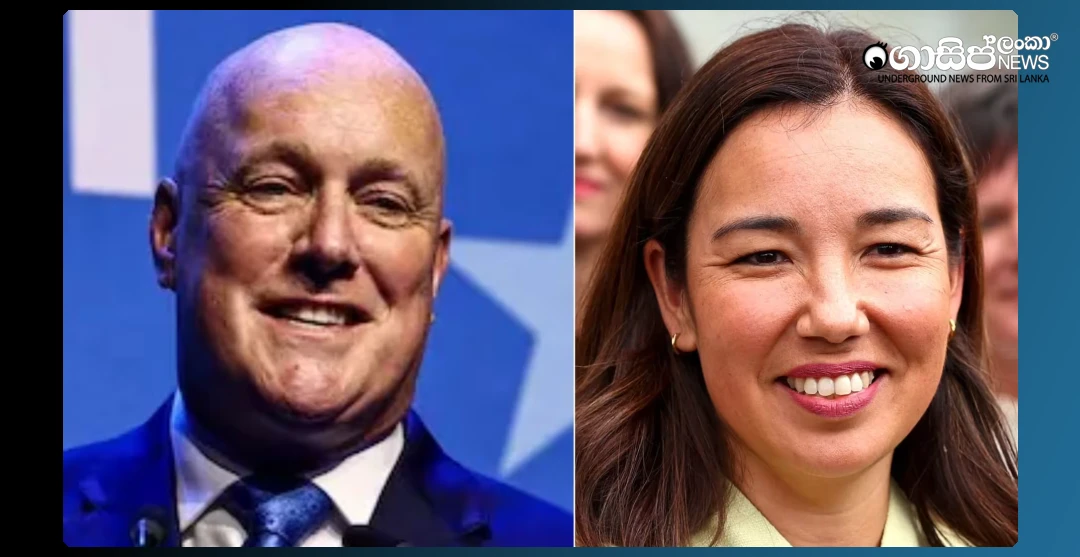
With the release of the final results of New Zealand's general election, the current right-wing coalition needs the support of a new centrist party to form a new government. Although preliminary results showed the National Party and its two coalition partners had a slim majority of two seats, the Electoral Commission released the final results yesterday after counting nearly 485,000 special votes cast by overseas and out-of-electorate voters.
Accordingly, the National Party lost two of its seats, falling to 40 seats, while the libertarian Act Party secured 13 seats and the populist New Zealand First Party secured 12 seats. Although 66 seats are required for a majority in the 130-seat Parliament, this coalition only holds 65 seats.Meanwhile, the Labour Party secured 863,238 party votes, surpassing the National Party's 819,012 votes, but only managed to win 36 seats. Labour Party leader Chris Hipkins stated that he was proud of securing the highest share of party votes but regretted not being able to bring about a change in government.
According to the revised results, the only realistic path to forming a government lies with the National Party-led coalition. To achieve this, they will have to reach an agreement with the centrist Opportunity Party, which holds 7 seats. Otherwise, New Zealanders might have to go to another election. Since the ownership of three seats changed during the special vote count, if the National Party requests a recount before December 3rd and manages to win back at least one of those seats, they could come to power with a slim majority.
Current Prime Minister Christopher Luxon, who had previously refused to work with the Opportunity Party, has now stated that he is softening his stance and hopes to find common ground. He stated yesterday that formal discussions would begin with the three smaller parties and that it would be a challenging and time-consuming process. "It's more important to do it right than to do it quickly. New Zealanders won't thank us for rushing into a broken agreement or sending them back to the polls," Luxon said.
Political scientist Lara Greaves of Victoria University of Wellington says that negotiations between the four parties will be extremely complex. "This is the highest chance we've had yet of going back to an election," she stated.
The Opportunity Party, led by Auckland businesswoman Qiule Wong, had long stated that it would first negotiate with the party that won the most seats. After the final results were released, she confirmed that she would hold discussions with Luxon, but stated that she would not show any flexibility regarding some of her party's policies and would not rule out the possibility of another election. The party's five main conditions are: taking action against New Zealand's supermarket monopoly, limiting political donations, a 10-year cross-party plan for the health sector, ending the use of bottom trawling nets in the fishing industry, and strengthening climate commitments.
Meanwhile, Wong has emphasized that she will not enter into any agreement if New Zealand First party leader Winston Peters serves as Minister of Foreign Affairs. She believes that his behavior in several past governments is not what would be expected of someone in such a position. Furthermore, there are strong disagreements between New Zealand First and the Act Party regarding climate policies, and the Act Party is also unlikely to support political donation reforms.
With only about four weeks left until Christmas, New Zealand is facing weeks of negotiations to form a four-party coalition government for the first time in its history, and New Zealanders might even have to wait until 2027 to know the shape of the next government.