
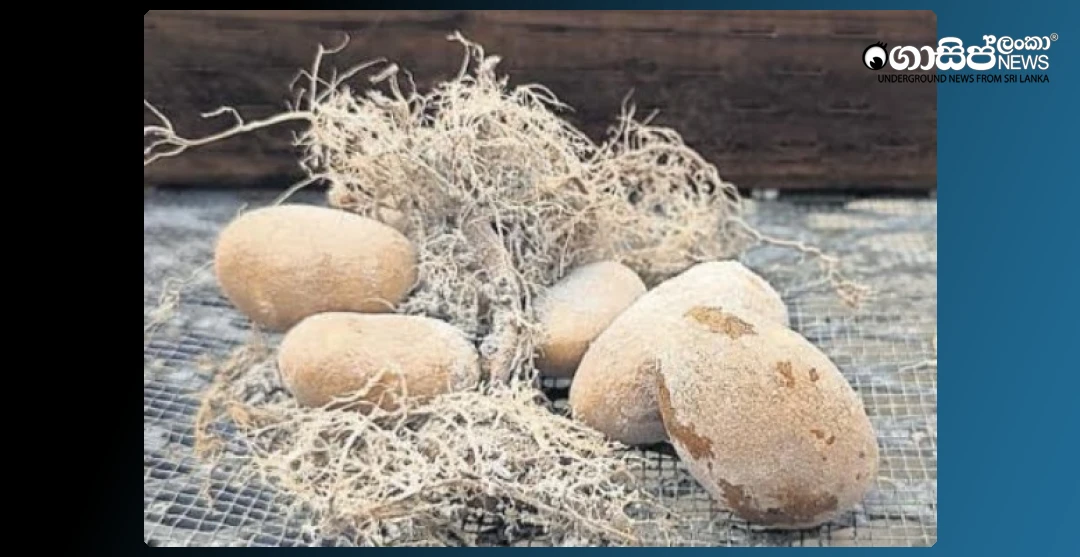
A new scientific report indicates that potato cultivation could be a critical factor in sustaining human life on the Moon long-term. The report emphasizes that for successful long-term lunar exploration, it is essential to have support systems that can produce food directly on the Moon.
After a group of scientists involved in a project supported by the American space agency NASA successfully cultivated potatoes in artificially prepared lunar soil, they concluded that potatoes are the most suitable crop for farming on the Moon.This study, led by Aymeric Goyer, a plant biologist at Oregon State University in the United States, has been published in the scientific journal 'npj Microgravity'. Goyer states that potatoes provide more calories per unit area compared to many other crops. He points out that potatoes are highly nutritious, containing more potassium than a banana, as well as vitamin C and good protein, and that consuming them provides a feeling of fullness for a longer period.
This experiment was conducted with the future prospect of building greenhouses on the Moon. Scientists have successfully cultivated a suitable, successful potato harvest for consumption, and they emphasize that it is crucial to confirm that the produced food is actually edible.
For these experiments, researchers used artificial lunar soil engineered on Earth using materials that mimic the characteristics of lunar dust and soil. This was mixed with varying levels of vermicompost. This organic soil extract, prepared by red composting worms typically known as 'Eisenia fetida' by digesting discarded food and organic waste, was used for the experiment. Goyer explains that since the dust and rock layer on the Moon contain no nitrogen, no crops will grow there without additional nutrients.
The study used the 'Modoc' potato variety, which has a red skin and white flesh and matures quickly. These potatoes, grown in small pots, yielded a harvest weighing less than ten grams. However, Goyer admitted that researchers have not yet tasted these potatoes. He further stated that the harvested yield was used for laboratory analysis.
David Handy, a co-author of the study and a space biologist at Oregon State University, believes that the results of these experiments could also be beneficial for agriculture on Earth. He says that the technologies discovered through this could be used in areas with low agricultural production and reliance on external food sources, such as urban centers and communities in desert regions.
Meanwhile, the United States and China have already announced plans to establish long-term bases near the Moon's south pole.