
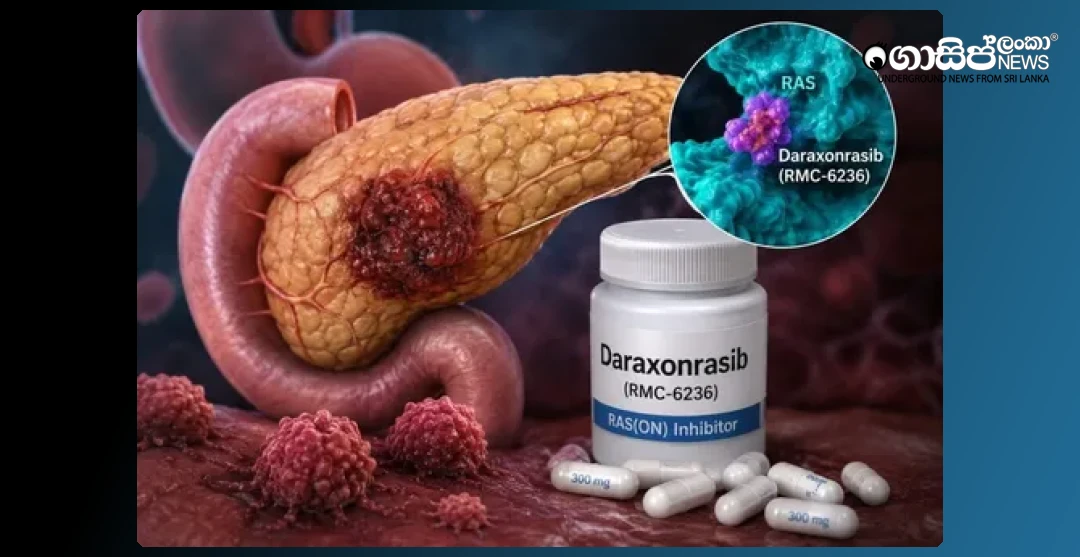
Marking a critical milestone in the fight against deadly pancreatic cancer, a newly introduced drug has shown remarkable success in clinical trials. This new drug, named 'daraxonrasib', which is a daily pill, has been introduced by the lead physician who conducted this major trial as the closest treatment to completely curing the disease for some patients.
According to this study, presented at a session of the European Organisation for Research and Treatment of Cancer in Barcelona, cancer tumours in slightly more than 60 percent of patients who received this new drug along with chemotherapy either shrank or completely disappeared. During the 18-month study period, cancer tumours completely disappeared in one out of every 12 patients, and the growth of cancer tumours was halted overall in 55 out of the 61 patients who participated in the trial.
It is noteworthy that more than three-quarters of the patients who joined the trial were still alive one year after treatment. This is considered a significant advancement, given that only 45 percent of patients receiving only standard treatments survive after one year.
Dr. Wungki Park, an oncologist at Memorial Sloan Kettering Cancer Center in New York, called this study a monumental achievement in the field of pancreatic cancer treatment. "This is the closest treatment we have to a cure. We have never before seen so many patients with metastatic cancer respond completely to a drug," he said. Dr. Park further stated that the disappearance of cancer in scans within a period of about 18 months is the closest they have come to a complete cure, and that it is an incredible situation.
This new drug works by targeting and binding to the mutated 'KRAS' gene. This gene, which causes about 90 percent of pancreatic cancer tumours, continuously sends signals for cancer cells to grow and multiply. By deactivating this process, the drug is able to prevent the spread of cancer tumours. However, Dr. Park also pointed out that these results do not mean that the patients concerned will be cancer-free forever, as pancreatic cancer often develops resistance to drug treatments. Nevertheless, he expressed hope that this trial would be an important step forward in the fight against this disease.
In the United Kingdom alone, approximately 11,500 people are diagnosed with pancreatic cancer each year, and about 10,200 of them die. Although only about 3 percent of new cancer patients are diagnosed with this type, it has become the fifth leading cause of cancer deaths in Britain. Less than six out of 100 patients are still alive five years after diagnosis, making it one of the most commonly occurring and deadliest types of cancer.
Dr. Medina Kara, Head of Research at 'Pancreatic Cancer UK', who called these new results encouraging, stated that half of all people diagnosed with pancreatic cancer die within three months of diagnosis. She said that family members are willing to sacrifice anything for their loved ones to spend more valuable time with them. Describing these findings as part of a growing body of evidence that offers real hope to people suffering from advanced pancreatic cancer, she also emphasized that the British government should take steps to continue the current trend by increasing investment in pancreatic cancer research and clinical trials. She further stated that this would allow more patients to participate in studies that could improve outcomes.
Pancreatic cancer has been extremely difficult to treat due to its tendency not to show clear symptoms until it has spread. Pain in the upper abdomen or back, unexplained weight loss, indigestion, changes in bowel habits, and jaundice can be among its primary warning signs. By the time the disease has advanced, surgery, which is currently the only treatment with the potential to cure pancreatic cancer, often becomes no longer feasible.