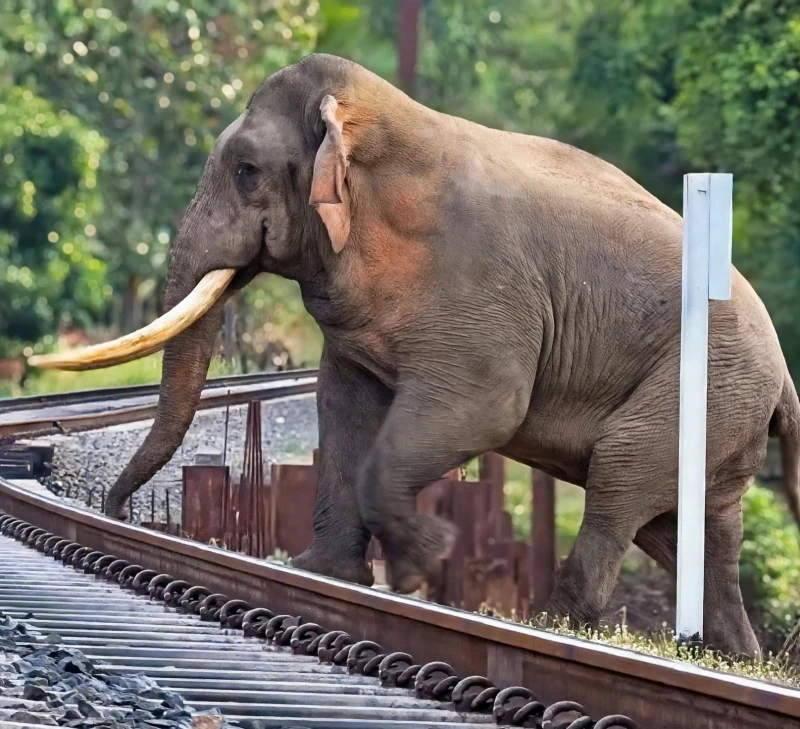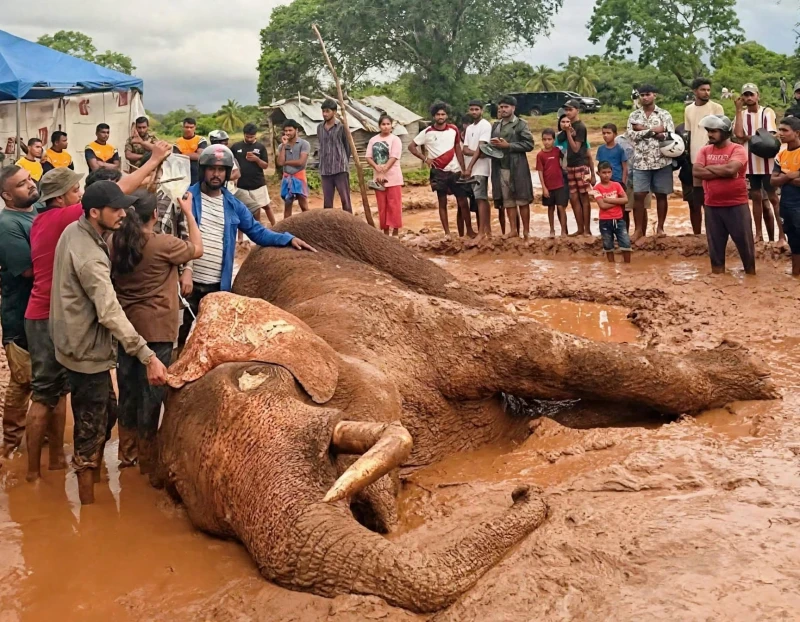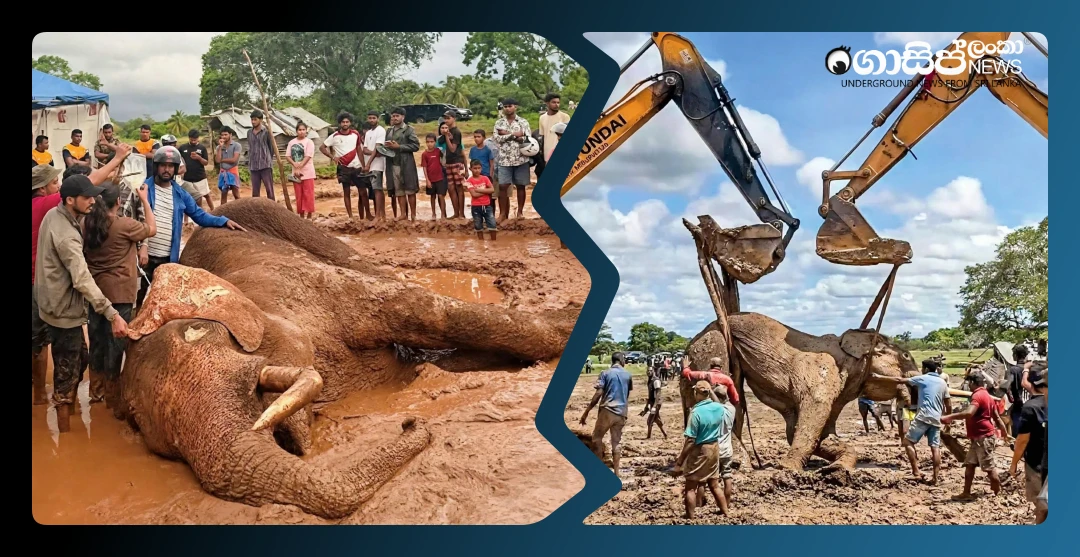
The tragic death of 'Kavanthissa', the elephant king who roamed the Galgamuwa area of Kurunegala District and possessed the largest and longest tusks in the country, has shocked the entire nation. This magnificent elephant, nearly 11 feet tall and approximately fifty years old, fell victim to an inhumane gunshot and breathed its last on the evening of the 16th.
However, marking a turning point in this sorrowful tale, the police and wildlife officials have succeeded in arresting a state official on suspicion of shooting the elephant Kavanthissa.The Ministry of Environment states that the suspect was arrested during a special joint operation launched by the Walana Central Anti-Corruption Strike Force and the Department of Wildlife Conservation. According to police revelations, he is a skills development officer attached to the Ehathuwewa Divisional Secretariat. A 12-bore firearm, a cap gun, and 24 rounds of ammunition were seized from his home. Notably, information has been reported to the police that he had previously shot an elephant named 'Diana'. The suspect is scheduled to be produced before the court, and further investigations are underway by the relevant authorities.
Serious doubts have now arisen as to whether the killing of Kavanthissa, a national treasure, is not an isolated incident but rather the result of an organized conspiracy targeting the wild elephant population. Accordingly, the Secretary to the Ministry of Environment submitted a written request to the Inspector General of Police on the 18th, asking for a swift and formal investigation to determine if a planned network is operating behind the killing of wild elephants in the country. The Ministry emphasizes that operations will continue to be launched to strictly enforce the law against such illegal activities that destroy wildlife resources.
This elephant, named 'Kavanthissa' by Opposition Leader Sajith Premadasa, roamed the areas of Galgamuwa, Siyambalangamuwa, Nanneriya, Orugala, Kudagalviharaya, and Meegalewa in the North Western region for nearly five decades. Tuskers constitute less than two percent of the total elephant population in the North Western wildlife zone. Among these rare giants, Kavanthissa was unique due to his majestic appearance, which was incomparable to any other elephant.
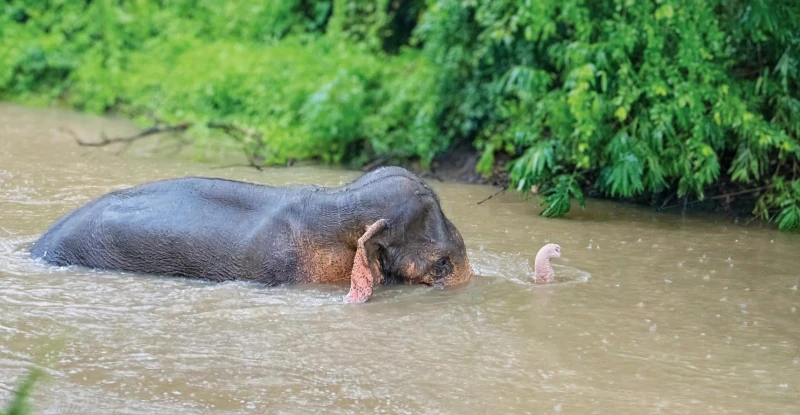
The entire nation's attention was drawn to Kavanthissa when images of him, having been shot about three months prior and moving with difficulty due to an injury, circulated on social media. It was reported to wildlife authorities on September 23rd that Kavanthissa had been shot. A team including veterinary surgeon Mr. Isuru Hewakottage from the North Western wildlife zone searched for the elephant in the Mahagamuwa Reserve on September 24th, but the elephant was only found on the 25th within the Siyambalangamuwa Reservoir Reserve. After five days of treatment from that day, the elephant suddenly disappeared and was found again about three days later, submerged in the Kalankuttiya Canal near Thambuththegama.
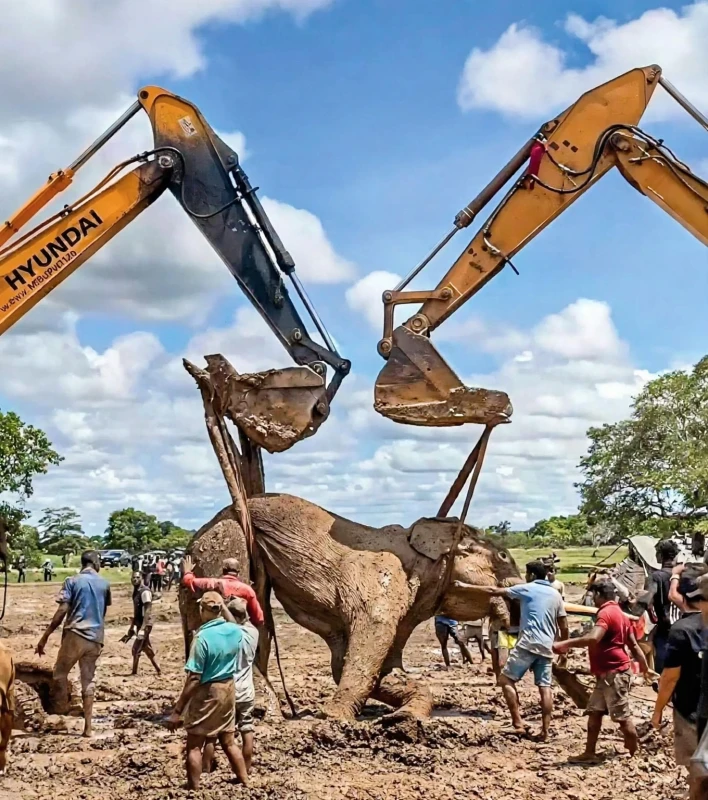
As that area belonged to the Anuradhapura wildlife zone, a team including Anuradhapura veterinary surgeon Mr. Chandana Jayasinghe subsequently took over the treatment. The elephant's continuous presence in the canal severely hindered proper observation of its condition. Gradually, a diarrheal condition developed, and with the liquid stools, Kavanthissa's body became severely weakened. Finally, the elephant returned to Galgamuwa and collapsed in a critical condition in a paddy field near the Unit 4 canal in the Walagamba Grama Niladhari division.
At this moment, veterinary teams were dispatched under the direct supervision of the Minister of Environment, Dr. Dhammika Patabendi, and the Ministry was prepared to bring in even foreign veterinarians if necessary. Prominent businessman Mr. Dudley Sirisena also came forward via social media to bear all expenses for bringing in foreign veterinarians. Despite the heavy rains, veterinarians and security forces made immense efforts to save the elephant.
However, all those efforts proved futile as Kavanthissa closed his eyes forever. With the elephant's death, severe accusations were leveled against the wildlife veterinarians who treated him via social media. Nevertheless, Dr. Sugath Premachandra, President of the Sri Lanka Veterinary Association, strongly refutes these allegations. He pointed out that a team of 19 individuals, led by veterinary surgeons Mr. Isuru and Mr. Pubudu, including 17 wildlife veterinarians, veterinarians from the Department of National Zoological Gardens, and Senior Professor Asoka Dangolla from the University of Peradeniya, treated the animal in the jungle with minimal facilities. He stated that the diarrheal condition that developed while the animal was successfully recovering using the world's most advanced technology was the cause of death, and he urged the public not to inconvenience wildlife veterinarians, who cured nearly 300 wild elephants last year alone, based on false information.
Meanwhile, Minister of Environment Dhammika Patabendi announced that an independent investigation team would be deployed to ascertain whether any error occurred during Kavanthissa's treatment or if anything was intentionally done to harm the animal. The Minister stated that he believes the medical board acted with the utmost dedication, more than for any other elephant, and expressed sorrow that the elephant's life could not be saved. He also emphasized that steps would be taken to further improve the animal treatment program in the future.
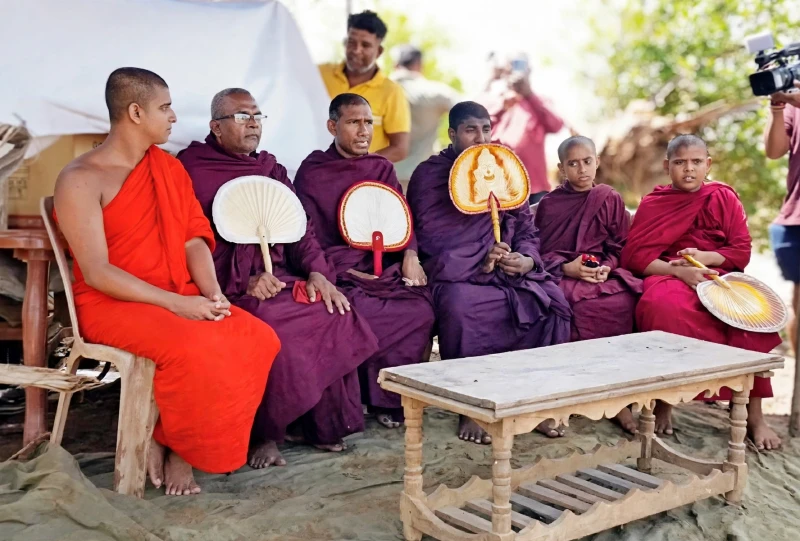
The post-mortem examination of the deceased Kavanthissa was conducted by the Faculty of Veterinary Medicine at the University of Peradeniya, and parts of the body were taken away. Galgamuwa Acting Magistrate Kanchana Hathurusinghe ordered the Department of Wildlife Conservation to submit the relevant report to the court. The elephant's head has been designated for burial on land belonging to the Department of Wildlife, via Range Officer W. Weerakoon of the Meegalewa Wildlife Office, and the case related to this death is scheduled to be called before Galgamuwa Chief Magistrate Ravindra Ranjan Bandara.
Kavanthissa has become another unfortunate victim of the unresolved human-elephant conflict that has spanned nearly four decades. This great resource is being destroyed day by day due to firearms, 'hakka patas' (jaw bombs), and traps used against wild elephants. If officials from top to bottom of the Department of Wildlife Conservation and the general public do not act with sincere intent to protect both elephants and human lives, seeing majestic giants like Kavanthissa on Sri Lankan soil in the future will not be a reality.