
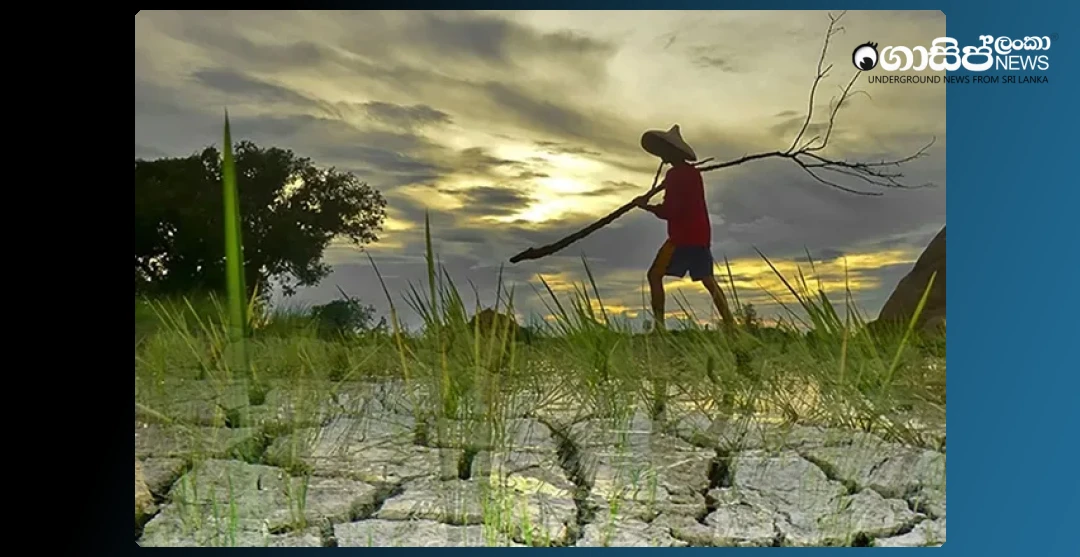
A heated debate arose in Parliament yesterday (22) between the government and the opposition regarding the advice given to farmers and cultivation schedules to face the El Niño climatic conditions. The opposition alleges that some advice from agricultural advisors has contributed to the damage caused to paddy cultivations by the current rainfall, while the government states that the Maha season was started early as a preparatory measure to conserve water for the upcoming Yala season.
Commenting on this, Samagi Jana Balawegaya Member of Parliament Nalin Bandara Jayamaha stated that there are inconsistencies regarding the advice received by farmers on how to respond to the El Niño risk. He pointed out that while agricultural advisors in some areas had given correct advice to farmers, this was not the case in other areas. The MP stated that the crops of some farmers who cultivated their paddy fields based on the advice they received have now been destroyed due to rainfall.
Responding to these allegations, Deputy Minister of Agriculture Namal Karunaratne explained that the government's primary objective was to prevent the release of water from reservoirs for paddy cultivation in January and February of next year. He pointed out that since the main risk under the anticipated climatic conditions is posed to the Yala season, the Maha season was planned in this manner to conserve water for the Yala season and to provide farmers with the opportunity to cultivate other field crops if necessary.
The Deputy Minister emphasized that international El Niño data had been released and that the Ministry of Agriculture acted based on information provided by the Department of Meteorology. He stated that cultivation activities were started two weeks earlier when planning the season, and according to the available data, a severe drought is expected in January and February. He further explained that the rate of water evaporation in the environment has increased by about 20 percent, and under these conditions, it was practically observed how water in reservoirs and wells rapidly evaporated.
Commenting on potential crop damage due to rainfall, Mr. Karunaratne stated that farmers had been informed in advance that rainfall was expected during this period. Farmers were advised to sow the same paddy varieties used in the Yala season so that harvesting could be completed by January and February. However, the Deputy Minister of Agriculture assured the assembly that farmers would be compensated if crop damage occurred due to rainfall.