
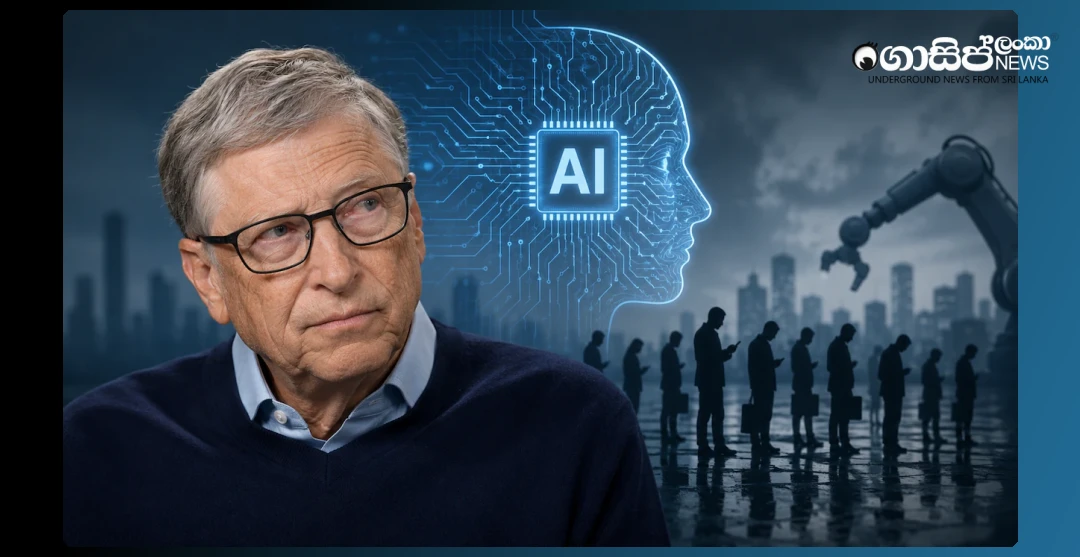
The International Monetary Fund recently described artificial intelligence as a 'slow tsunami' sweeping across the globe, destroying jobs. Further confirming this situation, Microsoft co-founder Bill Gates points out that companies are likely to replace their employees with AI-powered robots to increase profits, which could lead to a massive job loss crisis in the near future.
This is not merely a risk limited to the future. Many white-collar jobs such as data analysis, software development, data entry, and customer service are already collapsing in the face of artificial intelligence. Barclays Bank, providing the most recent example, has already planned to replace five thousand of its employees with artificial intelligence by the end of this year.
Bill Gates believes that this technological advancement is not limited to white-collar jobs. With the widespread use of humanoid robots in the future, even skills based on physical labor, such as those in factories and construction, will be at severe risk. The main reason for this is that businesses are trying to embrace this rapidly developing technology as a strategy to maximize their profits.
Bill Gates has predicted that by the end of the 2020s, artificial intelligence could reach a level of intelligence superior to humans and operate beyond human control. Another strong voice confirming this idea is the warning from British researcher Jacob Coxson, who recently left a major AI company called 'Anthropic'. Stating that this uncontrolled technology could pose a threat to all of humanity, he urges authorities not to displace its power.
However, Mr. Gates anticipates that this technological revolution will bring greater prosperity to the world as a whole. But he emphasizes that governments must urgently intervene through education and training programs to prevent the large-scale job displacement that will arise from it. He also points out that implementing such complex and difficult policies will be a significant challenge for countries during a period of rising geopolitical tensions and intense competitive challenges.
Understanding this situation, Chancellor John Healey expects to introduce a new approach in the upcoming budget that focuses on the risk of job loss and employee security, ensuring employees are not forgotten. Accordingly, while artificial intelligence will be utilized for economic growth, millions of funds are expected to be allocated in the future to protect against its risks.