
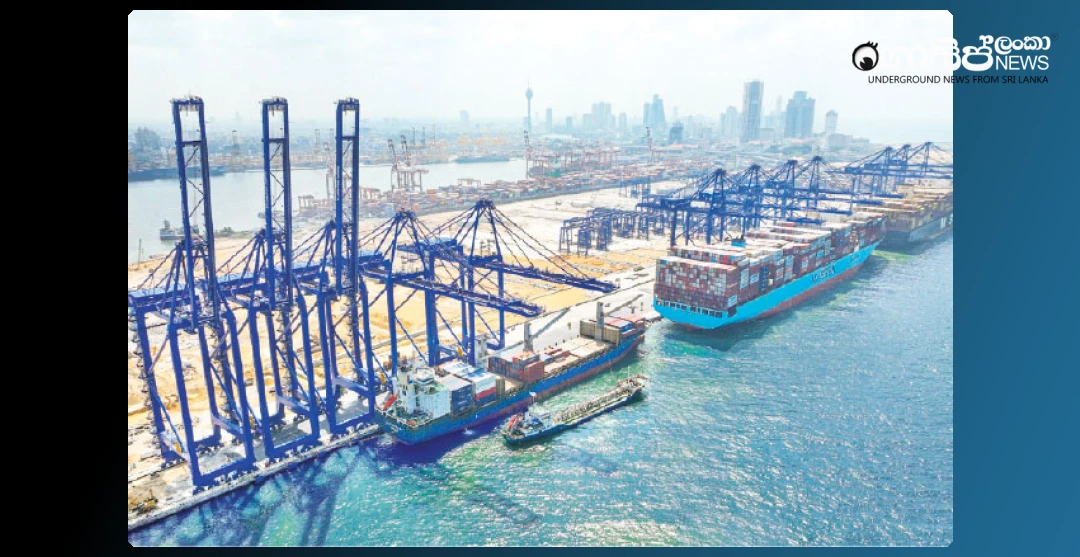
At a critical juncture when Sri Lanka is in dire need of Foreign Direct Investment (FDI), the main investor has suddenly decided to abandon a massive project planned around the Port of Colombo, a major shipping transshipment hub in the region. Accordingly, China Merchants Port Holdings, a Chinese company, has officially withdrawn from the South Asian Commercial and Logistics Hub joint venture, which was slated to be built at a cost of US$392 million.
Sri Lankan observers point out that this is not merely a commercial decision by one party, but that geopolitical factors and domestic economic policies have a direct impact behind it. According to Mr. Maya Majuran, Director of the Belt and Road Initiative Sri Lanka (BRISL), while the withdrawal of this massive company from the project is an unfortunate situation for Sri Lanka, it did not happen due to a single reason. Three main factors have converged to create a level of risk that makes it impossible to proceed with the project.
Firstly, the United States continues to pay close attention to China's involvement in logistics infrastructure centered around the Port of Colombo. This geopolitical situation has increased the political cost of the project. Secondly, the Sri Lankan government's decision to shorten tax holiday periods, in line with the International Monetary Fund's fiscal consolidation program. As a result, the economic benefits expected from this project as a long-term logistics facility have significantly decreased. Thirdly, domestic administrative issues. Slow approval processes, land disputes, judicial challenges, and delays between government agencies have severely increased both the capital cost and the implementation risk of the project.
However, the Sri Lanka Ports Authority indicates that this decision was reached after re-evaluating changes in the project's operating environment, timeline, and commercial aspects of the parties involved. Accordingly, they have determined that terminating the project will be beneficial to all parties.
According to the audited financial statements as of December 31, 2025, the balance of the relevant project company was US$37.14 million (approximately LKR 12.3 billion). Of this, US$26 million (approximately LKR 8.6 billion) was invested by Fortune Centre Group, a company registered in the Virgin Islands. The Sri Lanka Ports Authority and Access Engineering PLC, listed on the Colombo Stock Exchange, had invested US$5.57 million each (approximately LKR 1.84 billion).
According to the new agreement reached, the remaining US$26 million, after deducting taxes and late fees, is to be redistributed among the shareholders. These deductions include a Value Added Tax (VAT) amount of US$3.9 million (approximately LKR 1.29 billion). Accordingly, the Ports Authority will arrange to pay the remaining US$21.905 million (approximately LKR 7.25 billion) as a lump sum within 30 days.
Subsequently, the Ports Authority is to collect US$7.85 million (approximately LKR 2.6 billion) and distribute it according to the percentage of ownership. China Merchants will receive US$20.83 million (approximately LKR 6.89 billion), while Access Engineering and the Ports Authority will each receive US$4.46 million (approximately LKR 1.48 billion). This agreement allows each shareholder to recover approximately 80 percent of their invested capital.
China Merchants is not an unfamiliar investor in Sri Lanka. They currently operate a US$500 million deep-water container terminal within the Port of Colombo and also manage operations at the Hambantota Port. However, analysts emphasize that the abandonment of such a major project at a critical time when the country desperately needs foreign investment does not paint a positive picture of Sri Lanka's overall investment environment.