![Gossip Lanka News [English]](https://blogger.googleusercontent.com/img/a/AVvXsEhYm2aFFq-bIW1nWX-RrqnPFoIsVos6_VCVz8BpLt0QJi55GNXHXC2fugeRvL0qUStEuCfs7Sfu6ZiSlhrkldxfGuE_wzy5gitY6rMZ2KSi8VBbGvkgXLks37RwZV-4-HKbWiNLRxB8C_r1e4z3mpxFTMPDJPEADoG8E-bZteWFipeD5KNGbjvCfqEfKw=s300 "Gossip Lanka News [English]")
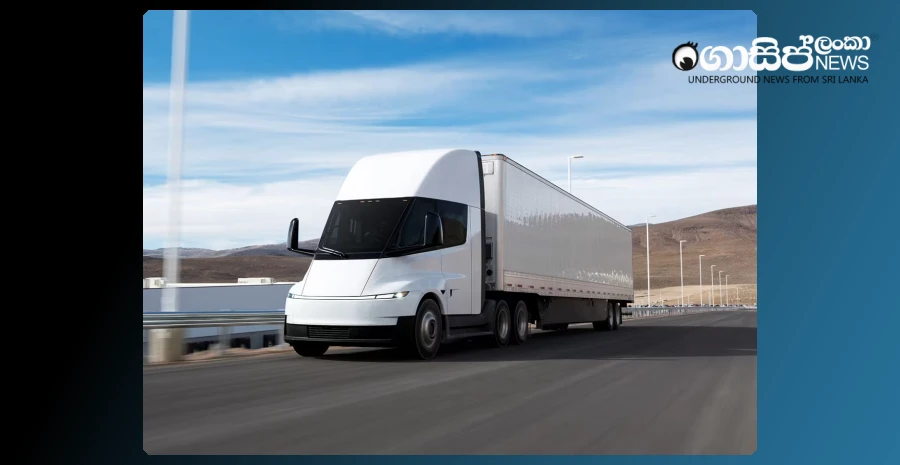
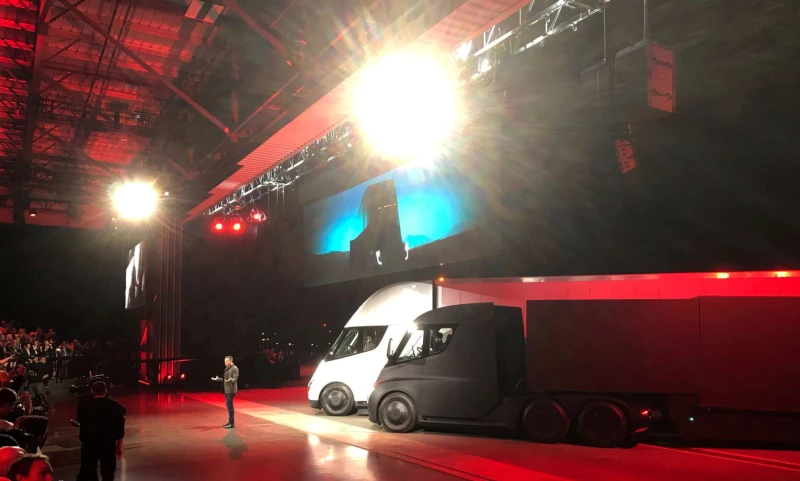
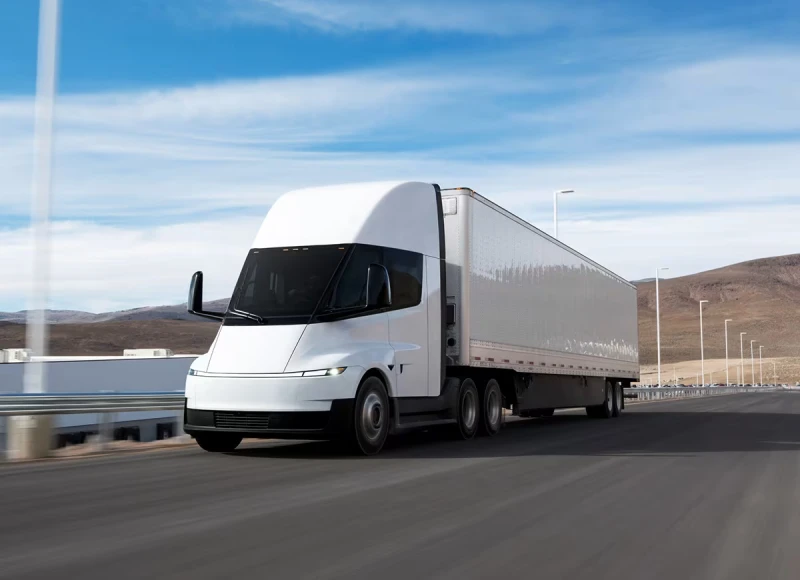
Tesla has officially commenced commercial production and customer deliveries of its first all-electric Class 8 'Semi' trucks. Elon Musk first introduced this vehicle in 2017, and although it was initially planned for market release in 2019, this official launch occurred after a long nine-year delay.
This milestone was marked at a special event held on the night of Thursday, September 24, 2026, at Tesla's newest Semi production facility near Gigafactory Nevada in Sparks, Nevada, USA. This launch is particularly significant as it occurs amidst record-high diesel prices in America, driven by the Iranian war which began in late February 2026.At this launch event, Tesla prominently highlighted the cost disparity between diesel and electric power. Under current market conditions, operating a diesel truck costs approximately $0.80 per mile, whereas a Tesla Semi costs between $0.20 and $0.30 per mile. The average price of a gallon of diesel in the United States had risen to $6.529 by September 21, 2026, according to AAA data, ranging from $6.48-6.50, and exceeding $8 in states like California. This represents a 78-85% increase compared to the $3.52 price in January 2026, and a 55-70% increase since the start of the Iranian conflict. This surge is attributed to disruptions in maritime traffic in the Strait of Hormuz and Russia's ban on diesel exports, leading to a global loss of 1.6 million barrels per day. A Tesla Semi driven 100,000 miles annually can save tens of thousands of dollars per year in fuel and maintenance costs, with its total cost of ownership (TCO) potentially saving $140,000 to $400,000 over several years.
This new production facility in Nevada, spanning between 1.7 and 1.8 million square feet, is dedicated exclusively to Tesla Semi trucks. It is designed to produce 50,000 trucks annually (approximately 1,000 per week), creating about 3,000 jobs. The first vehicle of this model rolled off the production line in April 2026, and Thursday's event marked the official deliveries and the factory's opening. This single production line will produce Standard Range, Long Range, and future European models. Although Tesla has not announced an official production target for 2026, external analysts estimate that between 5,000 and 15,000 vehicles will be delivered this year.
Company CEO Elon Musk did not directly attend the event as he was at a state dinner with President Trump and Chinese Premier Xi Jinping at the White House in Washington that day. However, in a pre-recorded video message, he stated that the Semi is the most fun truck to drive and that its waiting list is very long. The event's operations were handled by Lars Moravy, VP of Vehicle Engineering, and Dan Priestley, Semi Program Lead. Additionally, it was hinted that a preview of the Tesla Roadster model would be provided in the coming week.
The Tesla Semi can operate at the American legal maximum gross vehicle weight of 82,000 pounds (82,000 lb). Its efficiency is rated at 1.7 kWh\/mile, which has improved to 1.55 kWh\/mile in test runs like those by ArcBest. The Standard Range model features a 548 kWh battery with a 325-mile range. The Long Range model is equipped with an 822 kWh battery, offering a 500-mile range at full load (nearly 600 miles with a lighter load of approximately 60,000 lbs). Its technical specifications include three independent rear motors, 'Cybersell' 4680 NCMA battery technology, up to 25 kW ePTO capability for auxiliary power systems, and fast charging up to 60% in 30 minutes (1.2 MW Peak Charge). Although not officially confirmed, prices for the vehicles are reported to be around $260,000 for the Standard model and $290,000 for the Long Range model.
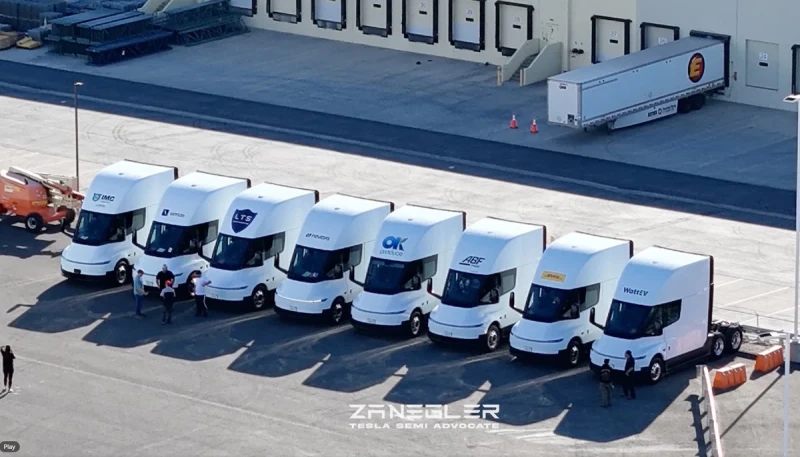
Several leading companies such as PepsiCo, DHL, US Foods, Einride, ABF\/ArcBest, IMC Logistics, WattEV, OK Produce, LTS, Nevoya, and HMD are already acquiring and ordering Tesla Semi trucks. Notably, the ZET SCALE alliance, which includes Microsoft and PepsiCo, has placed a massive order for 2,500 trucks to be delivered within 18 months starting from the third quarter of 2026. Additionally, Tesla plans to use these Semi trucks for its own freight operations and is scheduled to supply vehicles to the European market from this same Nevada factory in 2027.
Tesla is building a network of 'Megacharger' stations with MCS 3.2 connectors capable of delivering up to 1.2 MW of power for use on highways and transportation networks. The company expects to install over 30 locations with more than 200 megawatt-capable charging points by the end of the year. While the ability to achieve a 60% charge within a driver's legal 30-minute break is a significant relief for the transportation sector, expanding charging infrastructure remains a major challenge. Nevertheless, according to 2026 test data, the uptime of these vehicles exceeds 98%, which is clearly higher than the 90-95% for traditional diesel trucks.