![Gossip Lanka News [English]](https://blogger.googleusercontent.com/img/a/AVvXsEhYm2aFFq-bIW1nWX-RrqnPFoIsVos6_VCVz8BpLt0QJi55GNXHXC2fugeRvL0qUStEuCfs7Sfu6ZiSlhrkldxfGuE_wzy5gitY6rMZ2KSi8VBbGvkgXLks37RwZV-4-HKbWiNLRxB8C_r1e4z3mpxFTMPDJPEADoG8E-bZteWFipeD5KNGbjvCfqEfKw=s300 "Gossip Lanka News [English]")
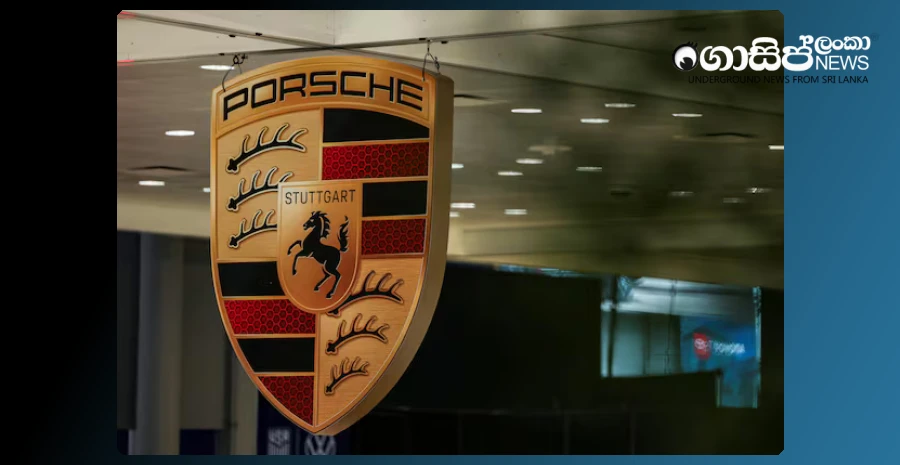
Porsche, the luxury sports car manufacturer that for a long time was the main source of profit for the German Volkswagen Group, has now become the biggest challenge facing the group. Due to declining sales and deteriorating profitability in key markets such as China and the United States, Volkswagen Group's reform program is facing a severe crisis.
Reuters reports that Porsche has become a symbol of the challenges facing the entire Volkswagen Group. The brand has lost its dominance in the Chinese market, which previously yielded high profits, and has also suffered a severe setback due to costly wrong decisions made during the transition to electric vehicles. Although Porsche previously contributed more than 25 percent of the Volkswagen Group's total operating profit, by last year, it had rapidly fallen to less than 5 percent.
The main reasons for this are the decline in demand for foreign luxury cars in China due to intense competition from local brands, and the drop in sales in America due to tariff burdens. In the first half of this year, Porsche vehicle deliveries fell by 16.5 percent (to 122,306 vehicles) compared to the same period last year, and its revenue dropped by 5.1 percent to 17.23 billion Euros (approximately 27 trillion South Korean Won). Ferdinand Dudenhöfer, an automotive industry analyst, points out that the golden age of Porsche as a profit-making machine has now ended.
This setback for Porsche severely impacts the overall performance of the Volkswagen Group. Accordingly, the Volkswagen Group took steps to lower its operating profit margin forecast for this year from the previous range of 4.0 - 5.5 percent to a maximum of 1 percent. This year's operating profit is affected by a one-time cost of approximately 10 billion Euros (approximately 16 trillion Korean Won), of which 6 billion Euros (approximately 9 trillion Korean Won) has been identified as goodwill impairment due to the deterioration of Porsche's profit expectations. Goodwill impairment refers to recording the difference as a loss in accounting when it is determined that the value of goodwill recorded on the balance sheet has decreased.
Last year, Volkswagen also recorded an impairment loss of 2.7 billion Euros (approximately 4 trillion Korean Won) for Porsche's goodwill. The addition of another 6 billion Euros this year indicates that the group's expectations for Porsche's long-term profitability and corporate value have significantly declined. Analysts say that Porsche's failure hinders the group's ability to increase profitability while major reforms are underway. Ingo Speich of Deka, a major Volkswagen shareholder, stated that lowering profit forecasts shortly after agreeing to major reforms is an extremely negative signal, and uncertainty about the future remains high.
Given this situation, Porsche's standing within the group has also deteriorated. Porsche's profit margin, which historically recorded one of the highest in the group, has now fallen below the Volkswagen Group's average, and it lags behind Škoda, a mainstream market brand within the group. Independent automotive analyst Matthias Schmidt says that the Czech Republic's Škoda brand has practically become the new 'Porsche' within the group. Bernstein analysts point out that this severe setback for Porsche will provide CEO Oliver Blume with justification to pursue more stringent cost-cutting reform measures.