![Gossip Lanka News [English]](https://blogger.googleusercontent.com/img/a/AVvXsEhYm2aFFq-bIW1nWX-RrqnPFoIsVos6_VCVz8BpLt0QJi55GNXHXC2fugeRvL0qUStEuCfs7Sfu6ZiSlhrkldxfGuE_wzy5gitY6rMZ2KSi8VBbGvkgXLks37RwZV-4-HKbWiNLRxB8C_r1e4z3mpxFTMPDJPEADoG8E-bZteWFipeD5KNGbjvCfqEfKw=s300 "Gossip Lanka News [English]")
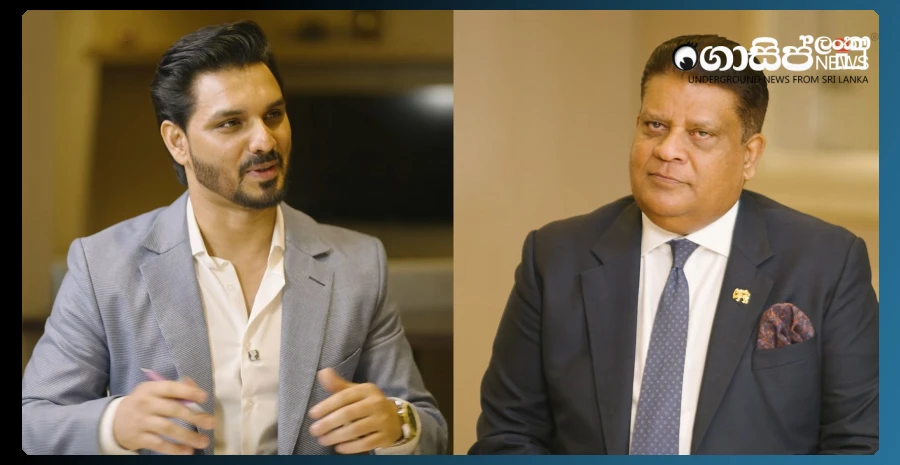
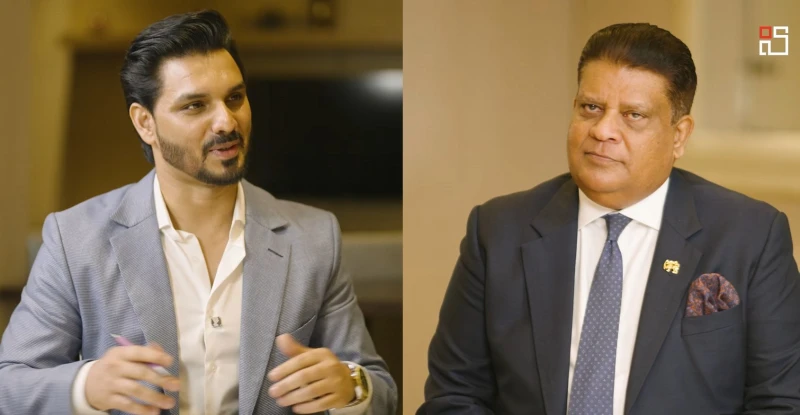
Allegations of alleged wrongdoing during the final stages of the war against the LTTE have been completely rejected by General Shavendra Silva, former Army Commander and Chief of Defence Staff of the Sri Lanka Army.
In an interview with the India-based media organization "Impact Stories," he stated that he is ready to respond to specific allegations against him and questioned the basis for imposing international sanctions on him. He also stated that during the final stages of the war, the Sri Lanka Army fought very professionally and did its utmost to minimize harm to civilians.General Shavendra Silva, who led the Army's 58th Division during the final stages of the war in 2009, said he has consistently sought clarification regarding the sanctions imposed against him. Questioning why the United States and the United Kingdom imposed sanctions on him, he stated that he is not a war criminal but someone who fought for his motherland. The former Army Commander also pointed out that if he had violated military law, he should have been investigated and punished under an appropriate mechanism.
Based on credible information regarding alleged severe human rights violations committed through command responsibility during the final stages of the war, the United States imposed travel bans on Shavendra Silva and his immediate family members in 2020. Subsequently, in 2025, the United Kingdom also imposed sanctions against him based on alleged human rights violations during the conflict.
Rejecting allegations that the military deliberately targeted civilians, Shavendra Silva acknowledged the possibility of civilian deaths during combat. However, he clarified that these deaths were never intentional, and that military plans were formulated to minimize civilian casualties and to avoid striking targets when civilians were observed nearby.
Recalling the final stage of the war, he stated that his 58th Division rescued over 123,000 civilians. He also said that over 75% of the LTTE members who surrendered at the end of the conflict, approximately 12,000, surrendered to his division. These surrendered members were later rehabilitated and reintegrated into society, which, he argued, demonstrates the military's positive approach towards those who laid down their arms.
Referring to a cordon and search operation where a large number of LTTE bodies were found, the former Army Commander revealed that a senior LTTE leader from the Northern region, who had died, was dressed in civilian clothes and carrying a weapon. He pointed out that while such an instance could be interpreted as a civilian death, combatants dressed in civilian clothes could subsequently be included in statistics as civilians killed.
He accused the LTTE of using civilians as human shields, preventing people from leaving their controlled areas, and positioning military targets near civilian locations during the final stages. He also criticized successive Sri Lankan governments for failing to properly present the military's side of the war internationally, which allowed accusations against the Sri Lanka Army to gain traction abroad.
Challenging governments and international organizations accusing the Sri Lanka Army, Shavendra Silva stated that they should directly engage with those accused and present specific incidents for clarification. He declared that if information regarding a specific incident, including a date and time, were provided, he could offer an explanation, and if he had made a mistake, he was ready to admit it.
Rejecting the notion that the LTTE represented the entire Tamil population, he stated that solutions to problems should have been sought politically rather than through armed violence. Citing LTTE killings, suicide attacks, and forced recruitment, he argued that an entire ethnic or religious community should not be blamed for the actions of an organization or its sympathizers. He further added that the military's objective was to defeat the LTTE and liberate the people, not to harass civilians.
Sri Lanka's final military operation remains a subject of intense international scrutiny. Investigations by the United Nations and international human rights organizations have accused both government forces and the LTTE of severe violations of international humanitarian law and human rights law during the final stages of the war. However, Sri Lankan military leaders, including Shavendra Silva, continue to reject allegations that government forces deliberately targeted civilians.