![Gossip Lanka News [English]](https://blogger.googleusercontent.com/img/a/AVvXsEhYm2aFFq-bIW1nWX-RrqnPFoIsVos6_VCVz8BpLt0QJi55GNXHXC2fugeRvL0qUStEuCfs7Sfu6ZiSlhrkldxfGuE_wzy5gitY6rMZ2KSi8VBbGvkgXLks37RwZV-4-HKbWiNLRxB8C_r1e4z3mpxFTMPDJPEADoG8E-bZteWFipeD5KNGbjvCfqEfKw=s300 "Gossip Lanka News [English]")
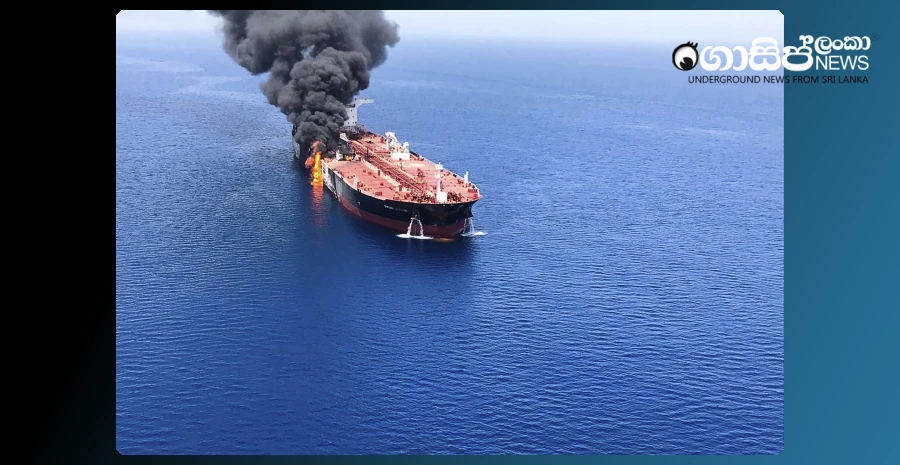
A merchant oil tanker was severely damaged in its engine room and rendered inoperable following an unidentified attack in the waters off the coast of Oman, near the Strait of Hormuz. The UK Maritime Trade Operations (UKMTO) issued an advisory under reference 120-26, classifying the incident as a direct attack, which occurred on August 24, 2026, at 20:25 GMT (approximately 12:57 AM local time on August 25).
The incident occurred in the Gulf of Oman, approximately 9 nautical miles (16.7 kilometers) northeast of Al Shisha, which is part of Oman's Musandam Governorate.Although the attack damaged the ship's engine room, rendering it unable to operate independently and leaving it adrift at sea, all crew members on board are reported to be safe. No specific information regarding environmental damage caused by the incident has been revealed yet, and UKMTO has not officially released details concerning the ship's name, ownership, flag, or direction of travel. However, unconfirmed maritime reports suggest it was an Aframax-type vessel sailing under the Liberian flag, and no party has claimed responsibility for the attack so far. While authorities are investigating the incident, other vessels transiting the region have been advised to proceed with extreme caution and report any suspicious activity.
This incident is reported against the backdrop of the US-Iran military situation, which began after attacks on Iran by the United States and Israel in late February 2026, and ongoing conflicts that have disrupted global energy transport routes for about six months. Iran has taken steps to obstruct the Strait of Hormuz, a narrow passage between 21 and 33 kilometers wide, through which approximately 20 percent of the world's oil and liquefied natural gas (LNG) supply is transported. Iran has been attacking vessels not under its control and transiting along the Omani coast, while the US has also intensified sanctions by blockading Iranian ports since mid-July and banning vessels not subject to Iranian control.
Discussions on temporary traffic relief agreements, prepared with Oman's mediation last June, have also faltered by August, and ship traffic through the Strait of Hormuz has rapidly declined. Throughout 2026, a pattern of unidentified attackers targeting the engine rooms of oil tankers, LNG vessels, and cargo ships in the Strait of Hormuz and Omani waters has been observed. Examples include attacks on several Dynacom vessels in July, attacks on Qatar-linked LNG vessels near Lima, incidents with casualties in August, and the disabling of the Marivex vessel carrying Indian sailors by US forces.
This series of attacks has led to severe economic impacts, such as increased maritime insurance premiums, fluctuations in global oil prices, and the necessity to alter shipping routes. Omani authorities and several other parties are investigating this latest vessel incident, and further details regarding the ship's identity and the nature of the attack are expected to be revealed in the coming hours. The UK Maritime Trade Operations (UKMTO) announced that an unknown attack occurred on an oil tanker transiting off the coast of Oman, near the Strait of Hormuz. This attack, which took place on the night of August 24, 2026, caused severe damage to the ship's engine room, completely disabling its power system. However, all crew members on board are reported to be safe.
According to the emergency warning number 120-26 issued by UKMTO, this incident occurred in the waters nine nautical miles northeast of Ash Shisha in Oman's Musandam Peninsula. Official information regarding the ship's name, country of origin, or its route has not yet been released. No party has claimed responsibility for the attack so far, and investigations are underway to determine if any damage or oil spill has occurred to the marine environment from the vessel.
This attack takes place against the backdrop of a highly volatile situation that has persisted for nearly six months across the Strait of Hormuz, one of the world's most critical energy transport routes, amidst the American-Iranian crisis that began in late February 2026. Both sides are making strenuous efforts to assert their influence over this narrow shipping lane, through which approximately twenty percent of the world's oil supply passes, severely disrupting normal merchant vessel traffic.
This is considered another instance in a pattern of unknown missile or drone attacks on oil, natural gas (LNG), and cargo vessels transiting along the southern shipping lane off the Omani coast. Numerous such attacks have been reported in recent months, leading to increased insurance costs in the maritime sector and creating instability in the global fuel market. Omani authorities and maritime security agencies are currently conducting further investigations into the incident, and all vessels transiting the region have been advised to remain highly vigilant.