![Gossip Lanka News [English]](https://blogger.googleusercontent.com/img/a/AVvXsEhYm2aFFq-bIW1nWX-RrqnPFoIsVos6_VCVz8BpLt0QJi55GNXHXC2fugeRvL0qUStEuCfs7Sfu6ZiSlhrkldxfGuE_wzy5gitY6rMZ2KSi8VBbGvkgXLks37RwZV-4-HKbWiNLRxB8C_r1e4z3mpxFTMPDJPEADoG8E-bZteWFipeD5KNGbjvCfqEfKw=s300 "Gossip Lanka News [English]")
The Nepalese government, which initially rejected the arrival of foreign search and rescue teams in the face of the devastating flood disaster near the Nepal-China border, has changed its decision and allowed expert teams to enter the country following diplomatic pressure at the international level. Balen Shah's government has taken this step after considering requests from countries where many of its citizens are missing.
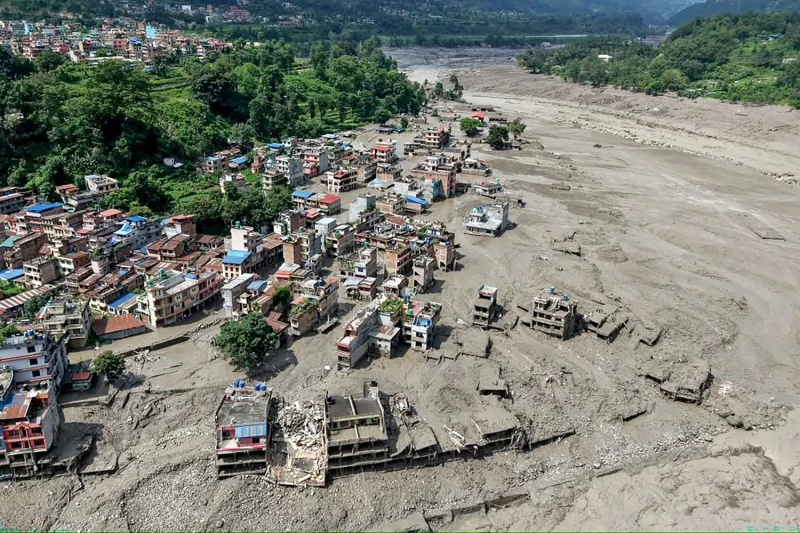
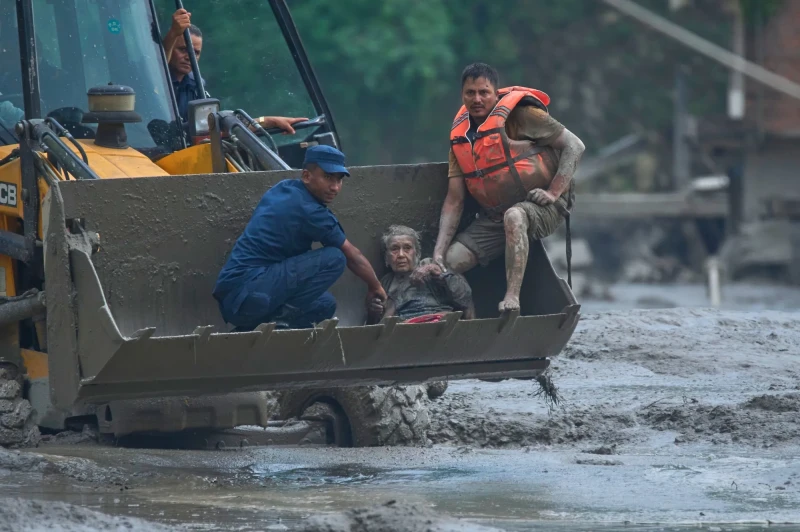
This flash flood occurred on August 26, when a glacier collapse or a flow of ice, mud, and rocks in the Tibet region caused the Bhotekoshi and Trishuli river systems in Rasuwa district to overflow. This completely submerged many villages in Nepal's Rasuwa, Nuwakot, Dhading, Gorkha, and Chitwan districts, destroying several hydropower projects, bridges, and roads. According to the Red Cross, over 90,000 people have been affected by the disaster, and reports received by August 29 indicate that between 579 and 584 people have died in Nepal, along with several in Tibet. Additionally, between 1,900 and 2,500 people are missing, including 517 foreigners (288 of whom are Indians), while the number of people rescued so far exceeds 4,000.
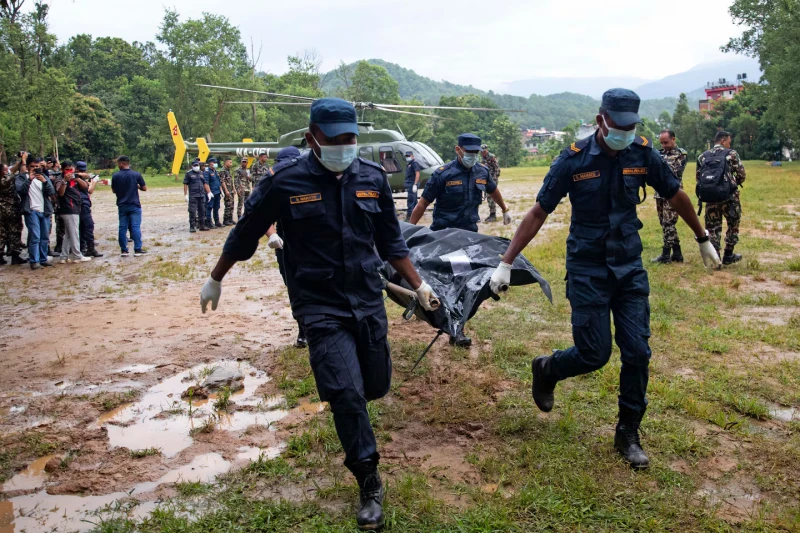
Immediately after the disaster, the Kathmandu administration stated that the assistance of external search and rescue teams was not required as domestic security forces had the capacity to manage operations. On August 28, Nepal's Foreign Ministry spokesperson Lok Bahadur Chhetri stated that such help was unnecessary at the moment as the army, police, and armed police were conducting operations. Accordingly, Nepal initially rejected search teams offered by China, the USA, Britain, Japan, South Korea, Sri Lanka, and Bangladesh, including India's NDRF teams.
Analysts point out that the Nepalese army's thorough knowledge of the complex geographical conditions of the region, coordination problems caused by the excessive influx of foreign teams during the 2015 Gorkha earthquake, and the sensitivity of the area near the Chinese border were reasons for this rejection. However, Nepal did not completely reject financial and material aid and worked to obtain financial assistance through the Prime Minister's Relief Fund, as well as specialized support such as Bailey bridges, medical teams, and rescue operations received from India.
With pressure from foreign embassies indicating that their citizens were among the missing, Nepal changed its policy by the evening of August 28 and August 29. Accordingly, with the approval of the Inter-Ministerial Coordination Committee, experts from India, China, Australia, and South Korea have been allowed to enter the country for tunnel rescues, DNA testing, and forensic identification. Foreign Minister Shishir Khanal clarified that international aid was not entirely rejected, but priority was given to domestic forces in the initial stages.