![Gossip Lanka News [English]](https://blogger.googleusercontent.com/img/a/AVvXsEhYm2aFFq-bIW1nWX-RrqnPFoIsVos6_VCVz8BpLt0QJi55GNXHXC2fugeRvL0qUStEuCfs7Sfu6ZiSlhrkldxfGuE_wzy5gitY6rMZ2KSi8VBbGvkgXLks37RwZV-4-HKbWiNLRxB8C_r1e4z3mpxFTMPDJPEADoG8E-bZteWFipeD5KNGbjvCfqEfKw=s300 "Gossip Lanka News [English]")
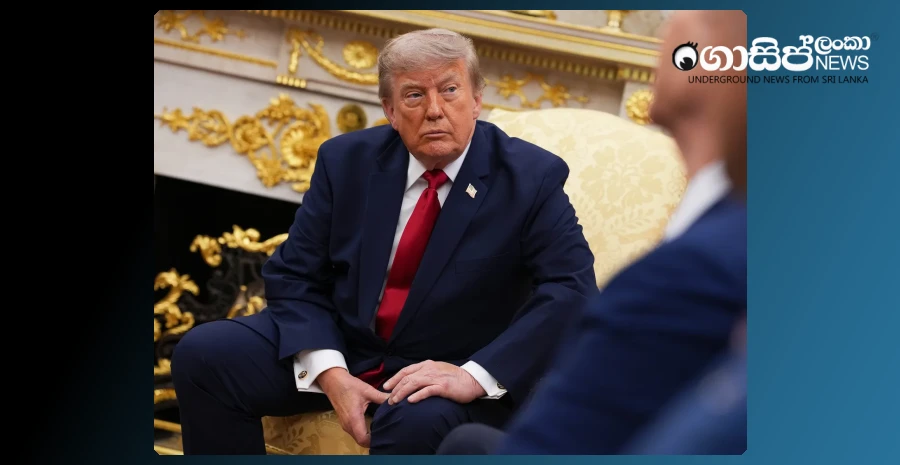
Lawrence D. Freedman, Emeritus Professor of War Studies at King's College London, says that the American president is facing a serious risk of another 'forever war'.
According to him, leaders who command powerful armies often tend to fall into the 'short war illusion'. They think they can win quickly and will not face adverse consequences. He further emphasizes that Russian President Vladimir Putin's actions in Ukraine, as well as American President Trump's handling of Iran, have failed to understand the limitations of military power, thereby creating a situation where objectives cannot be achieved without a long-term struggle.It appears that even highly advanced militaries are insufficient if there is no proper strategy to translate battlefield supremacy into political and diplomatic successes. The 1991 Persian Gulf War was successful because President George H.W. Bush had a limited political objective of expelling Saddam Hussein from Kuwait. However, the subsequent conflicts in Iraq and Afghanistan turned into long-term failures. Currently, the President faces the challenge of achieving victory by using only politically more convenient air and naval power, without deploying American ground troops within Iranian territory.
Professor Vali Nasr of Johns Hopkins University in Washington points out that the current situation is just another phase in a decades-long conflict that began after the collapse of the Iranian Shah's rule in 1979 and the American hostage-taking. Mr. Trump's withdrawal from the 2015 Iran nuclear deal in 2018 was a culmination of this. Furthermore, Aaron David Miller of the Carnegie Endowment states that the President has also intervened in another parallel 'endless war' between Israel and Iran, occurring through Iranian proxy groups in Lebanon, Palestine, and Yemen, influenced by Israel.
The conflict with Iran is completely different in nature from the wars America fought with countries like Vietnam, Iraq, or Afghanistan. Iran has the ability to exert severe economic pressure on the United States by blocking traffic through the Strait of Hormuz. As Susan Maloney, Director of Foreign Policy at the Brookings Institution in Washington, points out, due to America's misunderstandings about the balance of power in this region, the situation has now completely changed, and the era of free passage through the Strait of Hormuz may largely be over.
A negotiated solution to this crisis still appears to be a distant prospect. Analyst Mr. Weiss points out that both parties have failed to reach even a minimal framework agreement, deferring issues that could be resolved in the future. Although Washington's risk in this war is smaller compared to Iran, and the American side's momentum is slowing, Iran is prepared to act with the same intensity, thus creating the foundation for this to continue as another intermittent conflict and an endless war.