![Gossip Lanka News [English]](https://blogger.googleusercontent.com/img/a/AVvXsEhYm2aFFq-bIW1nWX-RrqnPFoIsVos6_VCVz8BpLt0QJi55GNXHXC2fugeRvL0qUStEuCfs7Sfu6ZiSlhrkldxfGuE_wzy5gitY6rMZ2KSi8VBbGvkgXLks37RwZV-4-HKbWiNLRxB8C_r1e4z3mpxFTMPDJPEADoG8E-bZteWFipeD5KNGbjvCfqEfKw=s300 "Gossip Lanka News [English]")
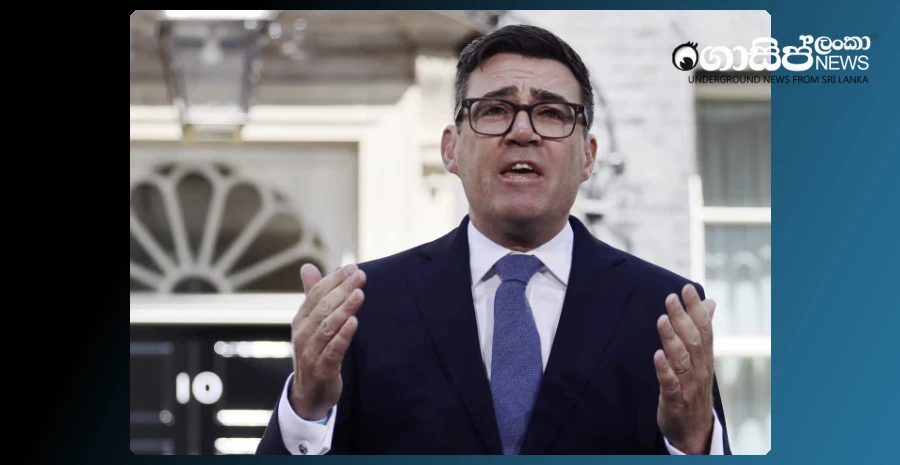
Mr. Andy Burnham, who was appointed as the new Prime Minister of the United Kingdom, also faces the same immense economic challenges that his predecessors had to confront, and his primary goal is to accelerate Britain's economic growth once again. Since the 2008 financial crisis, the country's economy has been in a very slow state, and currently, the per capita gross domestic product has grown by only about 7% compared to early 2008.Amidst problems such as a heavy public debt burden, high inflation, and minimal growth in productivity, there is a strong need to take urgent steps to reduce the cost of living for the people. The decision to leave the European Union about a decade ago, as well as minimal public investment and consumers' tendency to save rather than spend, have also strongly contributed to this economic downturn.
Mr. Burnham's main strategy for overcoming this crisis is to grant economic decision-making power to local officials, in other words, to decentralize administrative power. Having served as the Mayor of Greater Manchester for nearly a decade, he hopes to replicate the successful economic model he implemented there, which boosted productivity and investment, across the entire country. He believes that by shifting economic policy-making power, which has been concentrated solely in London, to the regional level, Britain's existing regional disparities can be overcome. Scholars such as Professor Diane Coyle of Public Policy at Cambridge University and Professor Neil Lee of Economic Geography at the London School of Economics also point out that the excessive concentration of power in London has severely hindered economic growth in other parts of the country.
However, the new government will also have to implement its policies under strict financial constraints. Due to the promise not to raise the three main types of taxes and the strict rules imposed on public debt and expenditure, economic analysts believe that the new Prime Minister will have to build strong partnerships between the government and companies instead of large-scale nationalizations. He aims to implement a ten-year plan focused on reducing the cost of water, housing, energy, and transport services by bringing them under public control. As a preliminary step, it has been announced that the Value Added Tax (VAT) on electricity will be removed, which will allow an average family to save approximately $60 this year.