![Gossip Lanka News [English]](https://blogger.googleusercontent.com/img/a/AVvXsEhYm2aFFq-bIW1nWX-RrqnPFoIsVos6_VCVz8BpLt0QJi55GNXHXC2fugeRvL0qUStEuCfs7Sfu6ZiSlhrkldxfGuE_wzy5gitY6rMZ2KSi8VBbGvkgXLks37RwZV-4-HKbWiNLRxB8C_r1e4z3mpxFTMPDJPEADoG8E-bZteWFipeD5KNGbjvCfqEfKw=s300 "Gossip Lanka News [English]")
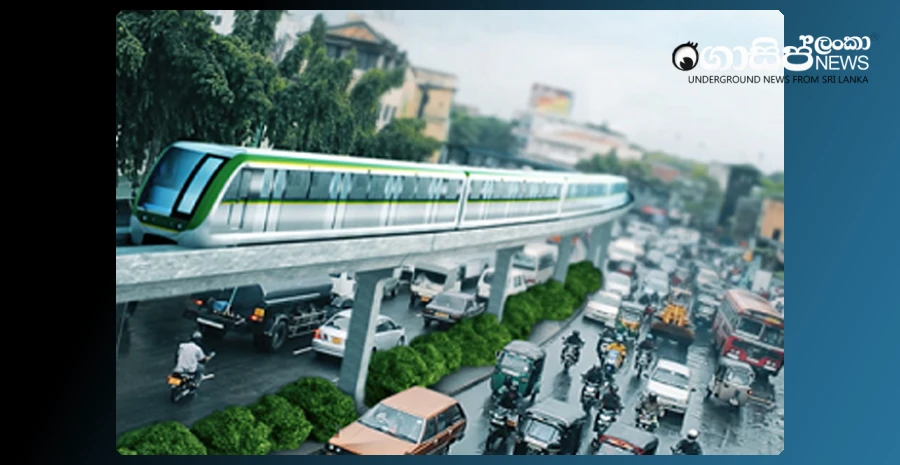
Minister of Transport and Highways, Mr. Bimal Rathnayake, states that a sum of nearly Rs. 840 million has been paid as compensation to the relevant Japanese company for the Colombo Light Rail Transit (LRT) project, which was canceled during the previous Rajapaksa government, and that the company is currently demanding interest payments related to it. The Minister made this statement in response to a question raised by Samagi Jana Balawegaya (SJB) Member of Parliament, Mr. Chaminda Wijesiri.
It was revealed that a total of JPY 189 million, USD 1.031 million, and approximately LKR 110 million were paid as compensation on one occasion. The relevant Japanese company is currently demanding further interest, and that requested amount has not yet been paid, and a committee has been appointed to investigate the matter, the Minister further stated. Although the total loss incurred due to the cancellation of the project has not been calculated, only information regarding the compensation paid in 2024 has been recorded.
After identifying that this project was unsuitable for Colombo's urban transport infrastructure, the then-government decided to cancel it. During a discussion held on September 18, 2020, the Director-General of the Department of External Resources pointed out that this project was not cost-beneficial. Furthermore, a letter issued by the then-President also identified it as a high-cost, ineffective project. A cabinet paper submitted by Mr. Mahinda Rajapaksa, who was then the Minister of Urban Development, indicated that this project was loss-making, and Mr. Bimal Rathnayake stated that due to the project's cancellation midway, there was no opportunity for corruption or fraud.
The Auditor General has submitted nine recommendations regarding this project, and has indicated that the decision to halt the project should be re-evaluated and either restarted, or its uneconomical nature should be transformed into an economically advantageous situation. However, the Auditor General has not directly proposed restarting it, and the current government has also not conducted a re-evaluation or made a new decision regarding this matter.
In the early 2010s, the need for a new public transport system, in addition to buses and traditional train services, was identified as a solution to the severe traffic congestion in Colombo, and this Light Rail Transit project was proposed as a solution. Its main objectives were to reduce traffic congestion in Colombo, decrease the use of private vehicles, control air pollution, save travel time, and support the economic development of the Western Province.
For this project, estimated at a total cost of USD 2.3 billion, the Japan International Cooperation Agency (JICA) had agreed to provide a concessional loan of USD 1.4 billion. This loan, to be repaid over a period of 40 years, included a grace period of 12 years, during which Sri Lanka was not required to make any payments. On May 23, 2019, the agreement was signed by Dr. R.H.S. Samaratunga, then Secretary to the Treasury, on behalf of Sri Lanka, and by Akira Sugiyama, then Japanese Ambassador to Sri Lanka, and Fusato Tanaka, then Chief Representative of the Japan International Cooperation Agency (JICA) in Sri Lanka, on behalf of Japan.