![Gossip Lanka News [English]](https://blogger.googleusercontent.com/img/a/AVvXsEhYm2aFFq-bIW1nWX-RrqnPFoIsVos6_VCVz8BpLt0QJi55GNXHXC2fugeRvL0qUStEuCfs7Sfu6ZiSlhrkldxfGuE_wzy5gitY6rMZ2KSi8VBbGvkgXLks37RwZV-4-HKbWiNLRxB8C_r1e4z3mpxFTMPDJPEADoG8E-bZteWFipeD5KNGbjvCfqEfKw=s300 "Gossip Lanka News [English]")
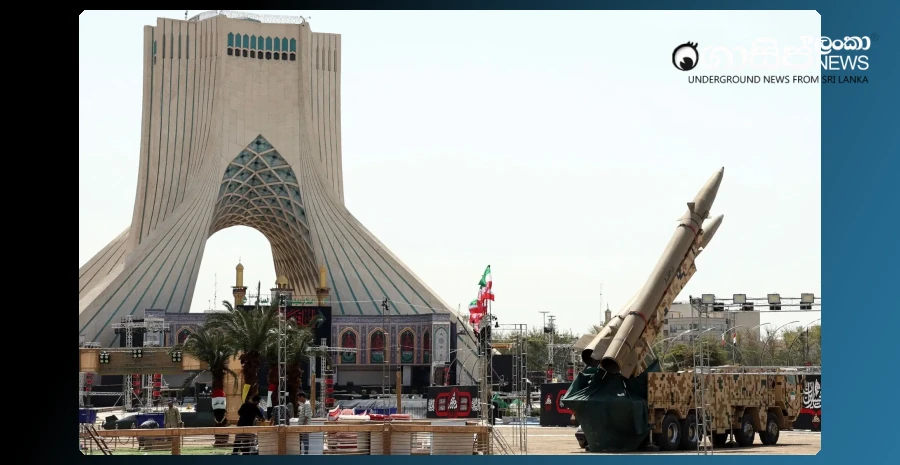
Iran has stated that it will stop retaliating as long as the United States suspends its bombing operations. On July 26, 2026, a senior Iranian official made these comments to Reuters, and the decision has also been confirmed by Iranian military statements.
After a 13-day continuous series of night airstrikes that ended late on July 24, the United States temporarily halted its operations, and no American attacks were reported on July 25 and 26. Iran, which had been retaliating against targets including desalination plants in neighboring Gulf countries where American bases are located, has also taken steps to suspend its attacks for two days in parallel.The unnamed Iranian official stated that if America stops its attacks, Iran will also halt operations, and 'attack for attack' is their stance. He further added that there is more suspicion than trust regarding this temporary halt in attacks, and it is considered a tactical pause rather than a sincere step. Meanwhile, military spokesman Brigadier General Mohammad Akraminia, speaking on Iranian state television, confirmed that Iran had suspended its retaliatory attacks because the Americans had stopped their attacks. However, he also warned that if the United States resumes attacks, the crisis would further expand geographically. US Ambassador to the United Nations, Mike Waltz, stated that President Donald Trump is allowing some room for negotiations, but America is ready to fight at any moment.
It is reported that several military and diplomatic factors have influenced the cessation of American attacks. Admiral Brad Cooper, Commander of Central Command (CENTCOM), has indicated that most of the intended targets have been achieved in the two-week operations around the Strait of Hormuz, and there is no point in continuing limited operations without escalating to a large-scale war. Furthermore, military chiefs have expressed concern about the depletion of missile defense systems and air defense ammunition stocks, and Vice President J.D. Vance has also shown some hesitation regarding this. However, Trump and Waltz have stated that there are sufficient ammunition stocks. In addition, an Omani delegation is in Tehran, and Oman, Pakistan, and Qatar are mediating diplomatic discussions to manage affairs in the Strait of Hormuz.
This armed conflict began on February 28, 2026, with a series of attacks launched jointly by the United States and Israel targeting Iran's nuclear program and ballistic missiles. In response, Iran launched missile and drone attacks across the region and took steps to close the Strait of Hormuz, through which about 20 percent of the world's oil transport occurs. As a result, the price of crude oil in the world market exceeded the $100 per barrel mark. Subsequently, the readiness broke down on April 8, and on June 17, a memorandum of understanding was reached with a 60-day negotiation period for nuclear issues and reopening the Strait. However, due to subsequent breaches of agreement and attacks on ships, America resumed night airstrikes in mid-July.
In this situation, Israeli Prime Minister Benjamin Netanyahu has stated that the war will not end until the Iranian regime collapses or they abandon their nuclear program. Netanyahu, who is scheduled to meet Trump in the future, has warned that Israel will respond strongly to any attack against it. Currently, the naval pressure imposed by America against Iran remains in effect, and ship traffic through the Strait of Hormuz is at a much lower level than normal. Although both sides have unofficially adopted a policy of halting attacks, Iran is prepared to launch a widespread retaliation if conflicts resume, and the global energy market and regional stability remain in an uncertain state.