![Gossip Lanka News [English]](https://blogger.googleusercontent.com/img/a/AVvXsEhYm2aFFq-bIW1nWX-RrqnPFoIsVos6_VCVz8BpLt0QJi55GNXHXC2fugeRvL0qUStEuCfs7Sfu6ZiSlhrkldxfGuE_wzy5gitY6rMZ2KSi8VBbGvkgXLks37RwZV-4-HKbWiNLRxB8C_r1e4z3mpxFTMPDJPEADoG8E-bZteWFipeD5KNGbjvCfqEfKw=s300 "Gossip Lanka News [English]")
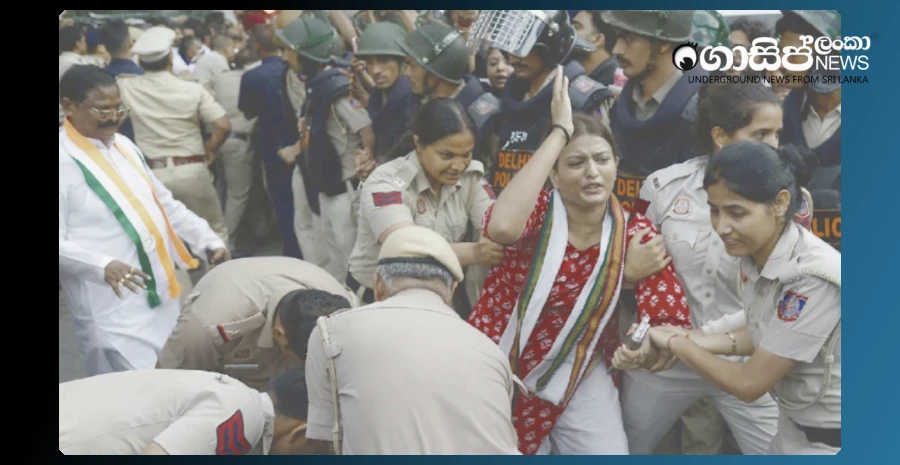
Massive student protests that recently erupted in India over the leakage of examination question papers have opened a new political path for the country's opposition political parties. These protests, primarily initiated by a youth organization called the 'Cockroach Janatha Pakshaya' (CJP), have further intensified with police suppression.
Many were injured when authorities used tear gas and batons against students marching towards Parliament, after which the organization openly sought support from opposition lawmakers for their struggle.Responding to this call, key opposition leaders quickly came forward to support the youth. Prominent figures like Rahul Gandhi and Priyanka Gandhi Vadra joined these protests, specifically demanding the resignation of Education Minister Dharmendra Pradhan. Rahul Gandhi was arrested by the police during a protest near Prime Minister Narendra Modi's residence. Earlier, Gandhi, who severely criticized the government, stated that the attack on students was an attack on all Indian families and that the Prime Minister could not evade responsibility. Although the Prime Minister has not publicly commented on this, he has told a cabinet minister that he will take all possible steps for the welfare of the students.
With more than half of India's 1.42 billion population being under the age of 30, this movement carries significant political weight. There is growing frustration among the youth regarding unemployment and corruption. For the opposition, which has been struggling against Modi's ruling alliance since 2014, this massive public mobilization, involving tens of thousands of people, has created a critical opportunity. Although the next national parliamentary election is scheduled for 2029, elections in key states like Uttar Pradesh and Punjab are approaching next year, and aligning with the youth population is expected to give them a clear electoral advantage.
However, political analysts warn about potential risks to the students' core objectives. While the CJP organization welcomed the political and material support from major parties, experts point out that their fundamental demands regarding exam integrity and job creation could be overshadowed by broader political agendas. Analyst Sandeep Shastri stated that with major political parties attempting to capitalize on this situation for their survival and prominence, there is a strong probability that attention will be diverted from the real issues driving the movement and from the leaders who initiated it.