![Gossip Lanka News [English]](https://blogger.googleusercontent.com/img/a/AVvXsEhYm2aFFq-bIW1nWX-RrqnPFoIsVos6_VCVz8BpLt0QJi55GNXHXC2fugeRvL0qUStEuCfs7Sfu6ZiSlhrkldxfGuE_wzy5gitY6rMZ2KSi8VBbGvkgXLks37RwZV-4-HKbWiNLRxB8C_r1e4z3mpxFTMPDJPEADoG8E-bZteWFipeD5KNGbjvCfqEfKw=s300 "Gossip Lanka News [English]")
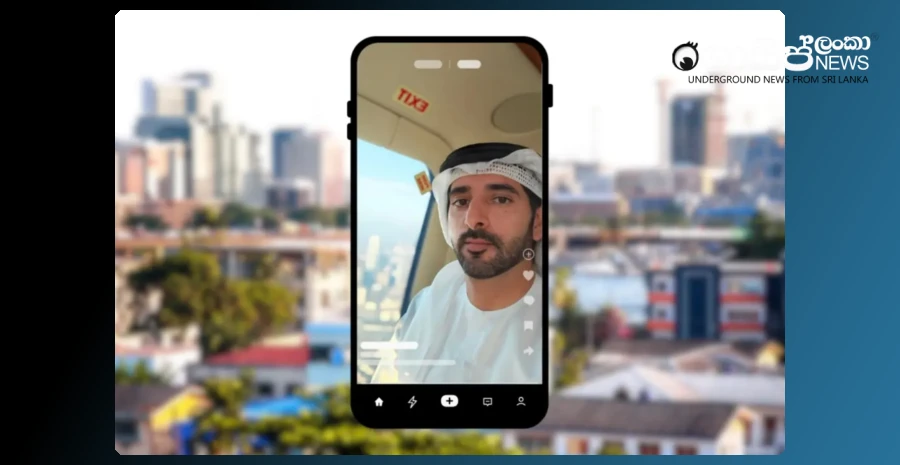
It has been revealed that a large-scale scam is operating, using artificial intelligence (AI) to create fake images (Deepfakes) of the Crown Prince of Dubai, entangling individuals worldwide in online romantic relationships and defrauding them of money. Scammers deceive people by speaking affectionately through live video calls, and researchers have identified that Nigerian-centered criminal gangs are operating behind this process.
A woman named Maria, who fell victim to this scam, had a romantic relationship with an individual posing as Prince Hamdan, also known as 'Fazza'. This person, whom she met on a dating website, later attracted her intensely by sending her affectionate messages day and night via messaging apps. During a particular WhatsApp video call, although the lip movements of the person, who closely resembled the Prince, matched the words, it was later revealed that his voice was not the real Prince's voice.
Maria, who failed to recognize the fraudulent nature of this in the early stages, lost all her year's savings. The scammer defrauded her of 100,000 pesos (approximately US$1,625) by promising to arrange a marriage certificate and a 'royal membership card' required to get a job in Dubai. However, she became suspicious when he asked for another 60,000 pesos (approximately US$974) to book a room, claiming he wanted to meet her at a hotel. She later checked his Facebook account, realized it was operating from Nigeria, and ended the relationship, after which the account was also removed from the internet.
This fraudulent operation, which uses the name and image of the Prince of Dubai, is widespread. Scammers use the real photos, videos, and even poems written by this royal, who has over 17 million followers on Instagram, to deceive their victims. Various Facebook groups posing as the Prince direct users to WhatsApp or Telegram conversations, where realistic fake photos are displayed showing the Prince kneeling and offering a ring, or extending a red rose. Although some users issue warnings, stating these are scams, many others fall for them and respond affectionately.
In light of this situation, various groups have emerged on social media to educate people on how to avoid falling victim to scammers, and a petition has been organized online requesting Sheikh Hamdan's staff to inform the public about such scammers who use Dubai phone numbers to ask for money or assistance. Since scammers obtain money through bank accounts in countries other than where the victims reside, or via cryptocurrency, tracing these transactions has become extremely difficult. However, Dubai authorities have declined to comment on this matter.
The Prince of Dubai is not the only public figure to fall victim to such scammers; last year, French authorities launched an investigation into a group that defrauded a woman of 830,000 Euros (approximately US$945,000) by posing as famous Hollywood actor Brad Pitt. According to estimates by the Global Anti-Scam Alliance, consumers worldwide suffered a massive financial loss of US$442 billion last year alone due to various online scams, including such romance scams.
Although it is unclear what type of artificial intelligence tools were used for the video conversations with Maria, technologies that can instantly change faces and control facial expressions in real-time are widely available online today. Mr. David Rand of Cornell University states that as this technology develops very rapidly, real-time video deepfakes will become even more realistic in the future. He also warns that this will fundamentally make it impossible to distinguish whether any video conversation conducted without a face-to-face meeting is real or not.