![Gossip Lanka News [English]](https://blogger.googleusercontent.com/img/a/AVvXsEhYm2aFFq-bIW1nWX-RrqnPFoIsVos6_VCVz8BpLt0QJi55GNXHXC2fugeRvL0qUStEuCfs7Sfu6ZiSlhrkldxfGuE_wzy5gitY6rMZ2KSi8VBbGvkgXLks37RwZV-4-HKbWiNLRxB8C_r1e4z3mpxFTMPDJPEADoG8E-bZteWFipeD5KNGbjvCfqEfKw=s300 "Gossip Lanka News [English]")
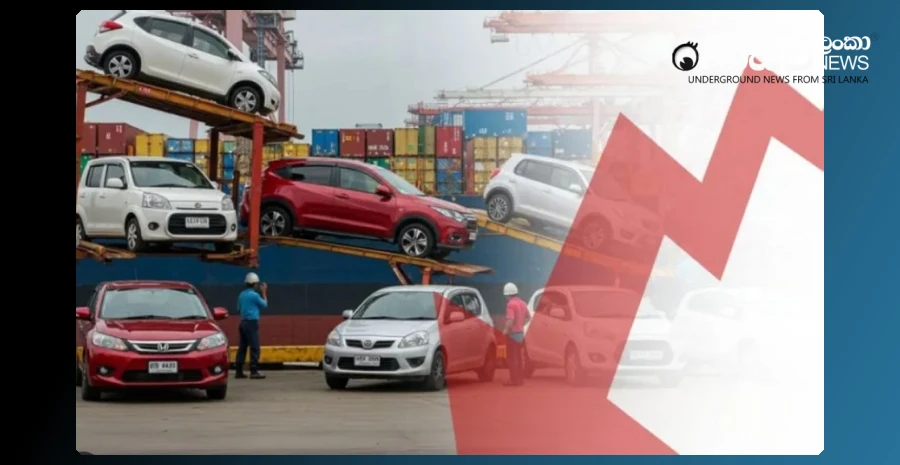
With the Central Bank of Sri Lanka taking steps to reduce the maximum loan limit for purchasing a private vehicle to 40% of the vehicle's value, vehicle importers state that the dream of owning a vehicle for the average citizen in the country has been severely jeopardized. They point out that amidst current economic difficulties, where the standard of living has not yet risen to the expected level, this new regulation will cause severe hardship to the general public.
For salaried employees and middle-class individuals, purchasing a vehicle outright with cash under current income conditions is not practical, and until now, they have fulfilled such needs solely through loan facilities provided by financial institutions.Having to find a 60% down payment from their own funds for the total value of a vehicle is an unbearable burden for the general public, and those in the industry state that only a very limited number of people in the country purchase vehicles with outright cash. Although importers bring vehicles into the country at a high cost, the government's restriction on the public's purchasing power has created a risk of a severe collapse for the entire vehicle industry in the future. In light of this situation, vehicle imports may significantly decrease in the coming period, and with limited supply, vehicle prices in the market are expected to rise further. Notably, prices of commonly used vehicles in the local market, such as Suzuki Alto and Wagon R, have already increased by 8 to 10 lakh rupees, and it is noteworthy that such vehicles for personal use have the highest demand in Sri Lanka.
Commenting on this, Mr. Arosha Rodrigo, Vice President of the Vehicle Importers' Association of Sri Lanka, states that the Central Bank's decision to impose a 60% loan limit for commercial vehicles and a 40% limit for private vehicles directly hinders the public's purchasing power. He points out that the primary objective of this Central Bank measure is to control vehicle imports into the country, and by limiting the ability to sell, vehicle sales will significantly decline. He also states that it is contradictory for the government to allow vehicle imports while restricting opportunities to sell them, and that a proper decision on this matter should have been made much earlier.
Although it is believed that these new loan limits will not directly impact the used vehicle market, the Vice President further states that considering the Social Security Contribution Levy and other existing surcharges, a further increase in vehicle prices in the future cannot be prevented. Especially due to the condition that imported vehicles must be sold within 90 days, importers currently bring in only enough vehicles for about one month, and therefore, the resulting shortage in the market will be another major reason for price increases.