![Gossip Lanka News [English]](https://blogger.googleusercontent.com/img/a/AVvXsEhYm2aFFq-bIW1nWX-RrqnPFoIsVos6_VCVz8BpLt0QJi55GNXHXC2fugeRvL0qUStEuCfs7Sfu6ZiSlhrkldxfGuE_wzy5gitY6rMZ2KSi8VBbGvkgXLks37RwZV-4-HKbWiNLRxB8C_r1e4z3mpxFTMPDJPEADoG8E-bZteWFipeD5KNGbjvCfqEfKw=s300 "Gossip Lanka News [English]")
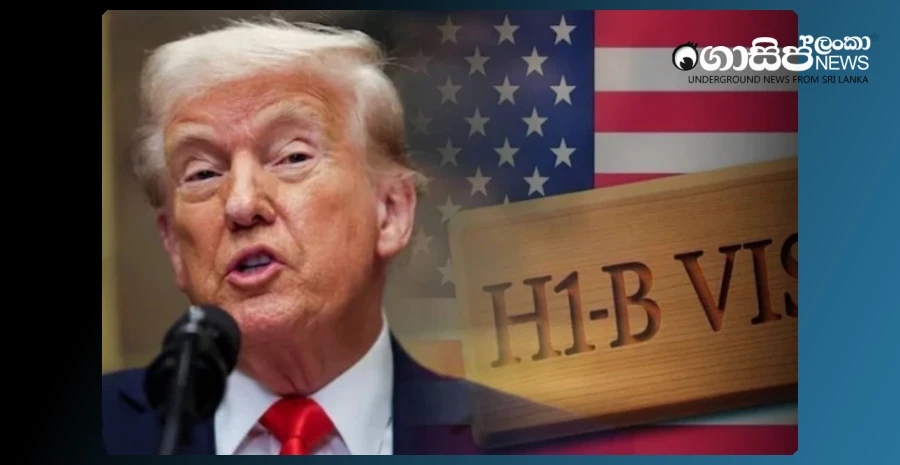
On May 22, 2026, the Trump administration announced a massive change in U.S. immigration policy, stating that many individuals already in the U.S. on temporary visas would be required to return to their home countries when applying for Green Cards.
According to policy memorandum PM-602-0199 issued by U.S. Citizenship and Immigration Services (USCIS), the previous procedure allowing applicants to obtain permanent residency without leaving the country (Adjustment of Status - Form I-485) has now been suspended. Under the new law, this facility will only be granted under complex and "extraordinary circumstances," and all other temporary visa holders must complete the consular process through a U.S. embassy in their home country. However, a specific list of what constitutes these extraordinary circumstances has not yet been provided and will be determined by officials on a case-by-case basis.
H-1B professionals, F-1 students, J-1 visa holders, and individuals on tourist visas will also be subject to this new law. Data analysts indicate that this will directly impact nearly 1.2 million people who have already applied. The magnitude of this change is clearly illustrated by the fact that approximately 58 percent of the 783,000 Green Cards issued in fiscal year 2024 alone were granted based on in-country adjustment of status.
Commenting on this new measure, USCIS spokesperson Zach Kahler stated that the administration is returning to the fundamental purpose of the law. He further noted that if a foreign national temporarily in the U.S. seeks a Green Card, they must return to their home country, except in exceptional circumstances, thereby preventing the misuse of loopholes in the system and ensuring proper implementation of the law. The government's stance is that the opportunity for adjustment of status under INA Section 245 is an administrative privilege, not an inherent right.
Nevertheless, immigration lawyers, technology sector leaders, and human rights groups strongly criticize this new policy. They point out that due to severe backlogs at embassies in countries like India, Mexico, and the Philippines, interviews could take years, leading to family separations, job losses, and significant impediments to progress in U.S. science and technology (STEM) fields. The impact on Indian and Chinese technology professionals, who already face severe visa delays, is expected to be immense.
On the other hand, supporters of this policy argue that it upholds the rule of law and discourages overstaying visas. This new policy is seen as an extension of the Trump administration's program to reform the legal immigration system by prioritizing national security and public safety, including measures such as temporarily suspending applications from high-risk countries and conducting stringent background checks.