![Gossip Lanka News [English]](https://blogger.googleusercontent.com/img/a/AVvXsEhYm2aFFq-bIW1nWX-RrqnPFoIsVos6_VCVz8BpLt0QJi55GNXHXC2fugeRvL0qUStEuCfs7Sfu6ZiSlhrkldxfGuE_wzy5gitY6rMZ2KSi8VBbGvkgXLks37RwZV-4-HKbWiNLRxB8C_r1e4z3mpxFTMPDJPEADoG8E-bZteWFipeD5KNGbjvCfqEfKw=s300 "Gossip Lanka News [English]")
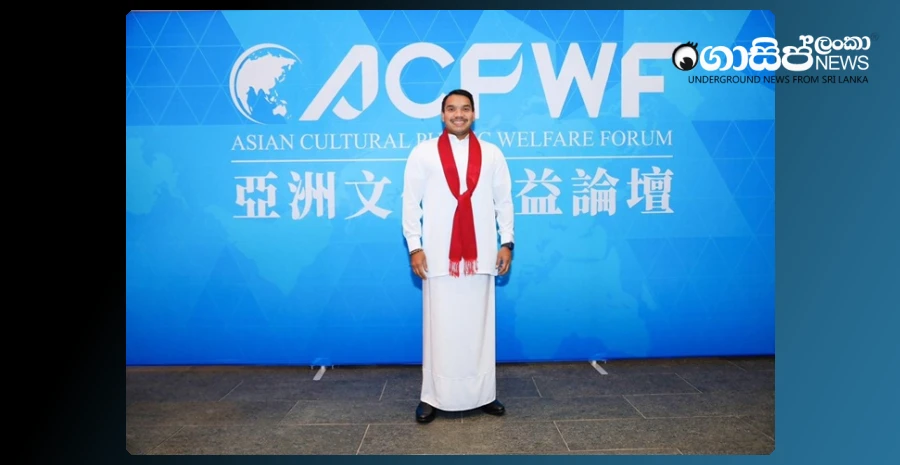
Sri Lanka Podujana Peramuna (SLPP) Member of Parliament Namal Rajapaksa, addressing the 2026 Asian Cultural Public Welfare Forum held in Hong Kong last Friday (15), emphasized the need for Asian nations to move towards modernization without losing their cultural identity.
Highlighting Asia's growing role in the global economy, the MP pointed out that Asia is expected to account for 60% of the growth in global Gross Domestic Product (GDP) by 2030. However, he raised critical questions about whether these rapid economic aspirations would lead to the degradation of our core values, the weakening of identity, or harm to nature.
Mr. Rajapaksa spoke about the ancient sustainable model of Sri Lanka's civilization, based on the concept of 'Wewai, Dagabai, Gamai, Pansalai' (tank, stupa, village, temple). The MP appreciated how his father, former President Mahinda Rajapaksa, worked to transform that historical balance into modern policies and his contribution to implementing rural empowerment and social welfare as a single national mission while developing infrastructure.
Quoting the Dhammapada verse, 'Appamado Amatapadam - Pamado Maccuno Padam' (Diligence is the path to immortality; heedlessness is the path to death), he stated that acting mindfully is the path to success, while heedlessness leads to decline. Citing examples like Sri Pada (Adam's Peak), revered by various religions, he further stated that leaders are obligated to protect irreplaceable religious and sensitive ecosystems and traditions while embracing innovations.
Emphasizing the importance of implementing 'public welfare innovation' through technological aspects such as Artificial Intelligence (AI), telemedicine, and renewable energy, Namal Rajapaksa warned of a significant risk that technology without ethics could create social inequality and divisions. He opined that a proper balance between technology and humanity must be maintained to overcome challenges such as climate change, digital disparities, and the aspirations of the younger generation.
Highlighting the need for civilizational cooperation in the Asian region in the face of challenges such as cross-border climate change and economic instability, Mr. Rajapaksa stated that Asia should lead the world not only economically but also morally and culturally. He emphasized that the true strength of a civilization is measured not by military power, but by the respect accorded to its people and the legacy left for future generations.