![Gossip Lanka News [English]](https://blogger.googleusercontent.com/img/a/AVvXsEhYm2aFFq-bIW1nWX-RrqnPFoIsVos6_VCVz8BpLt0QJi55GNXHXC2fugeRvL0qUStEuCfs7Sfu6ZiSlhrkldxfGuE_wzy5gitY6rMZ2KSi8VBbGvkgXLks37RwZV-4-HKbWiNLRxB8C_r1e4z3mpxFTMPDJPEADoG8E-bZteWFipeD5KNGbjvCfqEfKw=s300 "Gossip Lanka News [English]")
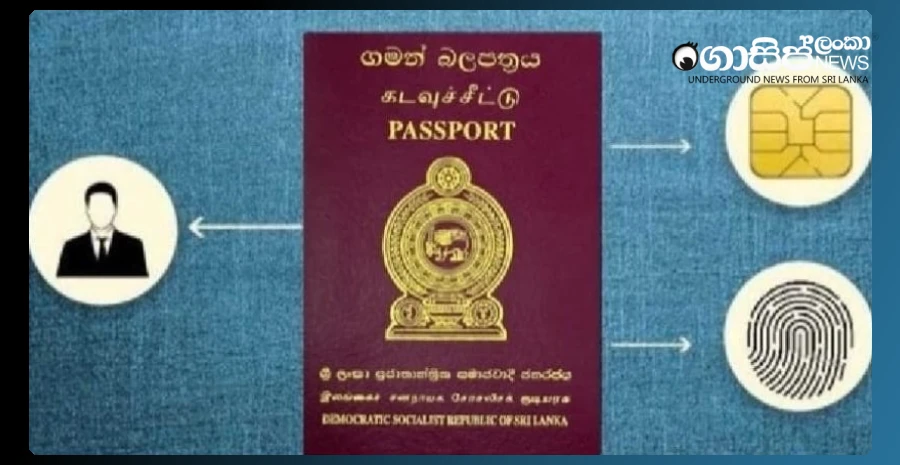
The Ministry of Public Security is preparing to award a massive tender to Thales DIS Finland Oy/Just in Time (JIT), a French-Sri Lankan joint venture, for the personalization and issuance of 3.15 million electronic passports (e-passports) in Sri Lanka. However, an analysis of this procurement structure reveals that experts warn of a "vendor lock-in trap" that could lead to taxpayers losing an enormous amount of money through non-negotiable fees in the future.
According to this agreement, the company will establish and maintain the physical IT infrastructure at its initial expense, planning to recover these costs by charging a monthly fee of EUR 1.04 and LKR 302.23 for each passport printed. Additionally, the government is legally bound by the contract to pay for a minimum of 60,000 passports per month.
Upon reaching the contractual limit, i.e., after five years or after 3.15 million passports have been issued, the ownership of this specific hardware will be transferred to the Department of Immigration and Emigration.
However, it has been pointed out that these physical machines will be of no use without the proprietary software required to run the Public Key Infrastructure (PKI) system, which is essential for operating these machines. The most critical issue is that the Department of Immigration and Emigration failed to request pricing for software license renewals after the contract period or to impose price caps during the competitive bidding stage. This will give the company absolute power over pricing in the future.
Furthermore, the department will also have to pay standard commercial IT license renewal fees for Oracle, Microsoft Windows, and antivirus service providers just to keep the core servers operational.
An official with a thorough understanding of this process has stated that since such long-term software requirements were excluded from the initial cost assessment, the true cost to taxpayers could increase by millions beyond the initial contract price.
Therefore, he emphasized that the High-Level Procurement Committee (HLPC) and national oversight authorities should intervene immediately before awarding this e-passport tender to Thales/JIT. To avoid this vendor lock-in trap, the government must mandate bidders to submit legally binding, capped price schedules for post-contract software licensing and maintenance.
Experts point out that since this system heavily relies on proprietary software, flawless and "airtight exit strategies" are essential when procuring such complex IT infrastructure. Accordingly, the official further warned that the government should not merely accept hardware without financial assurances but must secure long-term software rights and determine renewal costs in advance.