![Gossip Lanka News [English]](https://blogger.googleusercontent.com/img/a/AVvXsEhYm2aFFq-bIW1nWX-RrqnPFoIsVos6_VCVz8BpLt0QJi55GNXHXC2fugeRvL0qUStEuCfs7Sfu6ZiSlhrkldxfGuE_wzy5gitY6rMZ2KSi8VBbGvkgXLks37RwZV-4-HKbWiNLRxB8C_r1e4z3mpxFTMPDJPEADoG8E-bZteWFipeD5KNGbjvCfqEfKw=s300 "Gossip Lanka News [English]")
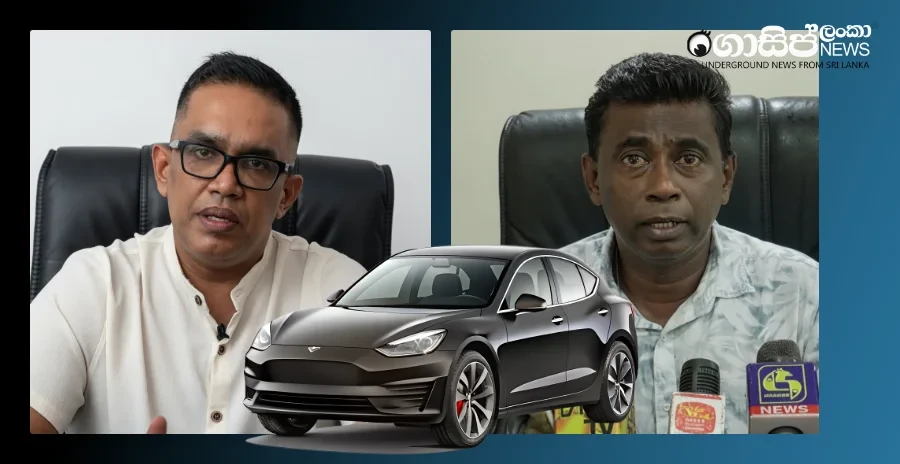
Vehicle importers point out that vehicle prices in the country are likely to increase significantly due to the new tax amendment imposed by the government on vehicle imports. According to the new gazette notification issued by the President, a 50% surcharge has been imposed on customs duty, effective for all imported vehicles.
According to Mr. Prasad Manage, President of the Sri Lanka Vehicle Importers' Association, this new tax will apply to all Letters of Credit (LCs) opened from the 16th onwards and will not affect LCs opened before that date.He emphasizes that after this tax increase is added to the customs duty, all other tax types, including VAT and luxury tax, will also automatically increase proportionally. In addition, the depreciation of the rupee will strongly impact the further increase in prices of vehicles imported in the future. Under the new situation, the prices of commonly traded vehicles in the market will significantly increase, with a Mira car increasing by about five or six hundred thousand rupees, a Wagon R by seven to eight hundred thousand rupees, and a Vezel by about seventeen or eighteen hundred thousand rupees. Mr. Manage also points out that a Yaris Cross will increase by fourteen hundred thousand rupees, a Toyota Raize hybrid by twelve hundred thousand rupees, and a Prado by thirty-five to forty hundred thousand rupees. He further states that since the prices of vehicles imported in the future will be high, the prices of vehicles currently available in the market may also increase to some extent due to supply and demand.
Meanwhile, Mr. Indika Sampath Merinnage, President of the Vehicle Importers' Association of Lanka (VIAL), states that typically three types of taxes are levied on vehicles: customs duty, excise duty, and VAT. He also confirms that when 50% of the customs duty is levied through the new amendment, it affects the entire tax structure. He believes that the government has made this policy decision based on factors such as the depreciation of the dollar amidst global war situations and the scarcity of foreign exchange reserves. He states that while supporting the government during such difficult times, his association is working to provide vehicles to consumers at a fair price.
Mr. Merinnage points out that this step taken by the government, allowing the economy to continue functioning instead of completely banning vehicle imports, is very practical. He appreciates that the government has worked to avoid imposing trade barriers in accordance with the conditions of the International Monetary Fund (IMF), and considers it a very positive and good economic management measure taken by the President and the Cabinet to restore the economy.