![Gossip Lanka News [English]](https://blogger.googleusercontent.com/img/a/AVvXsEhYm2aFFq-bIW1nWX-RrqnPFoIsVos6_VCVz8BpLt0QJi55GNXHXC2fugeRvL0qUStEuCfs7Sfu6ZiSlhrkldxfGuE_wzy5gitY6rMZ2KSi8VBbGvkgXLks37RwZV-4-HKbWiNLRxB8C_r1e4z3mpxFTMPDJPEADoG8E-bZteWFipeD5KNGbjvCfqEfKw=s300 "Gossip Lanka News [English]")
We have heard since childhood that the pen is mightier than the sword. But in the modern world, can an internet 'meme' be more powerful than a nuclear missile?
On February 28th, the United States and Israel jointly began bombing Iran. But even before the thick smoke of that attack dissipated, Iran was winning a completely different battlefield. Not with weapons, but with humorous posts and videos released through social media.Within twenty-four hours of the attack, accounts linked to the Iranian Revolutionary Guard Corps (IRGC) flooded the internet with propaganda content. According to the media monitoring organization 'NewsGuard', ninety-two percent of the fifty false statements spread during the first twenty-five days were pro-Iran. The result was that by mid-March, a majority of fifty-eight percent of Americans opposed these military attacks. Iran, without firing a single bullet, had very subtly invaded the bedrooms and living rooms of Americans themselves.
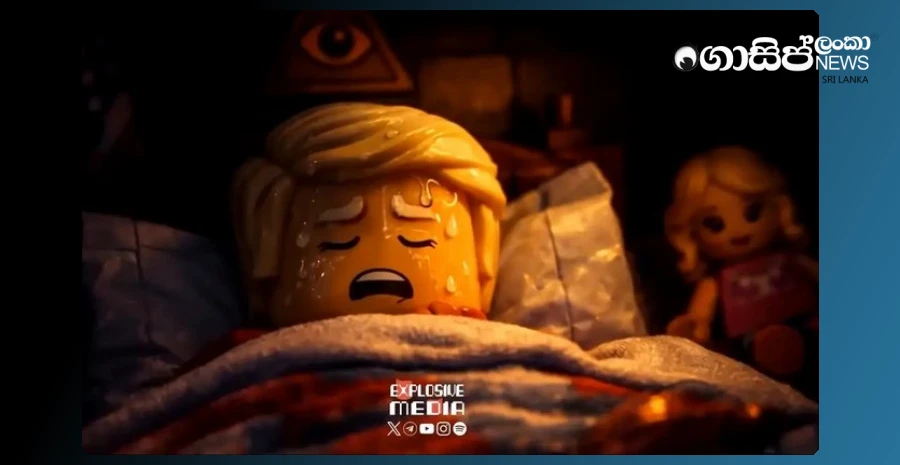
This was by no means a coincidence. Iran's Supreme Leader Ayatollah Ali Khamenei had stated in 2024 that media could do more to make enemies retreat than airplanes and missiles. Today, Iran's propaganda machine is run by a new generation of PhD holders who grew up on the internet. Instead of traditional Islamic resistance, they have weaponized the weaknesses of American culture itself. A Lego animation video showing Trump and Netanyahu jointly examining the infamous 'Epstein' files and bombing an Iranian school is one successful example of this. This video, which shows a pair of small shoes and a school bag among the rubble, did not so much convey political facts about Iran as it skillfully awakened the pre-existing feelings of guilt among Americans regarding power and impunity.
On the other hand, the satire they employed was extremely sharp and bold. Iranian Brigadier General Ebrahim Zolfaghari fearlessly looked into the camera and declared Donald Trump's own television catchphrase, "Hey Trump, you're fired." In response to Trump's ultimatum to open the Strait of Hormuz before April 7th, the Iranian embassy in Zimbabwe joked on social media that "its key was lost," and later the South African office claimed it was "found under a flowerpot." Meanwhile, Iran's Mumbai consular office also exchanged ideas in a way that won the hearts of Indians, confirming that this was not merely a social media operation, but high-level diplomatic communication.
The question arises here: how can a country battered by sanctions and with limited internet access launch such a powerful propaganda project? Behind this is a well-structured three-layered network. In addition to official state accounts and media organizations, they possessed a network of fake accounts built over many years, posing as Latin women in Texas or Scottish nationalists. On February 28th, sixty-one such accounts simultaneously began spreading pro-Iran ideologies, and Russia and China rapidly disseminated these messages worldwide, giving them massive publicity. In a context where both sides had censored information due to the war, Iran filled the resulting information vacuum in society with emotionally charged content produced using Artificial Intelligence (AI). It wasn't necessary for them to be true; it was enough for the audience to feel they were true, even for a few seconds.
The biggest irony here is that Iran learned all of this from Trump himself. The pattern of inflammatory and attention-grabbing political communication he built is now being used by Iran against him, even more creatively. The Iranian operation has proven that merely sending a quantitatively large number of messages cannot win people's hearts; it requires intelligence, swiftness, and subtle humor. The victory in a future war may not be determined solely by the blood spilled on the battlefield, but also by a smile that unfolds for a few seconds on a mobile phone screen.