![Gossip Lanka News [English]](https://blogger.googleusercontent.com/img/a/AVvXsEhYm2aFFq-bIW1nWX-RrqnPFoIsVos6_VCVz8BpLt0QJi55GNXHXC2fugeRvL0qUStEuCfs7Sfu6ZiSlhrkldxfGuE_wzy5gitY6rMZ2KSi8VBbGvkgXLks37RwZV-4-HKbWiNLRxB8C_r1e4z3mpxFTMPDJPEADoG8E-bZteWFipeD5KNGbjvCfqEfKw=s300 "Gossip Lanka News [English]")
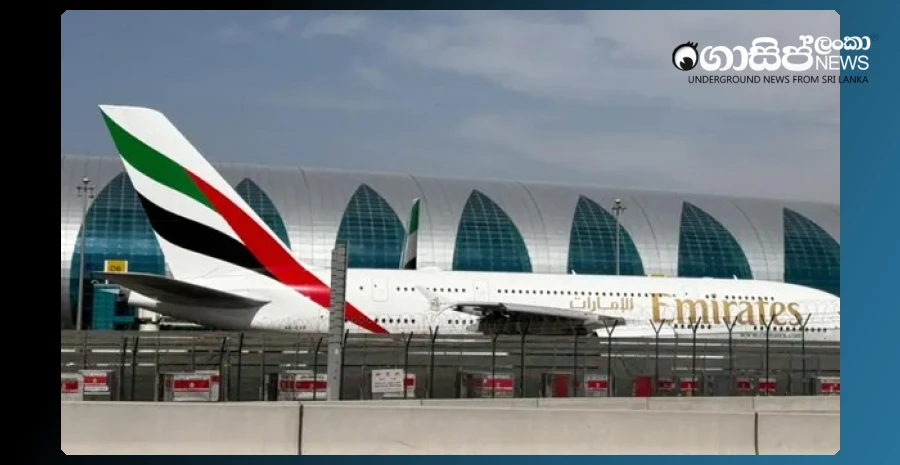
Flight operations in the United Arab Emirates have not yet fully returned to normal, and are currently in a gradual recovery phase. Temporary airspace restrictions and disruptions occurred due to the escalating regional tensions caused by attacks on Iran by the US and Israel, and subsequent responses, in late February and early March 2026.
However, according to the UAE General Civil Aviation Authority (GCAA) and other reports, flights are gradually returning to normal. The GCAA states that flight operations have resumed, being "managed with extreme caution," and are "gradually recovering."Key data reported by mid-March 2026 further confirms this situation. Accordingly, from March 1st to 12th, UAE airports facilitated over 1.4 million passengers and handled approximately 7,839 flights. National airlines like Emirates and Etihad have currently re-established about 44.6% of their pre-crisis operational levels. Emirates is currently operating on a limited schedule, and they state that they are continuously monitoring the situation, with a full restoration of operations expected to occur gradually.
Following the lifting of precautionary measures, the latest updates from government news and aviation authorities around March 17th indicate that the situation is further normalizing. Clear signs of resumed activity are visible at major airports like Dubai International Airport (DXB), and while flight tracking data confirms operations are stabilizing and growing, it is not yet operating at 100% capacity. This was caused by the precautionary closure of airspaces and partial suspension of flights in early March, but with the phased reopening of airspaces, the situation has significantly improved. However, as some delays or limited operations are still in effect, passengers are advised to refer to the official websites of the General Civil Aviation Authority (GCAA), Emirates, or Etihad, or live flight tracking platforms like Flightradar24, for the absolute and accurate live status of flights.