![Gossip Lanka News [English]](https://blogger.googleusercontent.com/img/a/AVvXsEhYm2aFFq-bIW1nWX-RrqnPFoIsVos6_VCVz8BpLt0QJi55GNXHXC2fugeRvL0qUStEuCfs7Sfu6ZiSlhrkldxfGuE_wzy5gitY6rMZ2KSi8VBbGvkgXLks37RwZV-4-HKbWiNLRxB8C_r1e4z3mpxFTMPDJPEADoG8E-bZteWFipeD5KNGbjvCfqEfKw=s300 "Gossip Lanka News [English]")
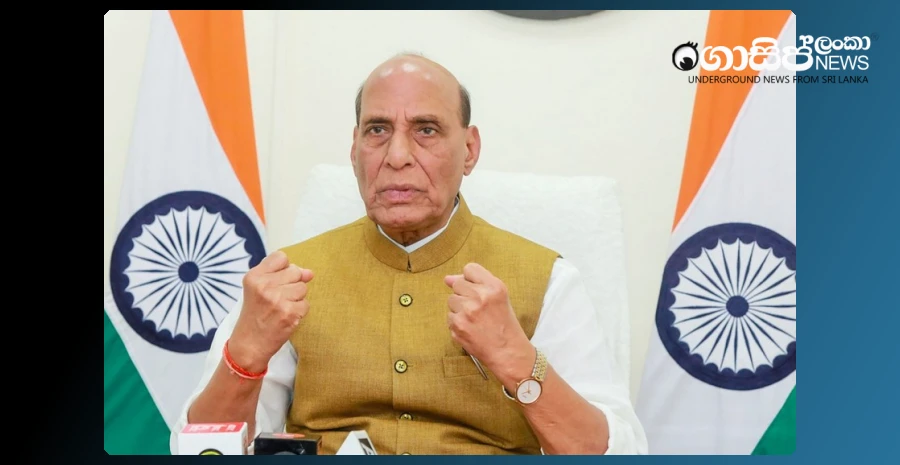
The escalating Middle East crisis between the United States, Israel, and Iran has been described by Indian Defence Minister Rajnath Singh as a "very unusual" situation created amidst rapid global geopolitical shifts. Addressing the 'Sagar Sankalp' maritime conference held on March 6, 2026, he emphasized that the world is currently undergoing massive transformations, challenging traditional assumptions and structures.
Calling the situation in the Middle East a burning example of the prevailing instability, the Minister pointed out that the events unfolding there are unusual, making it difficult to predict future developments in the region or India's neighbourhood. He was of the view that this crisis reflects the profound global uncertainty and unpredictable changes that are eroding the old world order. Accordingly, he also stated that there is a risk of such unusual geopolitical tensions becoming the "new normal" in the future.
Strong attention was also drawn to potential disruptions in critical regions such as the Strait of Hormuz, which could directly impact global oil supplies, trade routes, and supply chains. Stating that India is already observing such disruptions, Mr. Singh also highlighted the need to further strengthen India's maritime leadership, as the maritime domain is once again taking a central position in global power dynamics.
The Iran-America/Israel conflict has further intensified with reports of joint US-Israeli attacks on Iranian targets, retaliations, disruptions to energy supplies, and widespread regional instability affecting shipping and air services. Against this backdrop, India advocates for flexibility, dialogue, and diplomacy, while also securing its own interests through measures such as obtaining concessions for Russian oil imports to mitigate energy risks. The Minister's statements further confirm that India is closely monitoring this situation and its impacts on global security and economic stability.