![Gossip Lanka News [English]](https://blogger.googleusercontent.com/img/a/AVvXsEhYm2aFFq-bIW1nWX-RrqnPFoIsVos6_VCVz8BpLt0QJi55GNXHXC2fugeRvL0qUStEuCfs7Sfu6ZiSlhrkldxfGuE_wzy5gitY6rMZ2KSi8VBbGvkgXLks37RwZV-4-HKbWiNLRxB8C_r1e4z3mpxFTMPDJPEADoG8E-bZteWFipeD5KNGbjvCfqEfKw=s300 "Gossip Lanka News [English]")
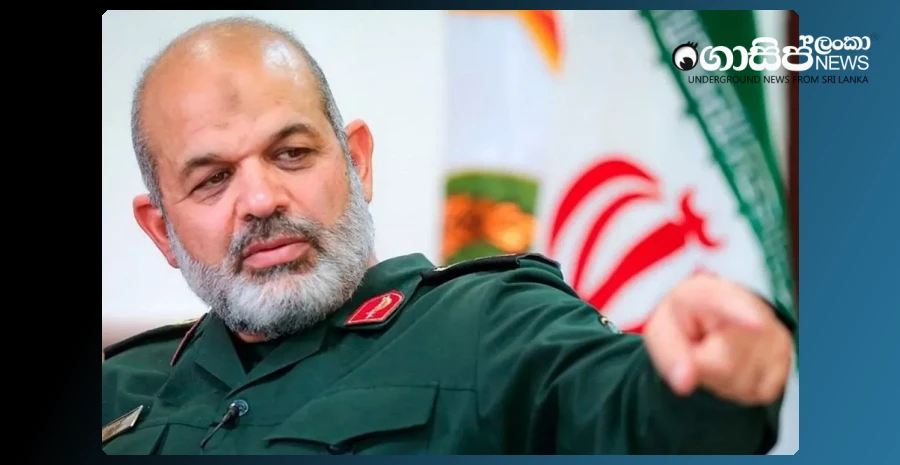
67-year-old Ali Larijani, Secretary of the Supreme National Security Council (SNSC), who served as Iran's de facto leader and operational coordinator after the demise of Supreme Leader Ayatollah Ali Khamenei, has been killed in an Israeli airstrike near Tehran. Iranian state media confirmed that in this attack, which occurred on March 17, 2026, his son Morteza, who was also a deputy head of the security forces, several guards, and Basij militia commander Gholamreza Soleimani were also killed.
During wartime, Larijani held primary responsibility for managing Iran's daily security affairs, nuclear policies, and crisis management. He served as the main coordinator between political institutions and the Islamic Revolutionary Guard Corps (IRGC). Larijani's assassination, occurring weeks after Khamenei's demise on February 28, is pointed out by analysts as a massive and the second-largest attack on Iran's top leadership.
Amidst American and Israeli attacks, power in Iran is now heavily concentrated in the Islamic Revolutionary Guard Corps (IRGC). Although a council of experts appointed 56-year-old Mojtaba Khamenei, son of the late Ali Khamenei, as the new Supreme Leader between March 9-10, he has not yet appeared publicly. Various reports circulate about his health, and he has only issued written messages, praising the armed forces and emphasizing the importance of using the Strait of Hormuz as leverage. Mojtaba is considered more hardline than his father, and with his low public profile, the decision-making process is reportedly almost entirely under the control of the IRGC.
The role of 71-year-old moderate Masoud Pezeshkian, who serves as Iran's president during wartime, has largely become nominal. Hardliners, Parliament Speaker Mohammad Bagher Ghalibaf and Judiciary Chief Gholamhossein Mohseni-Ejei, are working closely with security institutions. Brigadier General Ahmad Vahidi, appointed as the new head of the IRGC after previous commanders were killed in attacks, currently plays a central role in missile strikes and military operations. Additionally, Quds Force commander Esmail Qaani and Foreign Minister Abbas Araghchi are also actively contributing to crisis management.
The loss of powerful leaders like Khamenei and Larijani, and attacks targeting military command centers, have significantly weakened the coordination and experience of Iran's leadership. Critics believe that the vacuum left by the new leader Mojtaba being filled by IRGC hardliners poses a risk of escalating internal conflicts. Although air defense systems and missile capabilities have been damaged, Iranian rule is not yet on the verge of collapse, and they are attempting to maintain the governance structure through a militarized police state model by constantly appointing replacement leaders.
Although Iran's capabilities for a long-term conventional war have been weakened, it still possesses the ability to conduct short-term and medium-term asymmetric and retaliatory operations. Even after Larijani's assassination, Iran continued to launch drone and advanced Sejjil ballistic missile attacks, and it continues to exert pressure regionally against American and Israeli allies through its proxy networks (Hezbollah and Houthis). Due to the IRGC's decentralized structure, they have the ability to make independent decisions even with the loss of top leaders, and it is expected that Iran will focus more on consolidating its existence and creating regional pressure through threats centered on the Strait of Hormuz, rather than engaging in a full-scale war in the future.