![Gossip Lanka News [English]](https://blogger.googleusercontent.com/img/a/AVvXsEhYm2aFFq-bIW1nWX-RrqnPFoIsVos6_VCVz8BpLt0QJi55GNXHXC2fugeRvL0qUStEuCfs7Sfu6ZiSlhrkldxfGuE_wzy5gitY6rMZ2KSi8VBbGvkgXLks37RwZV-4-HKbWiNLRxB8C_r1e4z3mpxFTMPDJPEADoG8E-bZteWFipeD5KNGbjvCfqEfKw=s300 "Gossip Lanka News [English]")
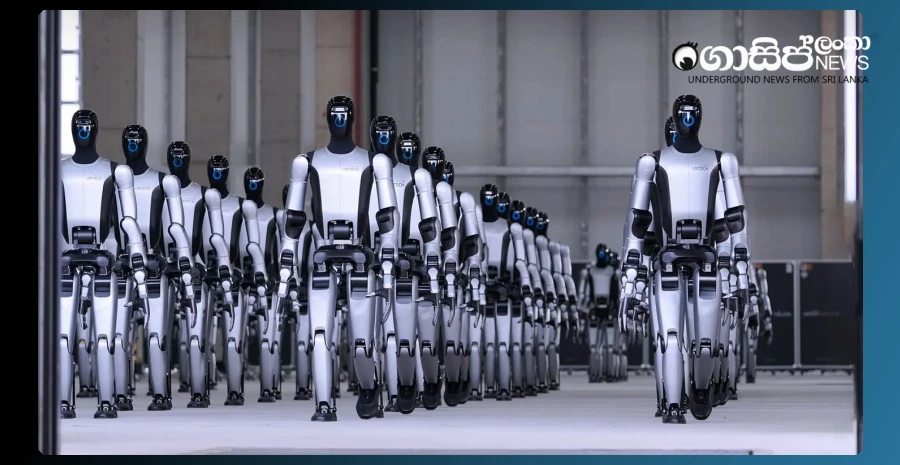
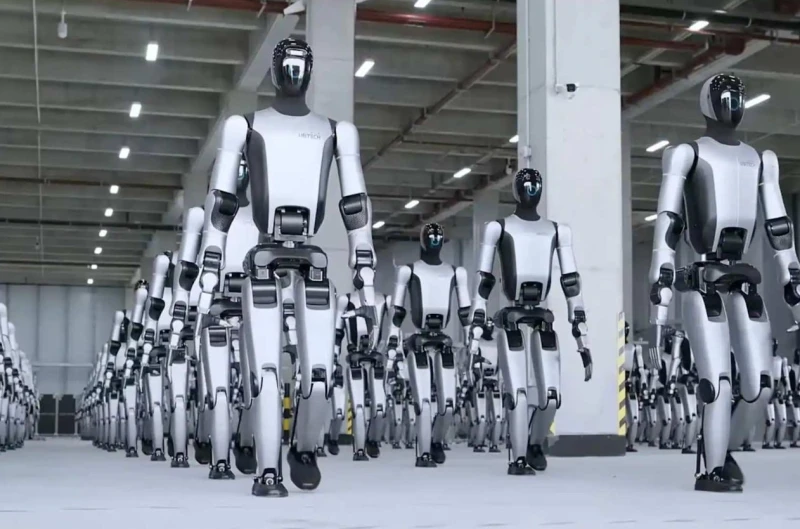
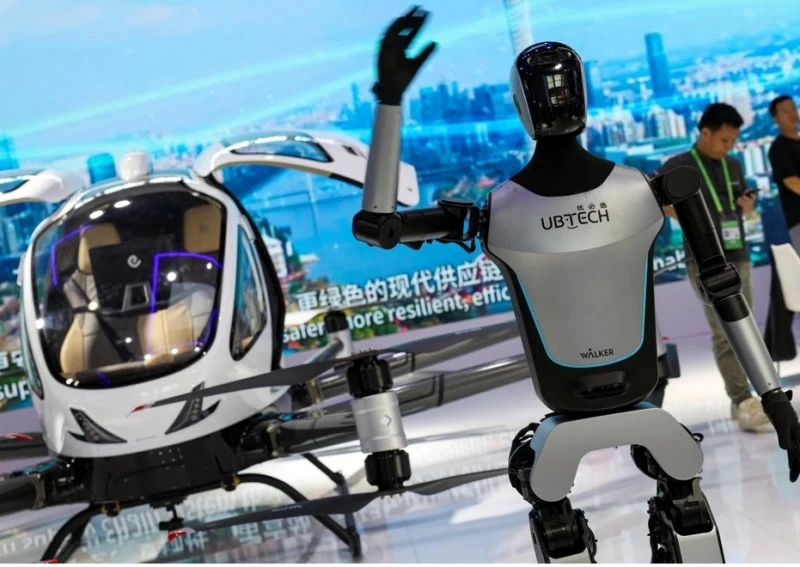
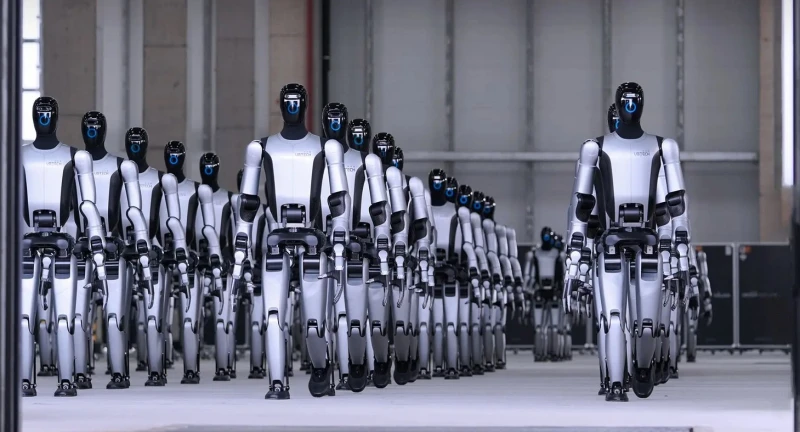
China has begun deploying humanoid robots at a busy checkpoint on the Vietnamese border, marking one of the first large-scale uses of such technology for law enforcement and public security operations. Walker S2 robots, developed by Shenzhen-headquartered UBTECH Robotics, began arriving this month at the Fangchenggang border checkpoint in Guangxi province under a $37 million government contract.
Researchers describe the project as a significant step towards "Embodied AI," where artificial intelligence operates within physical robot bodies to function in real-world environments. In Fangchenggang, a coastal city where millions of passengers and goods cross between China and Vietnam annually, these robots will assist border officials with tasks such as guiding passengers, directing vehicles, monitoring crowds, and inspecting goods.
Standing 1.76 meters tall, the Walker S2 robot possesses 52 degrees of freedom across its body and arms, allowing it to perform human-like movements. A standout feature of these robots is their ability to autonomously swap their own batteries in as little as three minutes, enabling continuous 24-hour operation without human intervention.
Some of these robots will patrol corridors and waiting areas, monitoring crowd behavior and blocked exits, and will notify human officers when intervention is required. Other robots will inspect container identification numbers in cargo lanes, verify seals, and transmit this information to central stations. Additional units are also slated for deployment in inspection tasks at nearby steel, copper, and aluminum production plants.
The Fangchenggang project aligns with China's Ministry of Industry and Information Technology's 2023 directive, which aims to establish a national-level humanoid robot innovation system by 2025. Furthermore, the ministry announced on December 27 that it would establish a standardization technical committee for humanoid robots, focusing on safety, interactivity, and testing methodologies.
UBTECH has secured orders exceeding $112 million for Walker series robots throughout 2025, and these robots are already deployed in automotive factories such as BYD, Geely, and FAW-Volkswagen. The company, which began mass production in November, plans to deliver 500 industrial robots by the end of the year and increase that number to 10,000 units by 2027.