The long journey of a Sri Lankan Tamil refugee, who sailed from India to Canada seeking safety, ended in an isolated shelter in a Southern African state with which he had no connection. Kishanth Peramalya, also known as Peramaiya, reported to be 35 or 36 years old, died by suicide on September 13, 2026, at a shelter in Mbabane, Eswatini.
Having been granted international protection to prevent his deportation back to Sri Lanka, he was taken to that country under a secret bilateral agreement between the United Kingdom and the government of Eswatini, with the aim of permanent resettlement.This incident has drawn significant attention following the revelation of this secret agreement and details surrounding his death by the BBC and other international media reports on November 25, 2026.
Kishanth's tragic journey began in his youth in Sri Lanka. Having been tortured and sexually abused by military personnel in Sri Lanka during his youth, he fled to India around 2007. He was later diagnosed with Post-Traumatic Stress Disorder (PTSD), which formed the basis for his refugee protection status, preventing his forced deportation to Sri Lanka.
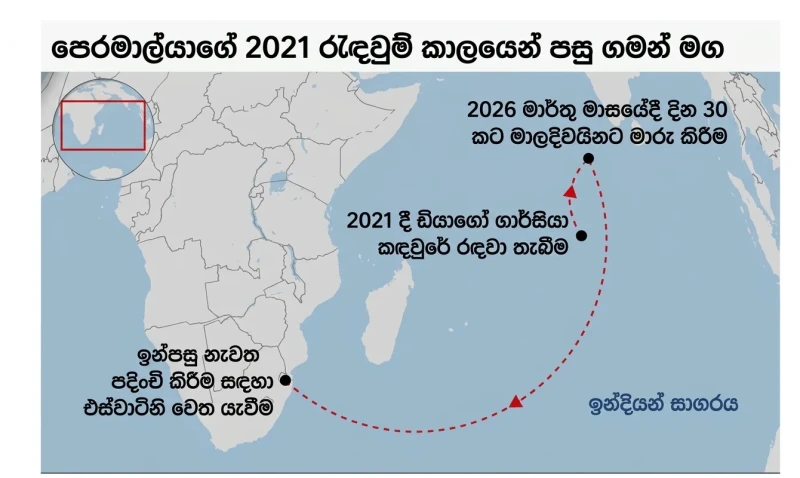
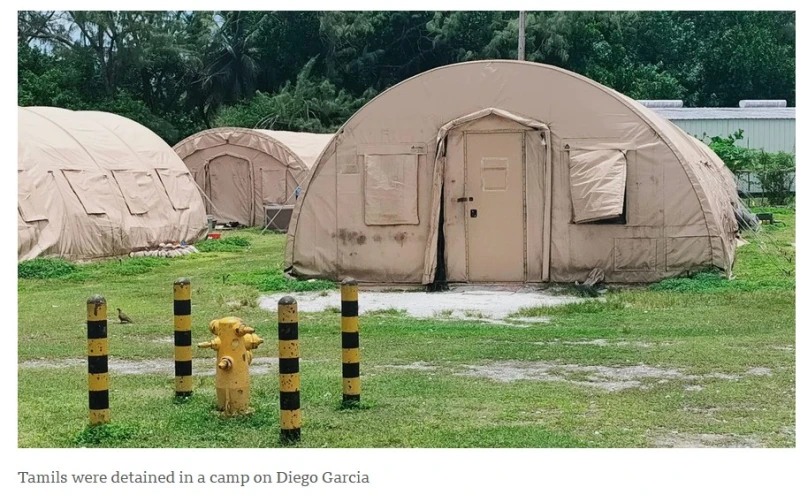
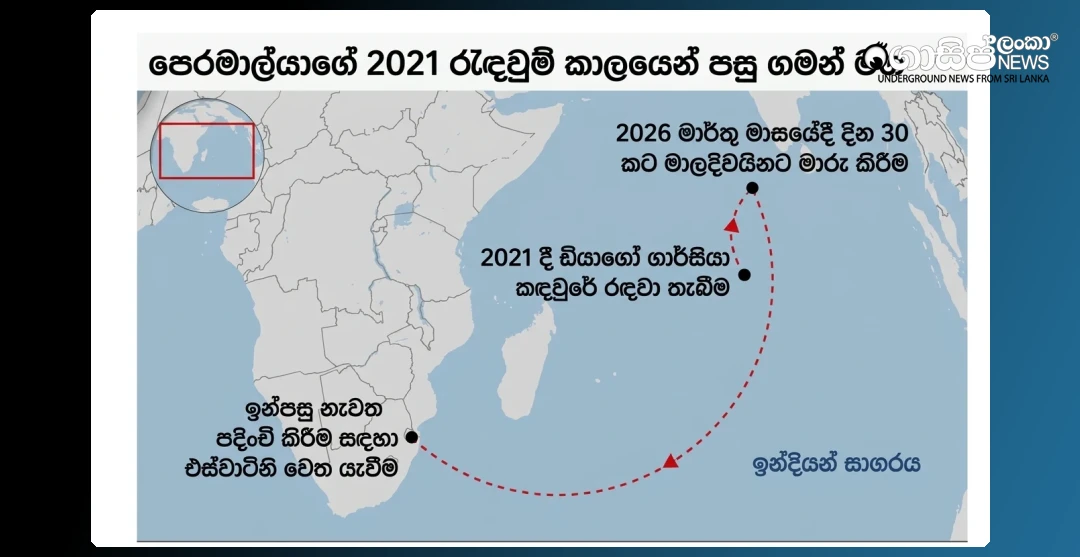
In October 2021, Kishanth was part of a group of approximately 89 Sri Lankan Tamils who sailed from India with the hope of reaching Canada and seeking political asylum. After their vessel encountered distress in the Indian Ocean, the British Royal Navy rescued them and took them to Diego Garcia, an island belonging to the British Indian Ocean Territory (BIOT). This group was detained for several years in a camp on the island, which hosts a major British and American military base. Although authorities provided them protection as returning to Sri Lanka was unsafe, a court later ruled that such prolonged detention was illegal. A strongly critical report from the United Nations was also issued regarding the conditions in that camp.
During his detention on Diego Garcia, Kishanth's mental health severely deteriorated. He suffered from depression and anxiety, and at times attempted suicide on multiple occasions. Concerns about his condition were noted in court records as well as in reports by UN investigators. He also had to be removed from the island for medical treatment, including transfers to Rwanda in 2023 and Bahrain in 2024.
During that period, he committed offenses related to two suicide attempts. These included assaulting and causing physical harm to a security officer who intervened, and an arson charge related to an attempt to set himself on fire, for which he was imprisoned for 24 weeks. Additionally, he was convicted of four counts of sexual assault against another refugee and received a suspended sentence.
Following the UN report, in November and December 2024, approximately 61 other members of the Diego Garcia group were allowed entry into the United Kingdom. However, due to Kishanth's criminal convictions, Yvette Cooper, then the British Home Secretary, refused him entry to Britain. British courts upheld this decision, considering the risk he posed and the failed attempts to find an alternative safe country. It is reported that the UK made inquiries to over 20 countries, but these were unsuccessful.
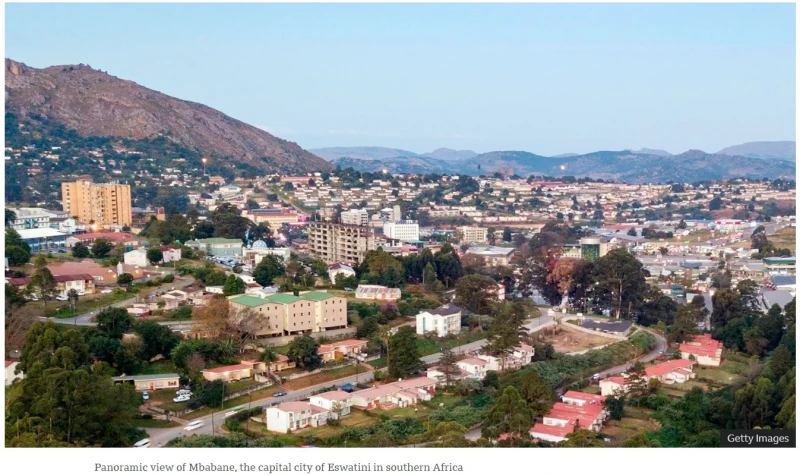
This crisis took a new turn in February 2026 when the United States began using the Diego Garcia base in connection with its conflict with Iran. During the process of evacuating non-essential personnel from the base, Maldives agreed to temporarily host Kishanth for a 30-day period at the end of March. Subsequently, he was transferred to Eswatini, a landlocked Southern African kingdom formerly known as Swaziland.
According to a draft bilateral agreement obtained by the BBC, Eswatini Foreign Minister Pholile Dlamini-Shakantu and British High Commissioner Colin Wells had signed it. Under this agreement, the United Kingdom was to cover the reasonable costs of Kishanth's accommodation, healthcare, and other support for up to three years, after which he was expected to become self-sufficient. At the time of his death, the governments of both countries were finalizing arrangements for his permanent residency. However, this agreement was not disclosed to the British Parliament or the local community in Eswatini. Migration experts point out that this is the first recorded instance of the United Kingdom arranging for the forced permanent resettlement of a protected refugee in a third country with which they had no prior connection.
Earlier, in 2025, the government of Eswatini had reportedly agreed to accept up to 160 third-country nationals deported from the United States, under a payment reported to be 5.1 million US dollars. Individuals, including local Member of Parliament Mavik Kumalo, accused the government of turning their country into a dumping ground for powerful nations.
Upon arrival in Eswatini, Kishanth was initially held alone in an isolated, remote shelter. His family members say that his mental state further deteriorated there. He called his sister in India up to four times a day, telling her that he did not want to be there and felt intensely lonely. His psychotherapy sessions, initially weekly, later became daily, and an assistant was assigned to prepare his meals. He remained there on continuous three-month visas and died by suicide on September 13, 2026, reportedly found dead within the shelter.
On September 28, the Eswatini government publicly confirmed his death, stating that the two governments had been exploring long-term residency. His body was held in Eswatini for weeks, until October, while funeral arrangements were discussed with the United Kingdom and family members.
“My brother absolutely did not want to go there, he couldn't be there alone, he was very lonely,” Kishanth's sister stated. His relatives say they were not informed that this transfer was permanent, nor were they aware of his sexual offense convictions. His mother has also spoken to the media about the visa issues and the isolation he faced, and family members in India continue to demand answers regarding how he was treated and the circumstances surrounding his death.
Commenting on the incident, the UK Home Office emphasized that its primary responsibility is to ensure the safety of the British public and that foreign criminals who cause serious harm will not be allowed into the United Kingdom. The ministry also stated that it continues to work with Eswatini authorities on this matter.
Tabile Mduli, acting spokesperson for the Eswatini government, stated that the initial agreement was temporary until the UK found a long-term solution, and that the two governments were exploring permanent residency at the time of Kishanth's death. She further added that the government has expressed its condolences and is coordinating funeral arrangements.
Meanwhile, the United Nations High Commissioner for Refugees (UNHCR) expressed deep regret over the incident, stating that specific safeguards are required in practice when transferring refugees to third countries. Critics and experts describe this incident as highly unusual, pointing out that third countries are generally reluctant to accept foreign criminals. Concerns have also been raised within parts of Eswatini society regarding the pressure such measures place on already limited mental health and medical resources, as well as the ethical implications of sending a convicted sexual offender to a poor country.
Although Kishanth Peramalya's life, which spanned nearly two decades oscillating from country to country, and from an isolated island in the ocean to an African state, ended in the Mbabane shelter, the questions raised by his family in India regarding his final journey under a secret diplomatic agreement still lack clear answers.