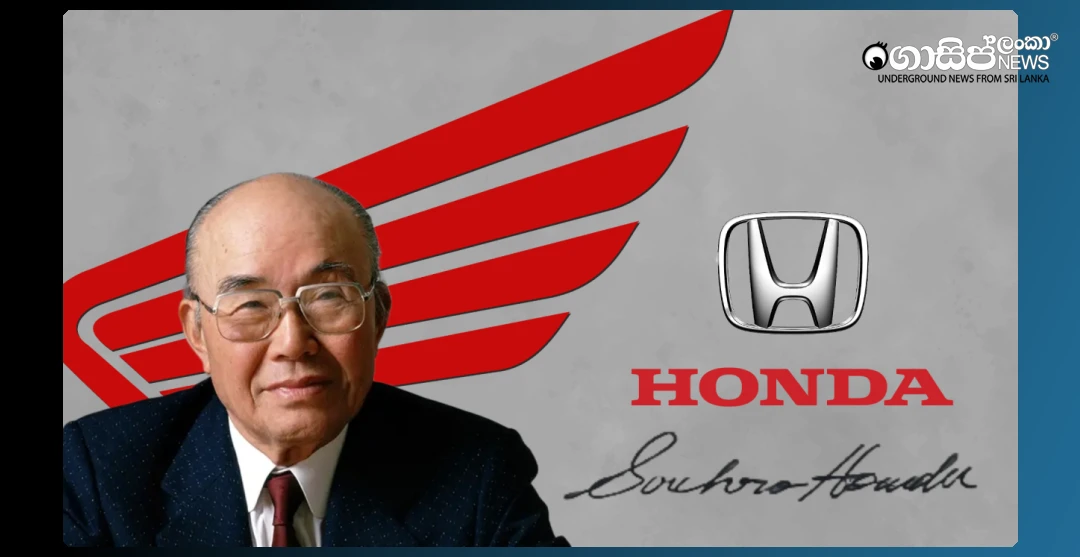
For a certain young boy in Japan, the smell of oil in the garage was more appealing than school education. Advancing in education was not that important to him. Obsessed with machinery, he did not stop his journey even when everything he built was destroyed by bombings and earthquakes.
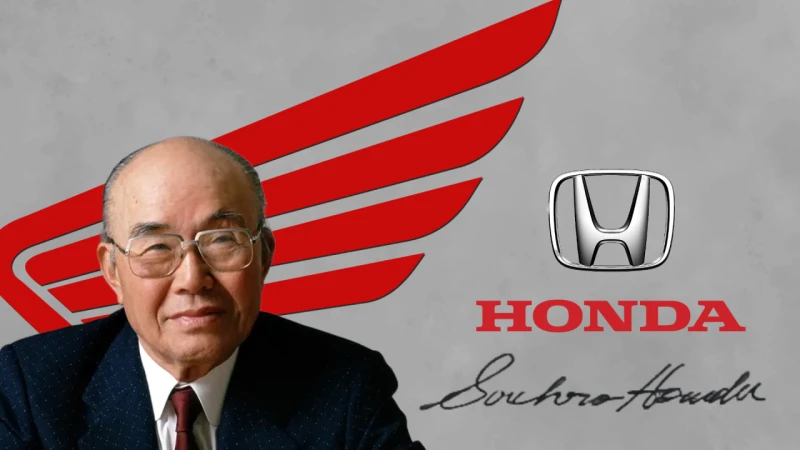
This unique story is the life story of Soichiro Honda, the founder of Honda Motor Company, which started in a small 16-square-meter wooden shed in war-torn Japan and has now grown into a giant global company.Soichiro was born on November 17, 1906, in Komyo village near Hamamatsu, Shizuoka Prefecture, Japan. His father, Gihei, was a blacksmith who repaired bicycles, and his mother, Mika, was a weaver. One day in his childhood, seeing the first automobile pass through the village ignited an immense passion for machines in him that never faded. It was also due to this fascination with machinery that he took his father's bicycle to watch a show by aviator Art Smith.
At the age of 15, without proper education, he went to Tokyo and joined the Art Shokai garage as an apprentice. Soichiro gained experience as a mechanic there for about six years, including during the Great Kanto Earthquake of 1923. In 1928, he returned to his village and started his own repair center as a branch of Art Shokai. Having earned a reputation as a skilled mechanic, he also participated in car racing, but that chapter ended when he suffered an injury to his left eye in an accident in 1936.
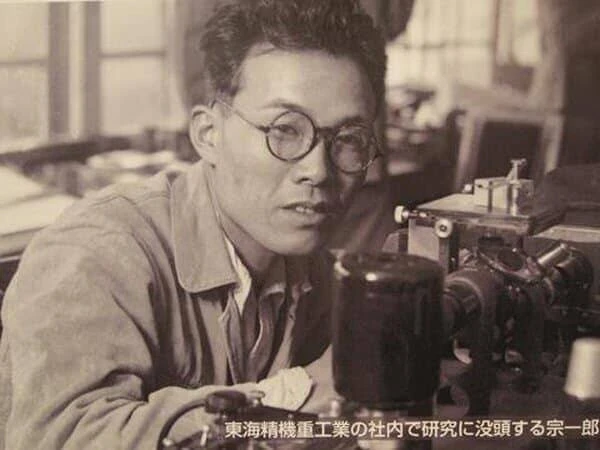
Not stopping there, Soichiro established Tokai Seiki in 1937 with the aim of supplying piston rings to Toyota. Right from the start, he faced a severe setback. Toyota accepted only a small number of the first 50 rings he produced. But undeterred, he attended metallurgy classes at night and improved his production process. Later, it grew into an institution with over 2,000 employees, supplying parts to Toyota as well as for aircraft and military needs. During World War II, Toyota purchased a significant number of shares in it, and it came under military control.
However, the war destroyed all of this. In 1944, the Yamashita factory was destroyed by an American B-29 bombing raid, and in January 1945, the Mikawa earthquake leveled the Iwata factory. Having lost everything he had built, Soichiro sold the remaining machinery to Toyota for 450,000 yen and withdrew from the business world for a short time.
In the post-war period, Japan suffered from severe fuel shortages and transportation difficulties. Recognizing this hardship, Soichiro established the Honda Technical Research Institute in October 1946, in a small wooden shed of about 16 square meters on a burnt-out site in Hamamatsu. There, he purchased about 500 generators that had been discarded by the military and used for wireless radios, and he attached them to ordinary bicycles. This new invention, named 'Bata-Bata' due to the sound of its engine, quickly became popular among the people at a time when there were no other transportation alternatives.
In 1947, Honda's first mass-produced product, the Type A engine mounted on a bicycle, was introduced. Subsequently, on September 24, 1948, Honda Motor Co., Ltd. was officially incorporated with a capital of one million yen and a few employees. Marking a milestone in Japanese automotive technology, they also succeeded in introducing a full motorcycle with a 98cc two-stroke engine called the Dream D-Type in 1949.
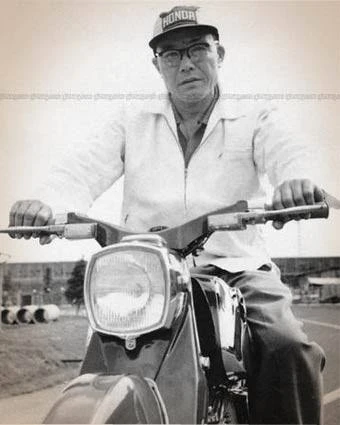
A crucial turning point in this journey was marked by Soichiro's meeting with Takeo Fujisawa in 1949. While Soichiro led engineering and design, Fujisawa took charge of finance, sales, and marketing. Fujisawa's idea was to create a motorcycle suitable for everyday use that even women could easily ride on Japan's difficult roads. As a result, the Super Cub motorcycle, introduced in 1958, sold over 100 million units, becoming the best-selling motor vehicle in history.
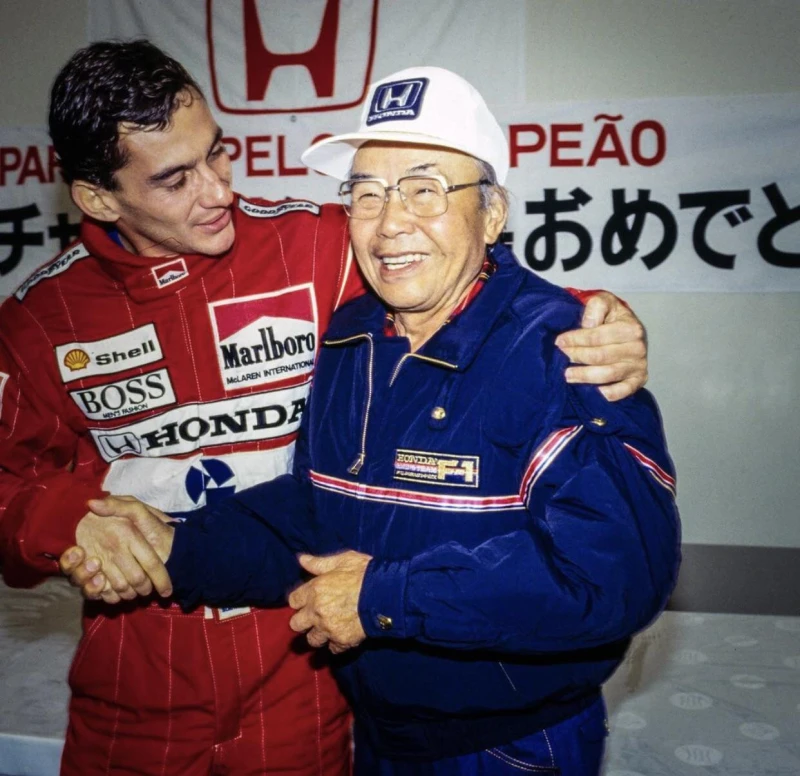
By the late 1950s, Honda had become the world's leading motorcycle manufacturer, and in 1959, it opened its first sales representative office in the United States. In 1963, they entered automobile manufacturing and successfully participated in racing competitions. Although he sometimes severely reprimanded employees, Soichiro worked to create a company culture that allowed for innovation and personal initiative rather than a strict hierarchy. He personally inspected the machines. In 1973, he retired from the presidency at the age of 66, and on August 5, 1991, he ended his life's journey in Tokyo at the age of 84.
He once said, "Success is the 1% result produced from your 99% work called 'failure'." He also said, "I will die the day I stop dreaming," and believed that he was most excited when he planned something and it failed. This was because that very failure brought the necessary ideas to his mind to correct it. The story of Soichiro Honda, who believed that failure is not a defeat but necessary data, who was born the son of a blacksmith, lost everything twice, but built one of the world's largest companies through continuous effort and courage, is an excellent example to the world that with unlimited dedication, one can rise again from any pile of ashes.