
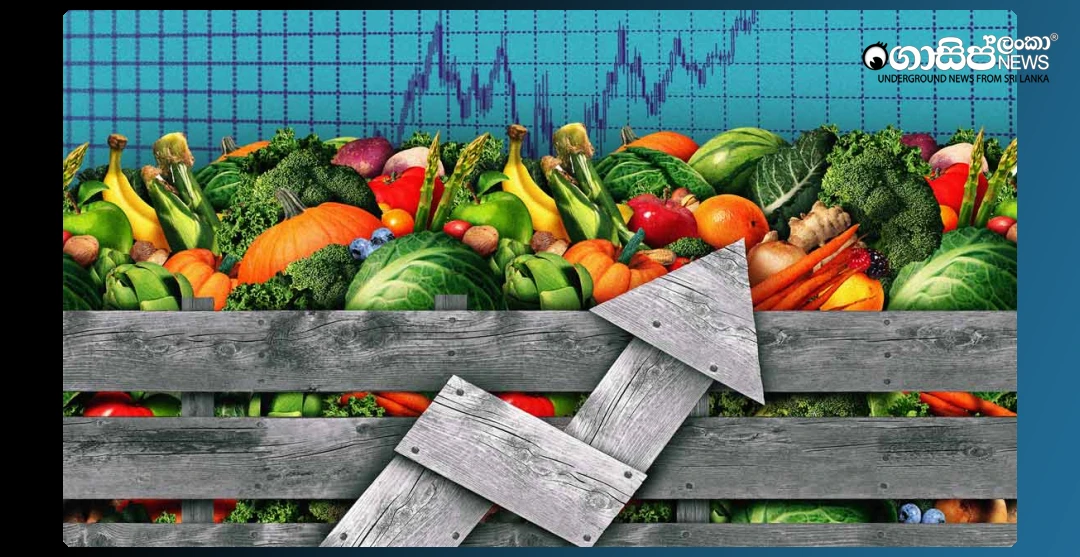
Although Sri Lanka's overall economy has reached pre-crisis levels, the World Bank points out that this recovery is not yet fully reflected in the daily lives of ordinary people. The bank's assessment is that with household incomes and the labor market still lagging, the pressure of rising food prices will be felt more acutely by the people of this country.
Inflation data for October 2026 clearly confirms this situation. According to these data, food inflation under the National Consumer Price Index has risen to 7.2 percent, and under the Colombo Consumer Price Index, it has increased to 8.8 percent. According to the World Bank's latest Global Food and Nutrition Security Update report for November, concerning food and nutrition security, the pressure of rising food prices remains intense in the South and Central Asian region, including Sri Lanka.
This report indicates that food price pressure has not eased at the global level either. The World Bank states that food price inflation still exceeds 5 percent in 33 percent of the countries used for the report. Accordingly, the report warns that food price pressure will remain intense in the South and Central Asian region, including Sri Lanka. Furthermore, real food price inflation has risen at a faster rate than overall inflation in 27 percent of the 153 countries for which data was reported. In the previously released report, this percentage was 12 percent.
Forecasts for the coming year are also not very favorable. According to the World Bank's Commodity Markets Outlook report released last October, food prices are projected to increase by 10.3 percent in 2026 and by 7.2 percent in 2027. The primary reasons for this global increase in food prices are disruptions to supply services due to military conflicts and the resulting high transportation costs. In addition, high input costs, climate risks, and trade barriers have also exacerbated this situation.
The World Bank emphasizes that the challenge faced by the South Asian region is not merely a food shortage. The World Bank states, "The challenge to food security in South Asia is further intensifying, especially due to reduced purchasing power of the people, climate shocks, rising transportation and energy costs, and unequal social protection programs, rather than an overall food shortage."
Meanwhile, the impact of climatic risks has become a major factor in this crisis. Special attention is being paid to a very strong El Niño condition, which poses a risk of lower-than-average rainfall and higher temperatures in countries including Sri Lanka, Bangladesh, Bhutan, India, and Nepal. The report indicates that this severely affects crop cultivation and food production. The World Bank and the World Food Programme have paid special attention to the risks that this El Niño impact could pose to agricultural productivity and water resource management in Sri Lanka.
The picture that emerges when comparing the background presented in the World Bank's report on Sri Lanka's economic recovery, released early last October, with these new data is serious. As the country's poverty rate remains high at 16.9 percent, it warns that rising food and energy prices will exert severe pressure on the food security of low-income families.