On February 19, 2014, a thirty-eight-year-old man arrived at the doorstep of the old North County Social Services office building at 101 Moffett Boulevard in Mountain View, California, carrying a multi-billion dollar deal. Twenty-two years prior, it was on those very steps that he, a mere sixteen-year-old, stood in long queues to receive free government food stamps.
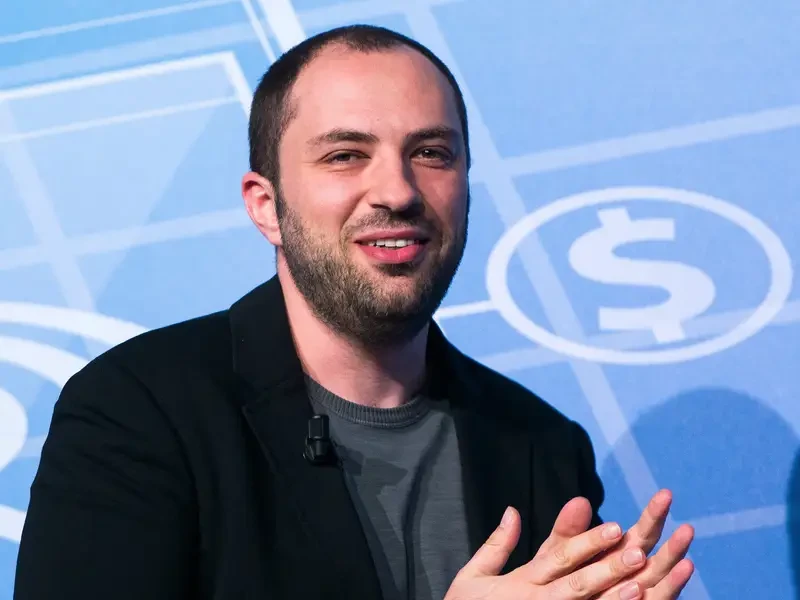
On that day, Jan Koum, who once stood in that queue as a helpless immigrant, signed a massive historic agreement with Facebook at that very doorstep, a deal worth approximately $19.3 billion, which turned the entire global communication sector upside down.Jan Borisovich Koum, born on February 24, 1976, into a Jewish family in Kyiv, the capital of the Ukrainian SSR, which was then part of the Soviet Union, grew up in Fastiv, a small town near Kyiv. His childhood was extremely difficult. There was no hot water facility at home, and the school building where he studied did not even have toilet facilities. Even when temperatures dropped to minus 20 degrees Celsius in winter, students had to walk through an open parking lot. His father, who worked in hospital and school construction, worked until night, so Jan had very little time with him. However, more than the poverty, what affected Koum's mind was the constant fear of state surveillance and an environment reminiscent of the society in George Orwell's 1984. His parents spoke very cautiously as telephone conversations were constantly being eavesdropped on. Also, at that time, there were almost no advertisements in the Soviet system, and these experiences later completely shaped his vision.
With the collapse of the Soviet Union, facing political and economic crises as well as anti-Semitism, 16-year-old Jan immigrated to Mountain View, California, with his mother and grandmother in 1992. The family, who obtained a small two-bedroom house with the help of a social welfare program, lived on welfare aid and food stamps. His father, who had planned to join them later but never managed to leave Ukraine, died in 1997. His mother worked as a babysitter (later becoming disabled due to cancer), and teenage Jan worked sweeping and cleaning floors at a grocery store. They rarely had enough money to call relatives back home. Koum, with limited English proficiency and no car for school, traveled on early morning buses, describing himself as someone doing dangerous work and barely finishing school. In 2000, with the death of his mother from cancer, he became completely alone in the world.
However, amidst these hardships, he bought used technical books from stores, studied them with great interest, and returned them to get his money back, thereby mastering computer networking and programming on his own. While enrolled at San Jose State University, he worked as a security tester at Ernst & Young and also joined a computer security group called 'w00w00,' which associated with figures connected to Napster. In 1997, during a security audit, he met Brian Acton, Yahoo's 44th employee. After passing the Yahoo interview and joining as an infrastructure engineer, Koum was one day called out of class by Yahoo co-founder David Filo to fix a server. At that point, he dropped out of university. Subsequently, Koum and Acton worked together at Yahoo for about nine years.
On October 31, 2007, both left Yahoo, spending time traveling in South America and playing Ultimate Frisbee. Both applied for jobs at Facebook but were rejected. "We're part of the Facebook rejects club," Acton later said. Although Koum had savings from Yahoo, he had no definite purpose for the future until he bought an iPhone in January 2009 and saw the potential of its 'App Store.' Discussing with his friend Alex Fishman, an idea for a status app emerged, which could show his location or status to contacts (e.g., indicating he was at the gym). On February 24, 2009, his 33rd birthday, he registered the company as 'WhatsApp Inc.' similar to 'What's Up,' meaning "what's happening." He handled the backend system, and a Russian software engineer named Igor Solomennikov helped create the iPhone application.
In its early stages, making the app successful was a difficult struggle. However, in June 2009, Apple introduced 'Push Notifications' through iOS 3.0, which changed everything, transforming status updates into instant messaging. Using the phone number as the login and the phone's contact list as the network, it rapidly grew as a simpler and more reliable messaging medium than regular SMS, especially internationally. Acton, who encouraged Koum not to give up, raised $250,000 in seed funding from former Yahoo colleagues and joined as co-founder in October 2009. They often operated very frugally from cafes, and a handwritten note on their table read: "No Ads! No Games! No Gimmicks!" Instead of relying on advertising, they charged a small fee after a free trial period (later $1 per year in some markets).
The core principle was to protect privacy by not storing messages on servers and collecting only a minimal amount of data. This was directly influenced by his childhood experiences with surveillance in the Soviet Union. "You have nothing more private than communicating with friends and family. Interrupting that with advertising is not the right solution," Koum once stated.
With that vision, WhatsApp rapidly expanded. The number of users grew from hundreds of thousands to millions. Growing without any advertising costs, its revenue in 2013 was approximately $20 million. Sequoia Capital invested $8 million in 2011 and another $50 million in 2013, based on a valuation of approximately $1.5 billion. By early 2014, WhatsApp, with about 450 million monthly active users (with about a million new users joining daily at peak times) and a daily active user rate of over 70 percent, had only between 50 and 55 employees. Of these, just over 30 were engineers. It had become the leading communication medium in many countries as a cheaper and more reliable alternative to SMS.
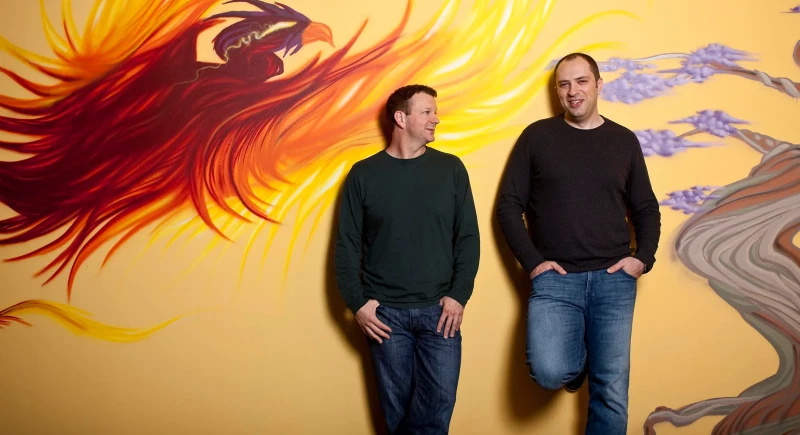
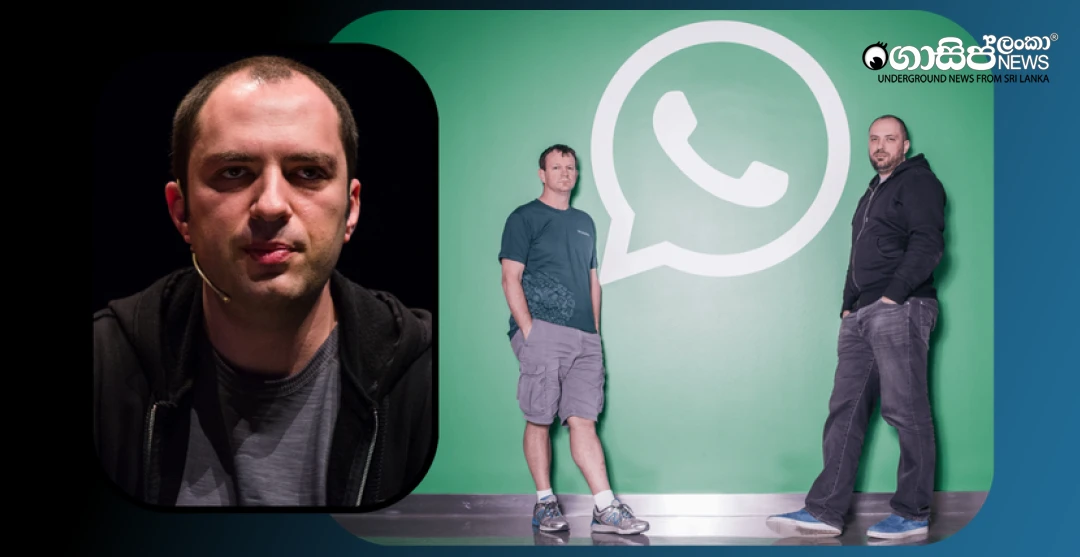
From around 2012, Mark Zuckerberg discussed this with Koum during dinner parties. Finally, on February 19, 2014, Facebook announced it would acquire WhatsApp for a value between $19 billion and $19.3 billion ($4 billion in cash, $12 billion in stock, and $3 billion in restricted stock units). To sign this historic agreement, Koum, Acton, and Jim Goetz of Sequoia chose not the main office, but the doorstep of the old social services office in Mountain View, where Koum had stood in line for food stamps as a teenager. Koum, who held about 45% ownership of WhatsApp, became a billionaire even after paying taxes. On the promise of preserving independence and an ad-free policy, he joined the Facebook board of directors and continued as WhatsApp CEO, and the deal officially closed that same year.
However, amidst disagreements over privacy and monetization methods, Koum, who had long opposed advertising and data collection, left WhatsApp and the Facebook board of directors in 2018. WhatsApp, which continued to grow thereafter, is today a massive network used by billions of people worldwide.
Since then, Koum has led a quiet life, with his net worth estimated to be in the range of $15 billion to $19 billion in recent years, and projected to be between $16 billion and $18.5 billion in 2026 reports. A portion of these assets is managed through Newlands. Through the Koum Family Foundation, with billions of dollars in assets, he primarily engages in philanthropy for Jewish welfare, Israeli institutions, relief efforts related to Ukraine after the 2022 invasion, education, and health sectors. Prominent among these are a $200 million donation to Shaare Zedek Medical Center in Jerusalem and $36 million for the 'Jan Koum Campus' at Milken Community School in Los Angeles. Additionally, he has made political donations to pro-Israel and certain American candidates.
Jan Koum's journey from a poor immigrant boy sweeping floors in a Mountain View grocery store and standing in food stamp lines to creating one of the world's largest communication tools is an unparalleled chapter in Silicon Valley. His strong belief in simple communication, free from the Soviet surveillance he experienced as a child, and with privacy preserved, ultimately succeeded in rewriting the communication culture of the entire world.