
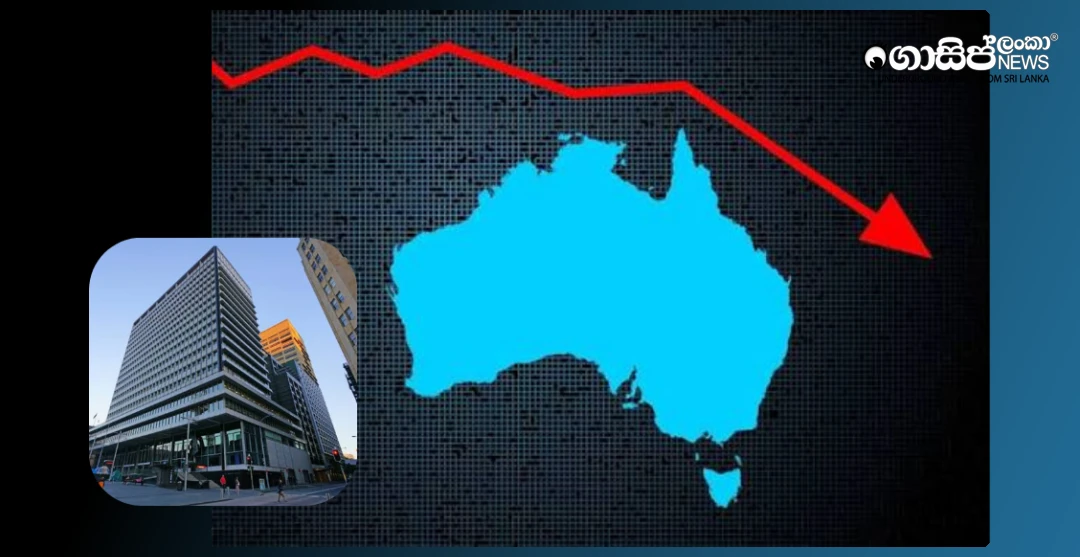
A group of members of the Reserve Bank of Australia's (RBA) Monetary Policy Board has issued a serious warning that the Australian economy is on the brink of a significantly sharp downturn, which would entail a severe cost of rising unemployment. This stance by the minority members who opposed the decision to raise interest rates for the fifth time in 2026 was revealed in the meeting minutes released on November 17.
At its meeting on November 3, 2026, which was Melbourne Cup Day, the Reserve Bank's Monetary Policy Board decided by a 6–3 vote to raise the cash rate target by 25 basis points. This increased the interest rate to 4.85 percent, effective from early November, marking its highest value since November 2008. Although three members voted in favor of keeping the interest rate unchanged at 4.60 percent, the Reserve Bank does not disclose how individual members voted in its reports.
The three dissenting members argued that it would be "prudent to allow more time" to assess the impact of the 100 basis points of interest rate tightening already implemented during 2026. They placed greater weight on the risk of slower economic growth than on the risk of higher inflation. The meeting minutes stated that "these members expressed concern that the economy may be approaching the point of entering a materially sharper downturn and pointed to the costs associated with unemployment."
This minority group focused on several key risks. One was that unemployment had risen by about 0.5 percentage points more than expected over the preceding six months by the time of the meeting. They also pointed to the downturn in the housing market, which media had described as among the sharpest declines in about 40 years. They believed that falling house prices and reduced transactions posed a risk of spending on home renovations, household appliances, and related professions falling more than usual. Additionally, they warned that the economy could face a further downturn if interest in data-centre construction weakened.
However, the six majority members judged that forward-looking inflation pressures had increased, and risks were skewed further to the upside. Considering persistent inflation, a potentially higher neutral interest rate, and the duration for which inflation would remain above target, they concluded that an interest rate of 4.60 percent was "clearly insufficient" to bring the economy back into balance. The majority believed there was a risk that higher inflation expectations could become entrenched if policy was not tightened sufficiently.
While the Bank's main forecasts did not show a technical recession (two consecutive quarters of negative GDP growth), Governor Michele Bullock later acknowledged that slow growth in incomes and spending would make the financial situation "feel like a recession" for many households. This has been attributed to weak productivity and supply shocks. Furthermore, she noted early signs that some businesses were starting to consider inflation between 3 and 3.5 percent as the "new normal," which would make it more difficult to bring inflation back to the 2.5 percent midpoint.
After cutting interest rates to 3.60 percent in 2025, the Reserve Bank raised them five times by 25 basis points each in February, March, May, September, and November of 2026. Inflation has re-accelerated due to rising fuel prices linked to conflicts in the Middle East and Iran, as well as domestic capacity pressures. According to staff forecasts in the November Monetary Policy Statement, headline and underlying inflation will remain above 3 percent until late 2027, reaching the midpoint of the 2–3 percent target later than previously expected, in mid-2028.
According to the economic outlook highlighted in the meeting minutes, unemployment is forecast to rise to 5.1 percent by the end of 2028, a higher figure than previous forecasts. Although staff judged that the initial rise in unemployment was mainly due to stronger labor supply, minority members viewed it as a warning sign. Economic growth is expected to remain below its potential, and house prices and new lending have fallen sharply. While mortgage repayments as a percentage of income are close to their 2024 peak, the report also indicates that the full impact on spending has been somewhat mitigated by the additional savings buffers held by many households.
Meanwhile, official data released after the November meeting have further confirmed the warnings of the minority members. According to data from the Australian Bureau of Statistics (ABS), the unemployment rate rose to 4.9 percent in October 2026, its highest level since late 2021. Approximately 43,500 jobs were lost in October after a decline in the previous month. With this latest data, financial markets and most major banks anticipate that the Reserve Bank will temporarily pause interest rate hikes at its next meeting on December 7–8, and that 4.85 percent may be the current peak.
This divergence of opinion within the nine-member Monetary Policy Board—comprising Governor Michele Bullock, Deputy Governor Andrew Hauser, Marnie Baker, Melinda Cilento, Renée Fry-McKibbin, Carolyn Hewson, Bruce Preston, Ian Ross, and Treasury Secretary Jenny Wilkinson—highlights the complex balance between controlling high inflation and preventing an economic downturn. With Treasurer Jim Chalmers and the government preparing for mid-year financial updates, and against a backdrop where the Reserve Bank's independence has been emphasized, all eyes are now on the Board's decision in December.