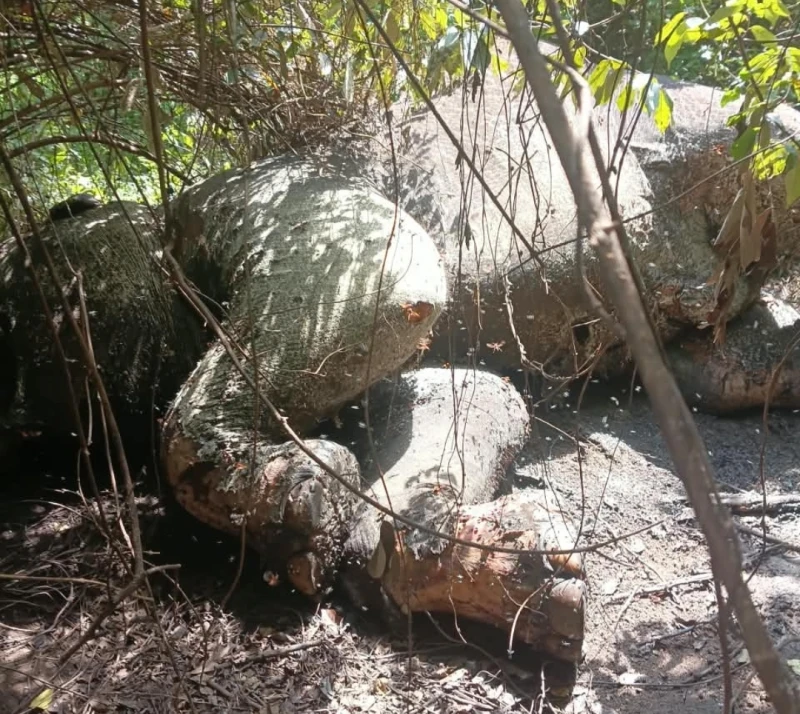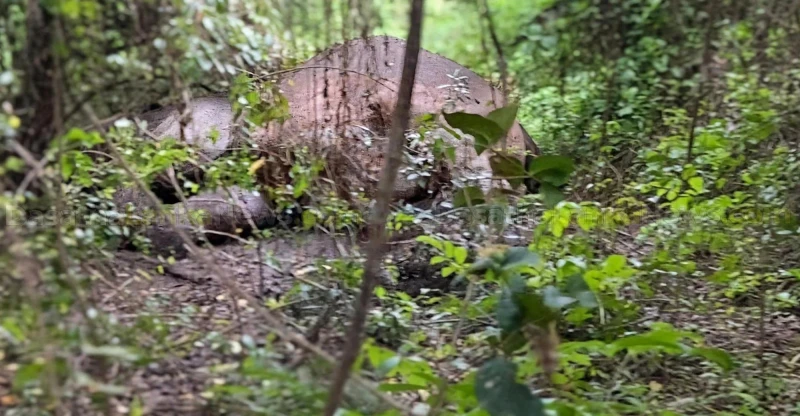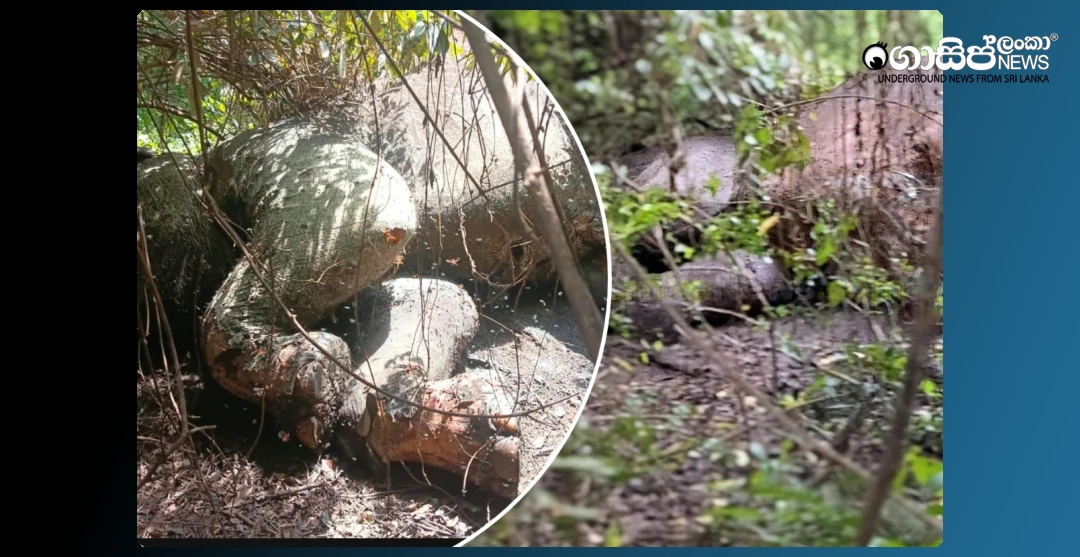
The carcass of another wild elephant, which had mysteriously died in a forested area in Miminnawala, Kahatagasdigiliya, was discovered by wildlife officials today (01). The most sensitive aspect of this tragedy, reported less than a month after the death of the elephant Kavantissa, is that the left tusk of the deceased elephant had already been cut off and taken away by someone when it was found.
Officials from the Kahatagasdigiliya Wildlife Office found the carcass in a forest thicket near a paddy field adjacent to the Kayangollewa tank in the Miminnawala area. Based on the condition of the body, officials suspect that the animal had been dead for several days. Wildlife authorities already suspect that the left tusk of the deceased animal was cut off and taken away by an individual.
A comprehensive investigation into this incident is currently underway. The Kahatagasdigiliya Wildlife Office, Divulwewa Police, and the Sri Lanka Army have jointly commenced investigative activities for this purpose.
Based on information received from the Department of Wildlife, Opposition Leader Sajith Premadasa also expressed deep shock regarding this incident via his social media account. Sharing a photograph of the deceased elephant, he stated that this was another elephant killing and an extremely horrific sight.
The Opposition Leader, urging authorities to take swift and decisive action to prevent such killings against wild elephants, referred to those responsible for this crime as "environmental terrorists." He emphasized that they should be immediately brought before the law and given the maximum possible punishment. He had previously suggested the need for a special investigation into the death of the elephant Kavantissa and a dedicated program for wildlife conservation.
Mr. Sajith Premadasa further urged in his note, "Let us all unite to prevent this destruction and disaster." Less than a month after the demise of the great elephant Kavantissa, the silent carcass of this elephant, missing its left tusk, once again highlights the danger faced by the country's wildlife resources.