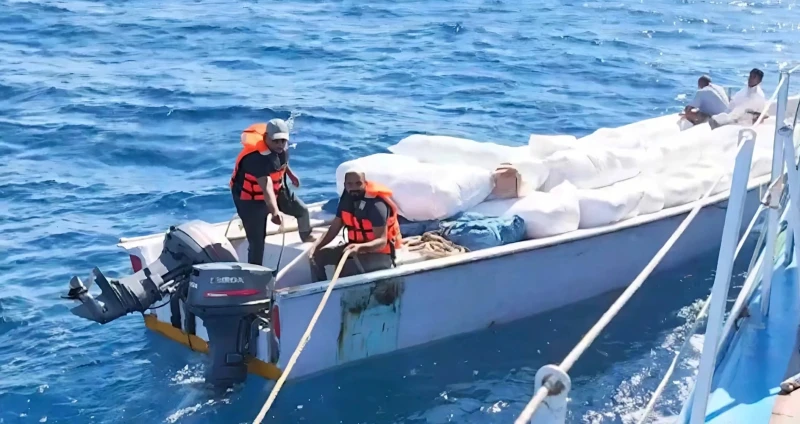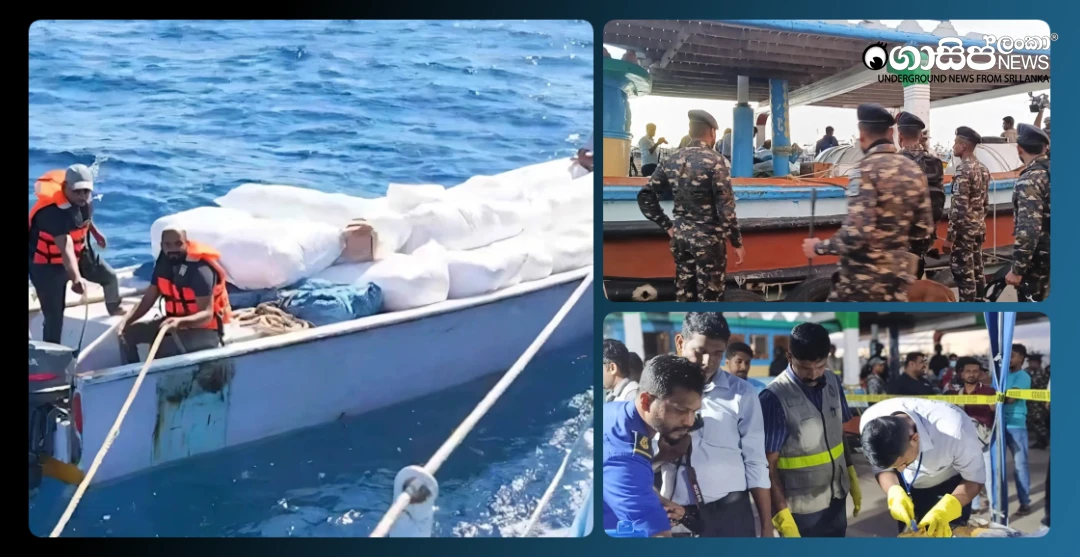
No flag, no country name, not even the name of the vessel was mentioned. This mysterious vessel, sailing in international waters south of Dondra without any identification marks, was taken into custody by the Sri Lanka Navy during a special search operation, bringing to light information about several operations against smuggling networks operating within the country's sea limits and customs warehouses.
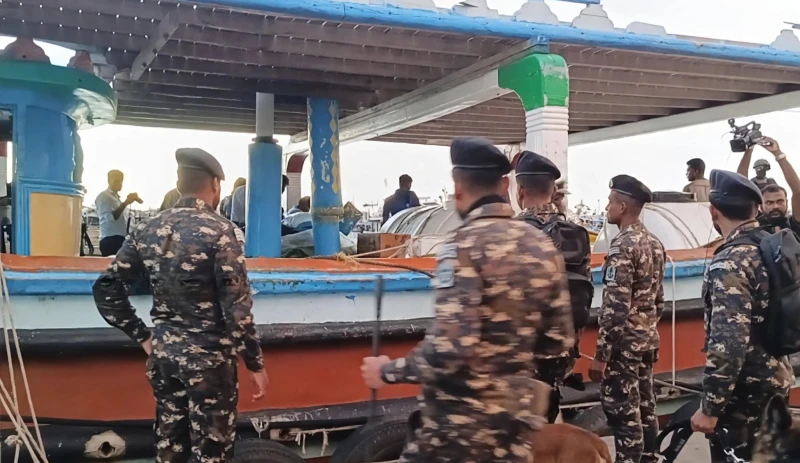
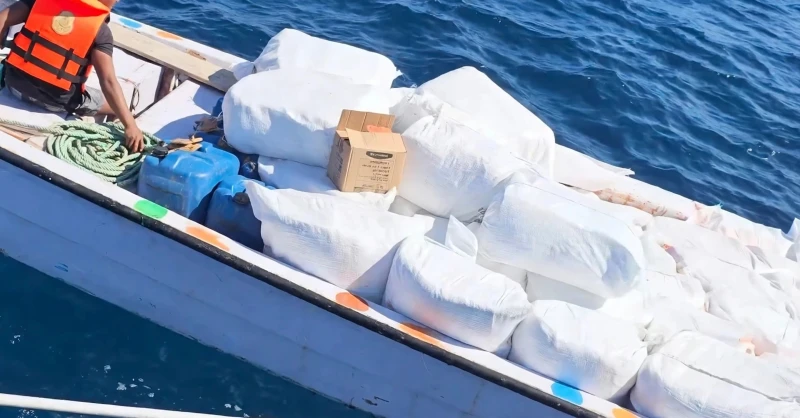
The vessel seized by the Navy in international waters south of Dondra is suspected of transporting a consignment of heroin and 'ice' (crystal methamphetamine). The Navy stated that seven suspects on board the vessel were also arrested. All of them are foreign nationals, but their identities have not yet been revealed, and the vessel is suspected to belong to a foreign drug network. Based on information received regarding the operation, the Navy suspects that the suspects threw nearly 300 kg of drugs from the vessel into the sea. The vessel, along with the remaining drugs, was brought to Dikowita Port this afternoon.
Commenting on this arrest, Deputy Minister of Defence Major General (Retired) K. P. Aruna Jayasekara pointed out that the absence of any flag, country affiliation, country name, or vessel name on the boat was a special reason for its seizure. He stated that this situation raised significant suspicion that it was a foreign vessel transporting drugs, and that preliminary findings from ongoing investigations with the arrested suspects also indicated that this vessel was used for drug trafficking. The Deputy Minister added that such operations were made possible as a result of amending and strengthening ordinances over the past year, and revealed that the value of drugs seized by the Navy alone in deep-sea areas in 2025 and 2026 amounted to 116 billion rupees.
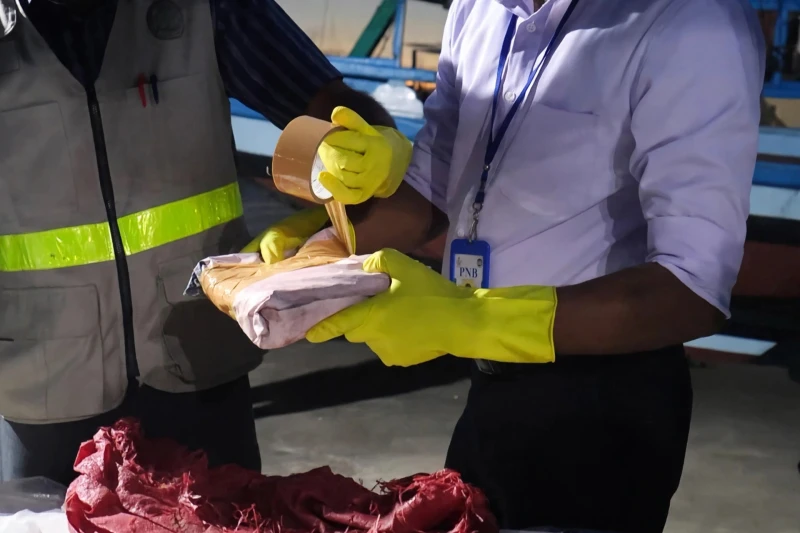
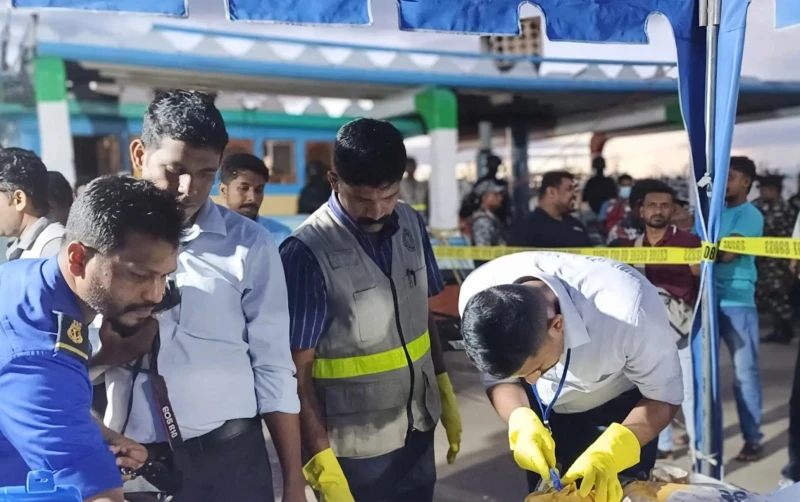
While drug traffickers were being apprehended in the southern seas, another sophisticated consignment of drugs was seized within a customs warehouse on land. Sri Lanka Customs has taken into custody a consignment of drugs that was meticulously hidden within three parcels and sent to the country from Malaysia, found in a customs warehouse located in the Peliyagoda area. Officers of the Sri Lanka Customs' Drug Control Division identified these suspicious parcels during a special inspection, and steps were taken to detain the parcels with the aim of arresting individuals who would come to claim them. However, as no one came to claim the parcels within the stipulated period, they were opened and inspected in the presence of officers from the Police Narcotics Bureau. During this inspection, 18,193 grams of hashish were found hidden inside the parcels, with an estimated street value of 181.9 million rupees.
Meanwhile, the Department of Coast Guard and the Sri Lanka Navy successfully prevented an illegal goods exchange planned to take place in the middle of the sea in the western maritime zone. Following an operation conducted jointly with the Navy in the sea area 50 nautical miles off Chilaw, the Coast Guard Department took into custody a local dinghy boat and four fishermen on board, along with nearly 180 kg of illegal shark fins.
Interrogations of these suspects revealed that the consignment of shark fins was planned to be exchanged for beedi leaves with an Indian vessel. Accordingly, the crew of the 'Samaraksha' vessel, in coordination with the Sri Lanka Navy, launched a further operation. When an Indian dhow approached the dinghy boat to conduct the exchange, officers took the Indian vessel and its four fishermen into custody. In this joint operation, 69 sacks were found, including six sacks containing shark fins and 63 sacks containing beedi leaves, and the respective vessels were also taken into custody by the security forces.
These three operations, extending from the southern seas off Dondra to the Chilaw maritime zone and the Peliyagoda customs warehouse, demonstrate how international sea routes, postal parcels, and sea exchange methods are simultaneously being used for drug and illegal goods trafficking.