![Gossip Lanka News [English]](https://blogger.googleusercontent.com/img/a/AVvXsEhYm2aFFq-bIW1nWX-RrqnPFoIsVos6_VCVz8BpLt0QJi55GNXHXC2fugeRvL0qUStEuCfs7Sfu6ZiSlhrkldxfGuE_wzy5gitY6rMZ2KSi8VBbGvkgXLks37RwZV-4-HKbWiNLRxB8C_r1e4z3mpxFTMPDJPEADoG8E-bZteWFipeD5KNGbjvCfqEfKw=s300 "Gossip Lanka News [English]")
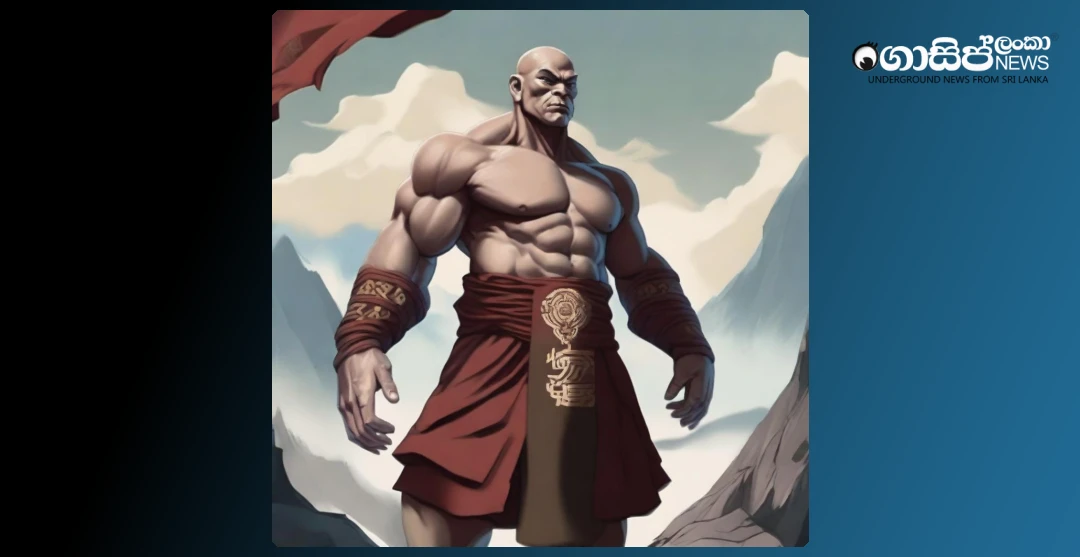
A certain critical term, which has been in use for some time within the Sri Lankan political, social, and media discourse, has now come strongly to the forefront. That is, 'Sangha Patalaya'.
Let's examine whether it is truly an appropriate word to refer to the Buddhist monks.Maha Sangharatnaya (the Great Sangha) is the sacred name given to the community of ordained followers of the Buddha. Patalaya refers to the criminal underworld. 'Sangha Patalaya', formed by the combination of these two contradictory words, is not an official term defined by law or existing within the Buddhist Sasana (dispensation). It is a sarcastic and highly critical term used by the media, political commentators, and social activists to refer to monks who wear robes and engage in crimes, drug trafficking, child abuse, as well as corrupt and politically extremist activities.
This term was not accidentally created recently. It was popularized by former Minister Mangala Samaraweera, targeting nationalist and hardline monks who publicly acted against his political views. It has also been used periodically in written media. In 2018, the 'Anidda' newspaper published an article titled "Sangha Patalaya and the Rule of Law," criticizing the conflict between religious power and the law. Subsequently, this term has been used on several newspaper websites to criticize the political and social interventions of certain monks.
In addition to the incident in 2025 where a group of monks from Thailand was caught with drugs at the airport, several other serious issues have recently fueled this discourse. Among them, the child abuse accusation against the Chief Incumbent of the Atamasthana in Anuradhapura is prominent. Between May 2023 and May 2026, complaints have been received by the National Child Protection Authority against two hundred and eighty-five monks. The case against Atamasthanadhipathi Pallegama Hemarathana Thero is considered one of the most prominent incidents, where the underlying power of the underworld was demonstrated through the use of legal influence, financial power, and the silencing of mainstream media and Mahanayaka Theros to escape punishment for the offense committed.
During the Rajapaksa presidency, Galagodaaththe Gnanasara Thero of the Bodu Bala Sena organization, who acted as if taking the law into his own hands on several occasions, faced legal punishment for those offenses with changes in government. However, with the change in 2018, as a Maithripala-Rajapaksa supporter, he received a pardon for the legal punishment. But with subsequent changes in government, the ability to exert influence over law enforcement agencies from below diminished, and the Thero's case resurfaced, confirming the punishment. Concurrently, controversies surrounding imprisonment, disrobing, and the political activities of individuals like Thiththagalle Anandasiri Thero have further broadened this critical designation of 'Sangha Patalaya'.
However, critics point out that merely engaging in politics, expressing political opinions, or raising a voice against social injustice is not proof that a monk belongs to this so-called underworld. This accusation is leveled against those who are criticized for going beyond their priestly duties to achieve religious or political objectives by using threats, intimidation, and mob power; unduly influencing state officials and political decisions; using religious authority to gain illicit economic benefits; and attempting to act above the law. It also includes those accused of acting extremely against other communities or dissenting groups.
All of this does not imply that the entire monastic community is corrupt. The vast majority of the Maha Sangharatnaya are individuals who uphold pure discipline and protect religious dignity, and it is stated by both sides that only a small group acting contrary to this causes the creation of such 'underworld' characters. However, it is clear from this term itself that the activities of this small group have created a significant conflict between the rule of law and the dignity of the robe.
From the assassination of former Prime Minister Bandaranaike to the present day, violent, criminal, and political controversies involving monks have run throughout Sri Lankan history. 'Sangha Patalaya' is a term that represents two different facets. On one hand, it functions as a social critique of genuine crime and corruption, while on the other, it is also used as a tool to defame political opponents. Therefore, it is more accurate to recognize it not as a proven criminal designation, but as a critical mirror reflecting the crisis between religious identity and social responsibility.