![Gossip Lanka News [English]](https://blogger.googleusercontent.com/img/a/AVvXsEhYm2aFFq-bIW1nWX-RrqnPFoIsVos6_VCVz8BpLt0QJi55GNXHXC2fugeRvL0qUStEuCfs7Sfu6ZiSlhrkldxfGuE_wzy5gitY6rMZ2KSi8VBbGvkgXLks37RwZV-4-HKbWiNLRxB8C_r1e4z3mpxFTMPDJPEADoG8E-bZteWFipeD5KNGbjvCfqEfKw=s300 "Gossip Lanka News [English]")
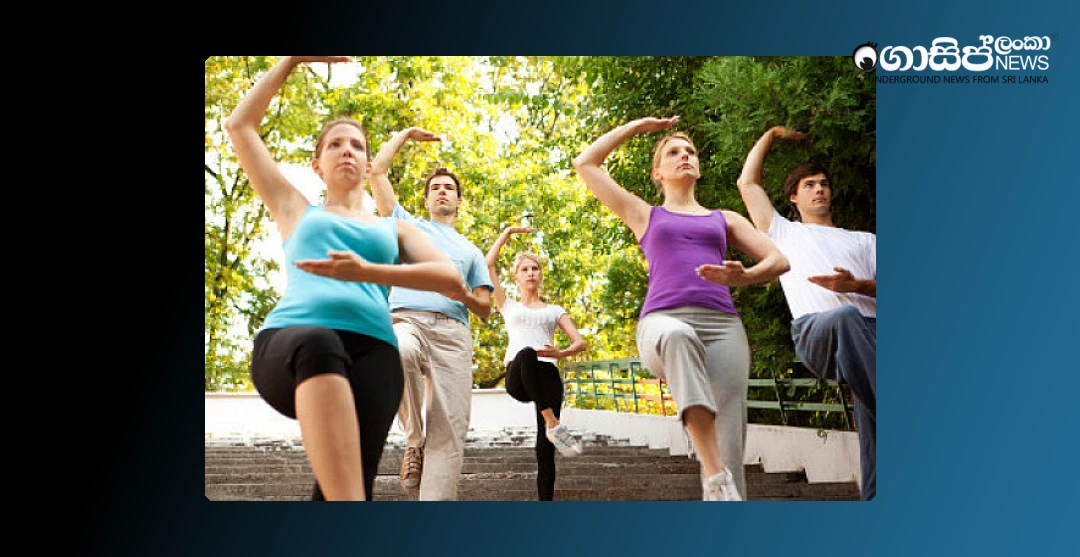
Normally, we walk by leaning forward. With each step, we fall forward and prevent that fall with the next foot. But did you know that by changing this normal habit, a single slow and very mindful step can bring great healing to both body and mind? This wonderful concept is behind the art of "Tai Chi Walking," which became extremely popular worldwide through social media and wellness programs in 2025 and 2026.
"Tai Chi Walking" is based on the principles of footwork and weight shifting from 'Taijiquan,' a centuries-old Chinese internal martial art. This is not a sudden new discovery. In the past, Tai Chi martial arts masters often made this step-training mandatory for months before teaching their students the complete methodologies. Through this, they developed the balance, proper body posture, and present moment awareness necessary for both martial arts and health. Now, even without learning all the movements of Tai Chi, ordinary people have the opportunity to gain many of these benefits through this walking method alone.
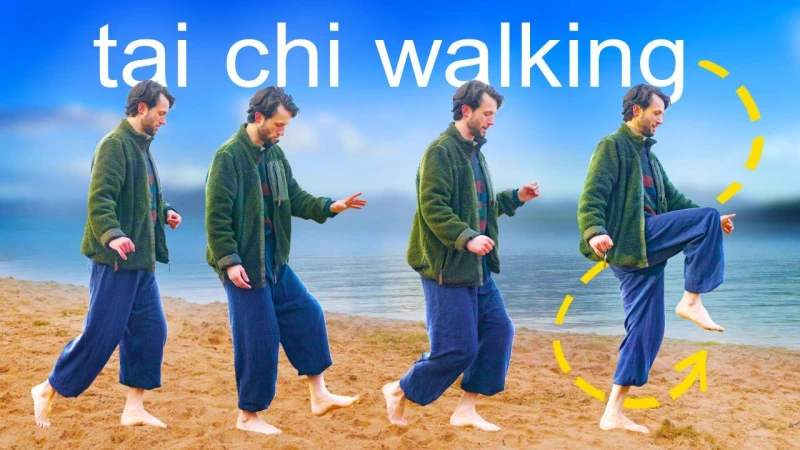
Unlike regular walking, relying on forward momentum is largely eliminated in Tai Chi Walking. Here, the entire body weight is shifted to one foot, the other foot is placed forward as a light, weightless step (empty step), and then the weight is slowly transferred to that foot. Typically, one step takes between 3 and 5 seconds. This develops the ability to balance the body on a single foot and activates the small muscles in the feet and ankles. While there is also a method called "ChiWalking" and "ChiRunning" introduced by Danny and Katherine Dreyer, which applies Tai Chi principles to normal-paced walking and running, true Tai Chi Walking is a different, very slow, meditative activity.
This training requires no special equipment; only a clear space indoors or outdoors is sufficient. It can be done with comfortable footwear or even barefoot. If you have balance issues, it is best to stand near a wall or support. First, stand with your knees slightly bent, not locked, and your back straight as if a string is pulling you up from the crown of your head. Shoulders relaxed, arms hanging loosely by your sides or placed on your waist, and looking straight ahead is the basic posture.
The main skill here is to shift 100% of your body weight onto one foot. When lifting the other foot off the ground, that foot should be light enough so that the body does not tilt. Then, that light foot should be placed forward as a shorter step than a normal one, and it should have no weight on it, so much so that it can be easily retracted. Subsequently, just like pouring water from one glass to another, the weight should be gradually transferred from the heel through the sole of the front foot. The back foot should only be lifted off the ground after the front foot has fully taken the weight.
A breathing pattern can be incorporated into this, inhaling when lifting and placing the foot, and exhaling when shifting weight. One can start with 5 to 10 minutes a day and gradually increase it to 15 to 20 minutes. Harvard Health experts point out that walking forward, backward, or sideways, as well as simple hand movements, can be incorporated, and some methods include small variations like foot turns. Dr. Paul Lam of the "Tai Chi for Health Institute" describes this as "walking with Tai Chi principles of mindful weight shifting, maintaining balance, upright posture, and focused attention."
There is a wealth of scientific evidence regarding the health benefits of this exercise. While the highest results are achieved by practicing full Tai Chi programs two to three times a week over several months, this walking training also activates the same fundamental mechanism. According to a research analysis conducted in 2023 using 24 randomized controlled trials, Tai Chi was confirmed to reduce the risk of falls in older adults by approximately 24% (RR 0.76). Additionally, improvements were observed in 'Timed Up and Go,' 'functional reach,' single-leg standing, and the 'Berg Balance Scale' measurements. Another study published in 'JAMA Internal Medicine' of the American Medical Association showed that older adults at higher risk of falls reduced that risk by 30% to 58% by practicing Tai Chi compared to doing general stretching or other exercises. Biomechanical studies indicate that Tai Chi stepping enhances the ability to control foot joints more than regular walking.
Furthermore, this is a joint-friendly, low-impact exercise. The slow application of weight can help protect bone density, making it particularly suitable for individuals with arthritis and older adults. According to a study published in 'JAMA Network Open' in 2024, a 12-month trial involving 342 individuals with prehypertension showed that while those who performed aerobic exercises like brisk walking experienced a blood pressure reduction of 4.61 mmHg, those who practiced Tai Chi saw an average blood pressure drop of 7.01 mmHg. Nighttime blood pressure measurements were also more favorable in those who practiced Tai Chi. This moving meditation helps reduce mental stress and anxiety, and improves focus and sleep. Some research also indicates that it can slightly enhance cognitive abilities.
However, in September 2026, several wellness publications, including 'Harvard Health,' pointed out that one should be cautious about exaggerated claims circulating online. Tai Chi Walking burns a low number of calories, so rumors spread through social media about rapid weight loss or significant muscle gain are not true. If weight loss is the primary goal, engaging in other faster activities in addition to this is essential. Individuals with serious balance problems, recent injuries, or other medical conditions should start this by taking short steps near a support, and seeking medical advice or the assistance of a qualified instructor is important. Rushing the weight transfer will cause the core purpose of this practice to be lost.
A beginner can even start this by simply practicing weight transfer from one foot to another without taking full steps. Better results can be achieved by practicing for short periods daily rather than long, occasional sessions, and practicing outdoors can further enhance mental well-being. Free YouTube videos by experts like Dr. Paul Lam can demonstrate how to correctly transfer weight from heel to sole.
Tai Chi Walking is not just an exercise; it is a beautifully constructed bridge between ancient Chinese martial arts principles and modern scientifically-backed wellness concepts. Without any equipment, through the simple act of taking more mindful and correct steps, it provides an excellent opportunity to improve both body balance and mental presence.