For soldiers fighting on the Ukrainian front, it was an experience "akin to a nuclear attack." As the night between October 13 and 14, 2026, approached, their drone operations suddenly began to falter without any prior warning.
As revealed by the Wall Street Journal on October 20, Elon Musk authorized the temporary limitation of the speed of the Starshield satellite internet service used by the Ukrainian military.
According to the report, citing American officials and sources close to the incident, connectivity was thus limited for terminals moving at speeds greater than approximately 160 kilometers per hour (100 miles per hour). This move surprised the Kyiv government and also caused confusion within the Trump administration.
Looking at the background of this incident, it appears that both Musk and President Trump had expressed anger regarding Ukraine's attacks targeting Russian diesel and oil refineries. Trump had linked these attacks to rising energy prices and was also pushing for an energy ceasefire.
SpaceX imposed this limitation on the Starshield package, which is distinct from the commercial Starlink service and intended for military and government purposes, without prior notification to Ukrainian authorities. With the imposition of a speed limit of 160 kilometers per hour or more, connectivity for some systems also faltered at speeds as low as 110-120 kilometers per hour.
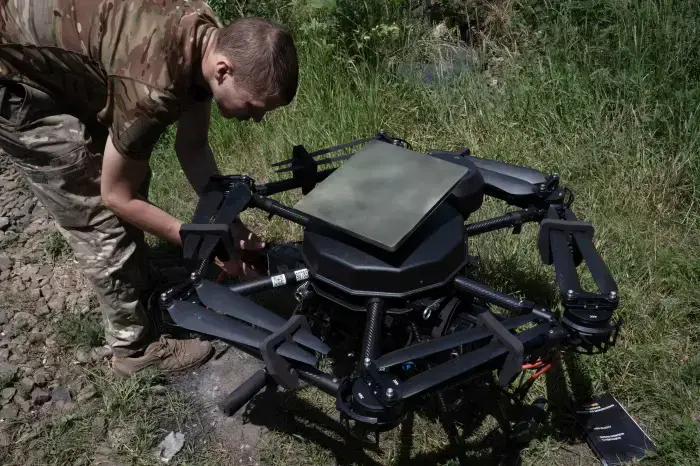
This primarily affected Ukraine's drone operations. It hindered the functionality of medium-range attack drones like the Hornet, which target objectives about 150 kilometers away, as well as interceptor drones chasing Russian Shahed jet drones coming at speeds over 300 kilometers per hour. It was also reported that this impacted reconnaissance activities, cargo transport coordination, and communication lines related to helicopters. However, short-range FPV drones using direct radio waves and front-line fixed terminals were not affected.
"This is akin to a nuclear attack on us. All operations have stopped. Many of us will have to pay with our lives because of this," a front-line official told Politico.
On October 14, Ukrainian presidential advisor Serhii Beskrestnov (Flash) publicly confirmed these restrictions, stating that they were related to the political situation.
On the same day, Elon Musk posted on his 'X' account, stating: "Starshield systems are owned and controlled by the American government. Any limitations on speed or usage are determined by the US military and ultimately the President (POTUS). Starlink is a commercial service. It cannot be used for offensive military actions."
By October 15, connectivity for moving systems had been partially restored to 160 kilometers per hour. However, Ukrainian sources state that the official speed limit has not been fully lifted. Former Ukrainian Defense Minister Mykhailo Fedorov called for these restrictions to be completely removed.
There are conflicting reports regarding this order. Reuters reported that the order came from within the White House. However, Trump, commenting between October 16-20, stated that he did not believe he or Musk were responsible for Ukraine losing the service, and that he wanted to find out who issued the order. Some American sources say Musk did this on his own. Other reports indicate that he discussed it with senior officials, including Trump, before and after. Nevertheless, Marco Rubio later stated that the decision-making rests with SpaceX or Musk.
Ukrainian authorities, including President Volodymyr Zelensky, consider this as pressure from the United States. Since 2022, Starlink and Starshield have played a critical role in communication on the Ukrainian war front. This service is partially funded by international contracts, and Europe does not have an immediate comparable alternative. This incident clearly demonstrates the extent to which Ukraine's wartime communication relies on a private company and American authorities.