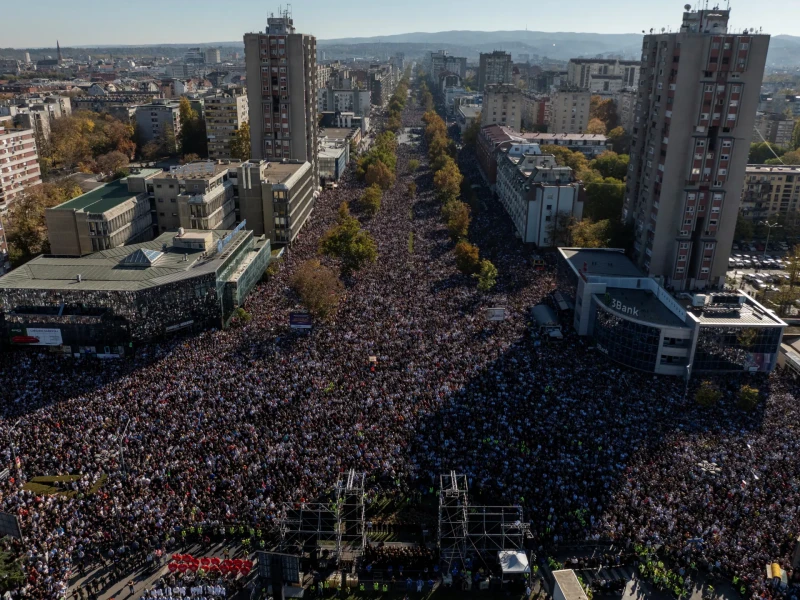
In a historic upset during the snap parliamentary election held on October 25, 2026, Serbia's student-led movement ended Aleksandar Vučić's nearly 14-year rule in the country. This popular movement, named "Student List – Students Win" (Studentska lista – Studenti pobeđuju), with a horizontal structure and no single leader, managed to secure a direct majority in parliament.
According to almost complete vote counting data released by the State Election Commission, also known as the Republic Election Commission (RIK), and observation groups like CeSID-Ipsos, the Student List secured between 52.5% and 53% of the votes (approximately 2.2 million votes). Accordingly, they are projected to hold between 139 and 141 seats in the 250-seat National Assembly. The "United Serbia" alliance, led by Vučić's SNS party, managed to secure only between 39% and 39.3% of the votes (approximately 1.7 million votes), and they are estimated to hold between 97 and 105 seats. The remaining seats were primarily allocated to minority lists such as the Vojvodina Hungarian Alliance and Albanian parties, with no other major party able to significantly exceed the parliamentary threshold.
Voter turnout was between 68.8% and 70%, with over 4.2 million voters casting their ballots. This was the highest voter turnout recorded since the breakup of Yugoslavia in 1992. Independent observers noted that the high turnout helped to mitigate any potential influence or risk of irregularities in the election.
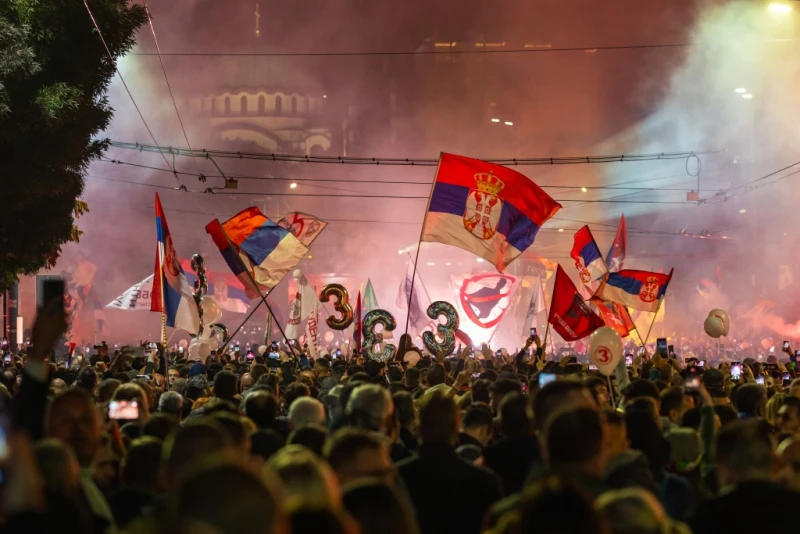
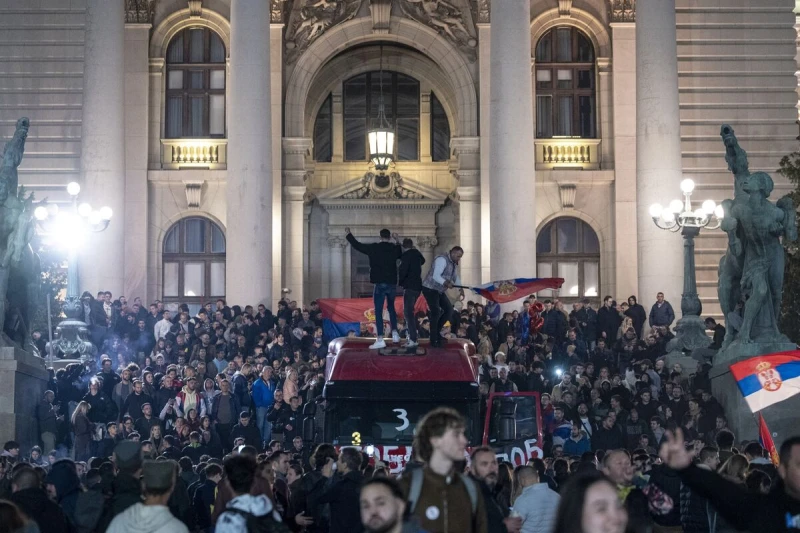
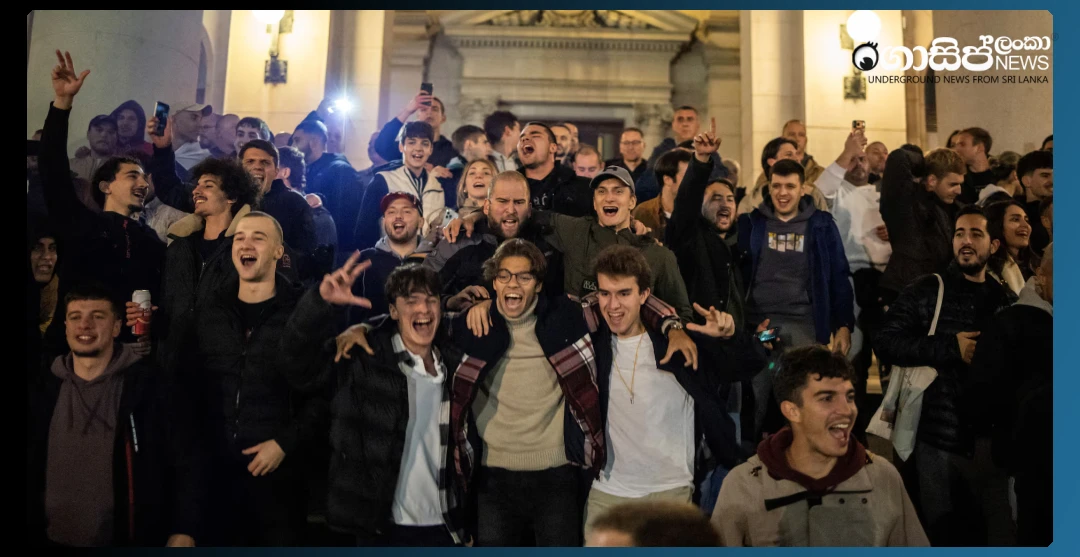
About an hour and a half after the polls closed at 8 PM, Aleksandar Vučić issued a statement from the SNS headquarters, officially conceding his defeat. "It is clear that we have lost this election. The Student List has won," he declared. Based on his party's sample data, he predicted that the students would receive between 135 and 140 seats, and his list would get around 105 seats. With the concession, massive celebrations erupted in Belgrade and other cities, with horns blaring, flares lit, dancing, and shouts of "Victory" and "He's finished," continuing across the country, including in front of the National Assembly, until Monday.
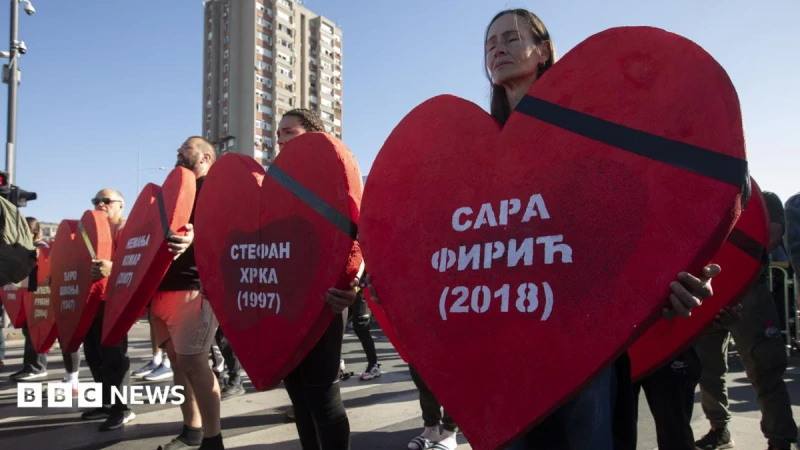
The inception of this popular movement was marked by the tragedy on November 1, 2024, when a concrete canopy collapsed at the Novi Sad railway station, killing 16 people, including children. Officials initially claimed that this section, recently renovated as part of China's 'One Belt, One Road' project, was not included in the renovation works. However, protesters accused corruption, poor oversight, and political pressure for a quick opening to demonstrate "European standards" as the causes of the disaster. Demands, which began with calls for full disclosure of documents and accountability, later expanded to include holding snap elections, depoliticizing institutions, and eradicating corruption.
Leading university blockades, faculty occupations, and widespread marches across the country, this series of student protests became the largest and longest wave of protests Serbia had seen since the overthrow of Slobodan Milošević in 2000. As a tactic to counter smear campaigns and targeted attacks, the movement deliberately operated without a single leader, making collective decisions through large student assemblies (plenums).
Vučić, who had been the leader of the SNS party since 2012, serving as Prime Minister from 2014 to 2017 and President since 2017, was constitutionally unable to run for a third presidential term. For this reason, he resigned from the presidency in late September 2026 and called this snap election to run as a prime ministerial candidate. Former Prime Minister and current Speaker of Parliament, Ana Brnabić, is currently serving as acting president, and a new presidential election is scheduled to be held by the end of December 2026.
Candidates for the Student List, which had no single hierarchical leader, were chosen through student assemblies. They included professors, doctors, actors, farmers, athletes, and lawyers. The main candidate leading the election list was Ilija Srdanović, a cardiologist and professor at the Novi Sad Faculty of Medicine. Born in Novi Sad around 1970, he is a long-serving clinical doctor at the Vojvodina Institute for Cardiovascular Diseases in Sremska Kamenica and a public supporter of the protests. On election night, Radomir Saičić, a chemistry professor and member of the Serbian Academy of Sciences and Arts (SANU), spoke on behalf of the students. Additionally, professionals from various fields represented the group, including economist Dejan Šoškić, former Governor of the National Bank of Serbia from 2010 to 2012, basketball player Dejan Bodiroga, and actor Tihomir Stanić.
Anti-corruption measures, the rule of law, better public services, and quality education are the primary focus of their policy statement. Regarding foreign policy, they do not recognize the independence of the state of Kosovo and are in favor of holding a referendum on joining the European Union. Relations with Brussels had seen some setbacks under Vučić's rule. However, given their limited experience in governance, it is still unclear who will be the next Prime Minister and how this collective governance style will operate in wielding executive power.
This result is widely discussed, drawing parallels to Viktor Orbán's defeat in Hungary in 2026, and is considered a new model for other student or anti-corruption movements in Europe. Although slight revisions to the seat count may occur in the final official vote tally, the Serbian student movement has succeeded in securing a majority in parliament.