
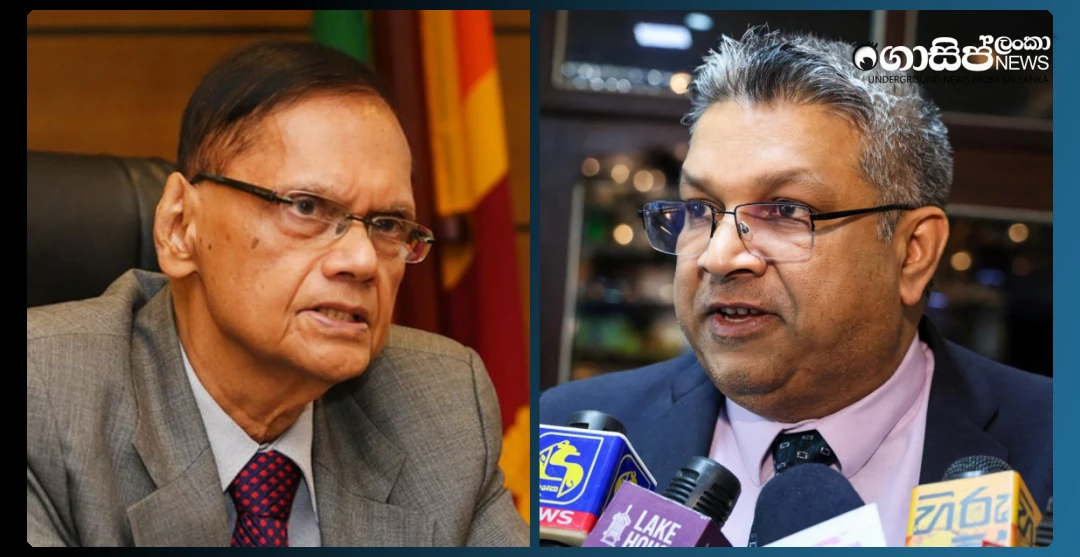
A heated political and legal debate has now emerged, centered on the incident where the robes of Ven. Galagodaatte Gnanasara Thero, who is currently imprisoned, were removed when he was taken to court. This conflict between the United National Party and the government regarding the interpretation of prison standing orders raises serious questions about existing loopholes in the law as well as the responsibility of political statements.
The genesis of this crisis was marked by a strong statement issued by the United National Party on October 14. Quoting the views of Professor G. L. Peiris, convener of the Joint Opposition, the statement accused the government of appointing a committee to make recommendations on the attire worn by imprisoned religious leaders when taken outside, calling it a mere 'eyewash'.
The professor's argument was that a new committee was not necessary for this purpose, as clear guidance already exists under Standing Order 550 of the Prisons Ordinance. The United National Party pointed out that the order states that a convicted prisoner taken to court should not be presented in prison uniform, and should be allowed to wear civilian clothes they were accustomed to wearing in society, or attire suitable for their religious or cultural background. They emphasized that appointing committees when this is clear is condemned as a dishonest attempt to suppress the issue, and that the government should immediately meet with the Mahanayake Thero of the Kotte Sri Kalyani Samagri Dharma Maha Sangha Sabha of the Siam Maha Nikaya and other members of the Sangha Sabha to apologize for the removal of Gnanasara Thero's robes.
However, the government responded strongly to this accusation. Harsha Nanayakkara, Attorney-at-Law and Minister of Justice and National Integration, issued a special statement accusing the United National Party of deliberately misleading the public by quoting only one part of the law concerning a sensitive issue, thereby propagating a distorted idea.
As the Minister pointed out, the true nature of the crisis lies in the full content of Prison Standing Order 550 and the duration of the sentence imposed on Gnanasara Thero. Standing Order 550 contains three main points: the first states that prisoners should not be brought to court in prison uniform. The second states that those sentenced to three years or less have the opportunity to leave prison wearing their personal clothes. The problem arises from the third point. Those sentenced to more than three years are not allowed to wear personal clothes; instead, they should be provided with a special set of clothing from the prison's equipment store, belonging to 'A' or 'B' categories, which are not identifiable as prison textiles.
On this legal basis, the situation of Gnanasara Thero takes on an entirely different dimension. As the Minister pointed out, he has been sentenced to six years in prison. Therefore, the second part of Standing Order 550 does not apply to him; only the third part is relevant. However, the 'A' and 'B' categories of attire provided under that law do not include the robes worn by a Buddhist monk. The government was compelled to appoint a committee precisely to fill this legal vacuum.
Accordingly, following discussions with Buddhist monks, a special committee convened and presented a new recommendation, rectifying the existing shortcoming. It has been proposed that the Standing Orders should be amended to allow a monk, even if sentenced to more than three years, to wear his robes when leaving prison, subject to the approval of his Nikaya or sect.
This entire incident clearly reflects how much misinformation can be spread in society by a half-read law. However, in the end, this controversial incident has served as an impetus to amend the prison legal system itself, in order to resolve a technical loophole in the law without harming religious dignity.